High in the Garhwal Himalayas, Kedarnath asks the pilgrim to walk with patience, seek forgiveness with humility and discover the stillness that remains when every unnecessary burden falls away.
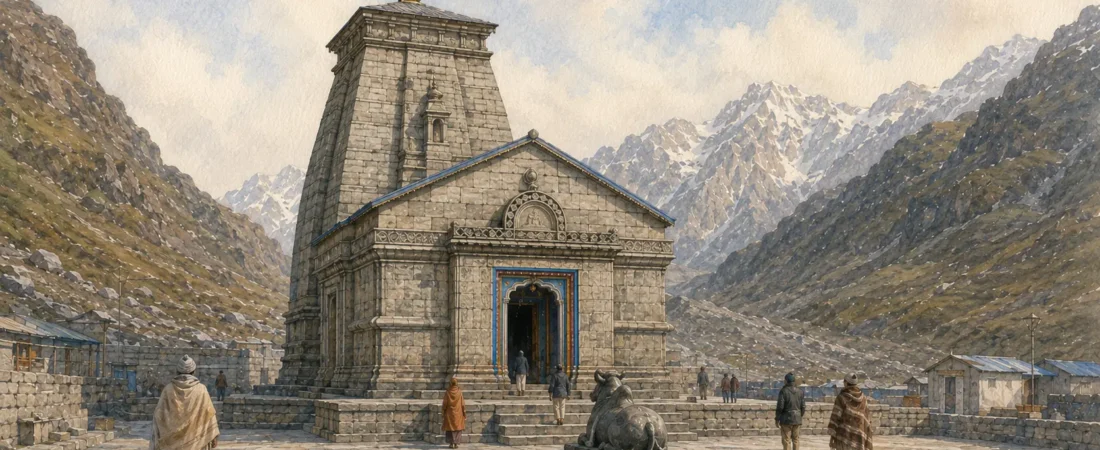
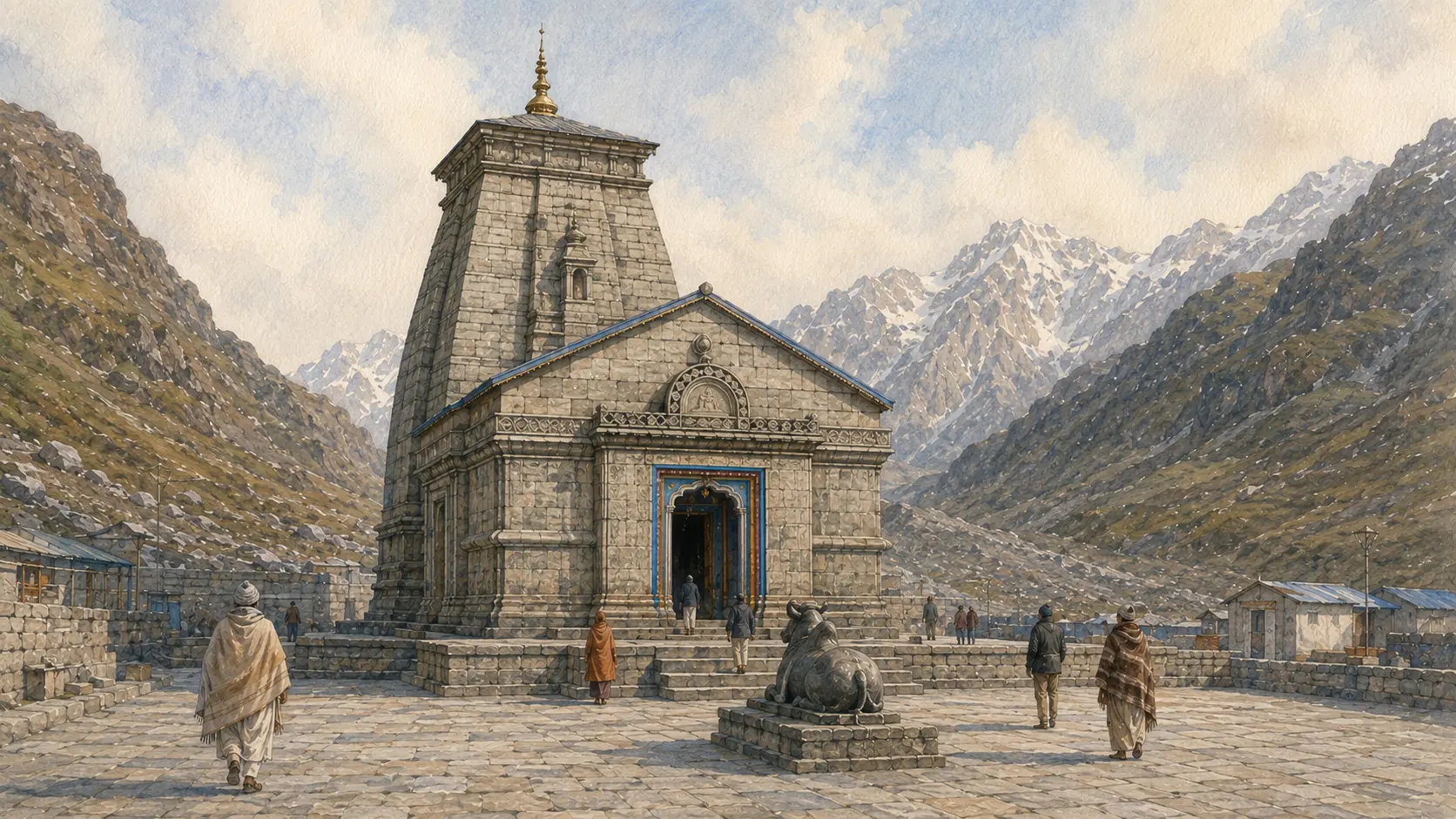
Kedarnath Jyotirlinga in Uttarakhand is one of the most revered and physically demanding pilgrimage destinations in India. The ancient grey-stone temple stands at an altitude of about 3,580 metres near the head of the Mandakini valley, surrounded by severe, magnificent Himalayan peaks. It is honoured simultaneously as one of the twelve Jyotirlingas, an essential shrine of the Panch Kedar tradition and one of the four sacred destinations of Uttarakhand’s Chota Char Dham Yatra.
Yet Kedarnath cannot be understood through titles alone. Its spiritual character is shaped by effort. The long road into the mountains, the ascent from Gaurikund, the thin air and the changing weather all ask the pilgrim to move slowly. Sacred tradition remembers the Pandavas arriving with remorse after the Kurukshetra war and Lord Shiva finally granting them grace. Another revered account remembers Nara and Narayana performing tapas and praying that Shiva remain at Kedara for the welfare of the world.
For the Indian Ethos Jyotirlinga series, Kedarnath carries the value of repentance, perseverance and grace. It teaches that genuine remorse is not self-punishment. It is the courage to seek truth, accept responsibility and continue the climb with a transformed heart.
Indian Ethos theme: Repentance, perseverance and grace
Contents
- Kedarnath Jyotirlinga at a glance
- Where is Kedarnath?
- Why Kedarnath belongs to three sacred circuits
- Sthala Purana: the Pandavas and the Panch Kedar
- Nara–Narayana and the Jyotirlinga tradition
- What makes the Kedarnath linga distinctive?
- Spiritual significance and Indian Ethos values
- Temple history and architecture
- The 2013 disaster, remembrance and renewal
- Opening season, darshan and worship guidance
- Winter worship at Ukhimath
- Mandatory registration and authorised bookings
- How to reach Kedarnath
- Trek planning, health and altitude safety
- Strictly vegetarian food in the Kedarnath region
- Places to visit around Kedarnath
- Best time to visit
- Suggested pilgrimage itineraries
- Guidance for seniors and families
- Frequently asked questions
Kedarnath Jyotirlinga at a glance
| Detail | Information |
|---|---|
| Sacred shrine | Shri Kedarnath Jyotirlinga |
| Location | Kedarnath, Rudraprayag district, Uttarakhand |
| Approximate altitude | About 3,580 metres above sea level |
| Presiding deity | Lord Shiva as Kedarnath or Kedareshwara |
| Sacred circuits | Dwadasha Jyotirlingas, Panch Kedar and Uttarakhand Chota Char Dham |
| Distinctive sacred form | A natural, irregular conical stone traditionally associated with Shiva’s bull-form hump |
| River valley | Near the head of the Mandakini River |
| Road head for the trek | Gaurikund, normally reached through Sonprayag |
| Trek distance | Official sources currently describe approximately 16–19 km, depending on the route and counting point |
| 2026 opening date | 22 April 2026, according to the Uttarakhand Tourist Care portal |
| Winter seat of worship | Omkareshwar Temple, Ukhimath |
| Major observances | Opening and closing ceremonies, Shravan worship and Maha Shivaratri at the winter seat |
| Best practical periods | May–June and September–October, subject to weather and official advisories |
| Indian Ethos value | Repentance, perseverance and grace |
Kedarnath is a high-altitude seasonal pilgrimage. Registration, route access, darshan arrangements and weather restrictions can change quickly. Verify every time-sensitive detail through official Uttarakhand and BKTC channels immediately before travel.
Where is Kedarnath?
Kedarnath Temple stands in Rudraprayag district in the Garhwal Himalayas. The shrine sits in a broad glacial valley at roughly 3,580 metres, with high ridges and snow-streaked peaks rising behind it. The Mandakini flows from the upper valley and accompanies the pilgrimage route downstream towards Gaurikund, Sonprayag and Rudraprayag.
There is no ordinary motor road to the temple itself. Most pilgrims travel by road to Sonprayag, continue through the regulated local transport system towards Gaurikund and begin the mountain ascent from there. Helicopter services operate seasonally from designated helipads when weather permits, but they are never guaranteed.
The remoteness is not an inconvenience accidentally attached to Kedarnath. It is part of the kshetra’s spiritual personality. At this altitude, the body cannot pretend to be limitless. One must respect weather, breath, fatigue and time. The mountain teaches humility before the temple is even reached.
Why Kedarnath belongs to three sacred circuits
One of the twelve Jyotirlingas
Kedarnath is traditionally counted as the eleventh of the Dwadasha Jyotirlingas. In the Jyotirlinga tradition, Shiva is worshipped not merely as a local deity but as limitless consciousness symbolised by divine light.
The foremost shrine of Panch Kedar
Kedarnath is the best known of the five Himalayan Shiva shrines called Panch Kedar. The others are Tungnath, Rudranath, Madhyamaheshwar and Kalpeshwar. Sacred tradition associates each with a manifestation of Shiva’s bull form.
A dham of the Uttarakhand Chota Char Dham
Kedarnath also forms the Shiva dham in Uttarakhand’s four-shrine pilgrimage, together with Yamunotri, Gangotri and Badrinath. This Himalayan circuit is distinct from the pan-Indian Char Dham associated with Badrinath, Dwarka, Jagannath Puri and Rameswaram.
Using the term Chota Char Dham or Uttarakhand Char Dham prevents confusion between the two respected pilgrimage traditions.
Sthala Purana: the Pandavas and the Panch Kedar
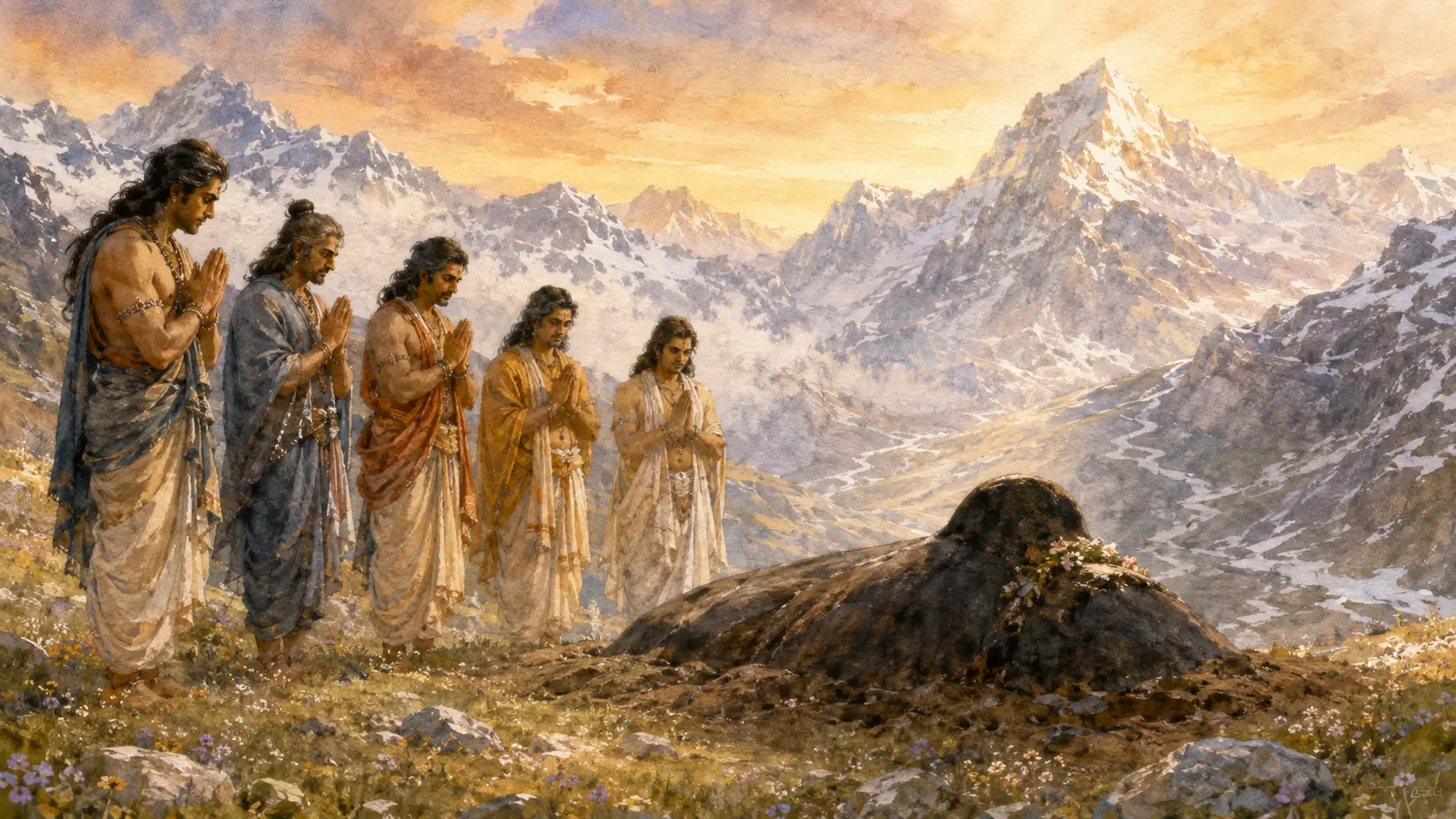
The best-known Sthala Purana of Kedarnath begins after the Mahabharata war. The Pandavas had fulfilled a terrible duty, but victory did not free them from grief. They carried the burden of lives lost, including relatives, teachers and members of their own lineage. Seeking spiritual release, they were advised to obtain Lord Shiva’s grace.
Shiva withdraws from sight
The Pandavas searched for Shiva, but sacred tradition says that the Lord did not immediately grant them darshan. Shiva withdrew into the Himalayan region and assumed the form of a bull. This concealment is sometimes narrated as divine testing. At a deeper level, it reminds us that forgiveness cannot be demanded as a reward. The seeker must become ready to receive it.
The Pandavas followed the bull into the mountains. In a widely loved account, Bhima recognised the unusual animal and tried to prevent it from disappearing. Shiva entered the earth, leaving the hump visible at Kedarnath.
The remaining manifestations were revealed at four other places:
- the arms at Tungnath;
- the face at Rudranath;
- the navel or middle portion at Madhyamaheshwar;
- the matted locks at Kalpeshwar.
Together, these five sacred sites became the Panch Kedar.
Narrative details vary in regional retellings, and the locations should be understood as sacred tradition rather than modern historical claims. The ethical centre, however, remains clear. The Pandavas do not hide behind victory or circumstance. They seek purification after recognising the moral weight of war.
Forgiveness as transformation
Kedarnath’s story is not an invitation to remain trapped in guilt. Its lesson is movement from remorse towards responsibility. The Pandavas travel, endure and pray. When Shiva finally reveals himself, grace does not erase memory; it transforms what the seekers do with that memory.
Repentance becomes sacred when it changes the direction of our life.
Nara–Narayana and the Jyotirlinga tradition
A second revered tradition, associated with the Shiva Mahapurana, connects Kedarnath with the sages Nara and Narayana. They are remembered as performing severe tapas in the Himalayas and worshipping Lord Shiva with single-pointed devotion.
Pleased by their tapas, Shiva appeared before them. Nara and Narayana did not ask for private power or comfort. They prayed that the Lord remain at Kedara so that future seekers could receive his grace. Shiva therefore abided at the kshetra as Kedareshwara Jyotirlinga.
This tradition adds a complementary dimension to the Pandava story:
- the Pandavas come seeking forgiveness;
- Nara and Narayana perform tapas for the welfare of others;
- Shiva’s presence transforms an isolated mountain valley into a place of refuge across generations.
The two traditions need not be forced into one chronological narrative. Each illuminates a different spiritual truth preserved by Kedarnath.
What makes the Kedarnath linga distinctive?
The sacred form worshipped in Kedarnath is not the smooth cylindrical linga familiar in many Shiva temples. Uttarakhand Tourism describes it as a natural conical form traditionally identified with the hump of Shiva’s bull manifestation.
This form links sanctum worship directly with the Panch Kedar Sthala Purana. It also shifts attention away from human ideas of perfect symmetry. The irregular stone is revered because divine presence is not limited to what has been shaped by human hands.
Visitors must follow the current instructions of temple personnel regarding proximity, offerings and darshan. Practices can change according to crowds, ritual schedules and administrative requirements. The sanctum is not a setting for photography.
Spiritual significance: repentance, perseverance and grace
Remorse without despair
The Pandavas do not deny the consequences of war, yet they do not abandon the possibility of transformation. Kedarnath teaches a form of remorse that leads to wiser action rather than permanent self-condemnation.
Perseverance without entitlement
The mountain path is long and weather-dependent. A pilgrim may prepare carefully and still be asked to wait, turn back or change plans. This is tapas in a practical form: sincere effort without the belief that effort gives us control over everything.
Grace beyond achievement
Reaching Kedarnath is physically demanding, but the shrine is not a prize for athletic success. Some devotees walk, some use a palanquin, some travel by helicopter and some worship the winter form at Ukhimath. Grace is not measured by kilometres.
Humility before nature
The Himalayas are sacred and ecologically vulnerable. To honour Shiva here means respecting weather warnings, water sources, waste rules, local communities and the limits of one’s body.
Stillness after effort
The first experience many pilgrims describe on entering the Kedarnath valley is not grandeur alone, but silence. The temple’s heavy stone form stands against constantly changing cloud and snow. The contrast becomes a meditation: circumstances change, yet awareness can remain steady.
Temple history and architecture
Sacred tradition credits the Pandavas with establishing the original shrine and associates Adi Shankaracharya with its revival. The Shri Badarinath Kedarnath Temple Committee presents the temple as an ancient structure linked with the eighth century, but claims about a single precise construction date should be treated carefully. Himalayan shrines are living institutions that may be repaired, renewed and rebuilt across centuries.
The present temple is constructed from massive grey stone blocks and stands on a raised platform. Rudraprayag district administration describes it as resting on a morainic ridge. Its form is austere rather than ornate:
- a garbhagriha containing the sacred linga;
- a mandapa for pilgrims and ritual assembly;
- a heavy stone façade suited to the severity of the landscape;
- a stone tower rising above the sanctum;
- Nandi seated before the entrance, facing Lord Shiva.
The architecture does not compete with the mountain. Its strength comes from proportion, stone and stillness. Small areas of painted colour around the entrance bring warmth to the otherwise restrained grey structure.
Adi Shankaracharya’s samadhi is traditionally located near the temple. The samadhi precinct was reconstructed after the 2013 disaster, and a new statue was unveiled in 2021.
The 2013 disaster, remembrance and renewal
In June 2013, extreme rainfall, flooding, debris flows and landslides caused catastrophic destruction across Uttarakhand. Kedarnath and the Mandakini valley suffered devastating loss of life and widespread damage. Any account of the event must begin with remembrance of the people who died, the families who endured uncertainty, the local communities that lost homes and livelihoods, and the courage of rescue workers.
The main stone temple remained standing while much of the surrounding settlement was destroyed. A large boulder came to rest behind the shrine and is now popularly revered as Bhim Shila. Local belief holds that it helped shield the temple from the force of debris. Devotional meaning and geological investigation can coexist, but neither should be used to make insensitive claims about why some lives or structures were spared and others were not.
Reconstruction has included riverfront protection, pathways, pilgrim facilities, housing for tirtha purohits, medical and administrative infrastructure, and the rebuilt Adi Shankaracharya samadhi. The most responsible meaning of resilience here is not simply rebuilding what existed. It is remembering the fragility of the valley and planning with greater respect for natural hazards.
Pilgrims honour Kedarnath not only through prayer, but through disciplined behaviour: following closures, avoiding litter, conserving water and never pressuring authorities to ignore unsafe conditions.
Opening season, darshan and worship guidance
Kedarnath Temple is seasonal because winter snow makes the upper valley inaccessible for ordinary pilgrimage. The opening date is announced annually, while the closing ceremony is traditionally connected with the period around Bhai Dooj and is confirmed by the temple authorities.
For the 2026 yatra, the official Uttarakhand Tourist Care portal lists 22 April 2026 as the opening date. At the time of verification in August 2026, the same portal had not published a fixed general opening-and-closing timetable for each day.
The BKTC online worship portal lists early-morning Abhishek worship broadly from about 4:00 AM to 6:30 AM and evening worship beginning around 6:00 PM, with schedules subject to the season, queue and ritual calendar. These puja windows should not be interpreted as guaranteed general darshan timings.
Darshan guidance
- Verify the same-day schedule through BKTC and on-site announcements.
- Keep the yatra registration letter, identity document and any authorised booking receipt accessible.
- Reach a booked puja or aarti at least 15–30 minutes early, as the BKTC advises.
- Dress in warm, modest layers even when the lower valleys feel pleasant.
- Do not photograph the sanctum or disregard phone restrictions.
- Expect longer queues near opening days, weekends and major observances.
- Accept weather-related suspension as a safety decision, not an obstacle to be negotiated.
Winter worship at Ukhimath
When Kedarnath closes for winter, the ceremonial representation of the deity is carried to Omkareshwar Temple in Ukhimath. Worship continues there through the snowbound months until the return journey before the next opening.
This tradition expresses a beautiful principle: a temple may be seasonally inaccessible, but worship does not stop. The sacred rhythm moves between the high Himalayan shrine and the inhabited valley.
Ukhimath is therefore not a substitute of lesser value. It is Kedarnath’s winter seat and a meaningful destination for devotees unable to undertake the high-altitude yatra.
Mandatory registration and authorised bookings
Char Dham registration
The Government of Uttarakhand requires pilgrims to register for the Char Dham Yatra and complete verification at designated checkpoints. Registration is a free safety and pilgrimage-management process.
Use only the official Uttarakhand Tourist Care registration portal. Download the QR-coded registration letter and keep both a digital and printed copy.
Puja and accommodation booking
Use the official Shri Badarinath Kedarnath Temple Committee website for BKTC puja, donation and listed accommodation services. Read all terms before payment and avoid people promising privileged access outside authorised systems.
Helicopter booking
Seasonal Kedarnath shuttle bookings are officially routed through IRCTC HeliYatra. Char Dham registration is normally required before booking. Flight operations are highly weather-dependent and weight, reporting-time, baggage and return conditions must be read carefully.
Do not transfer money to an agent or website merely because it appears in a search result or social-media advertisement. Verify the exact government-linked domain.
How to reach Kedarnath
By air to Uttarakhand
Jolly Grant Airport near Dehradun is the principal airport gateway for the region. From there, pilgrims continue by road towards Rishikesh, Rudraprayag, Guptkashi and Sonprayag. Road time varies greatly with traffic, weather and mountain conditions.
By train
Rishikesh, Haridwar and Dehradun are the main rail gateways cited by official tourism sources. Rishikesh and Haridwar are commonly used starting points for the road journey into Garhwal.
By road
A common route is:
Rishikesh → Devprayag → Srinagar → Rudraprayag → Guptkashi → Sonprayag → Gaurikund
Private vehicles are usually regulated around Sonprayag. Local shared transport commonly carries pilgrims onward towards Gaurikund according to the current traffic plan.
Gaurikund to Kedarnath
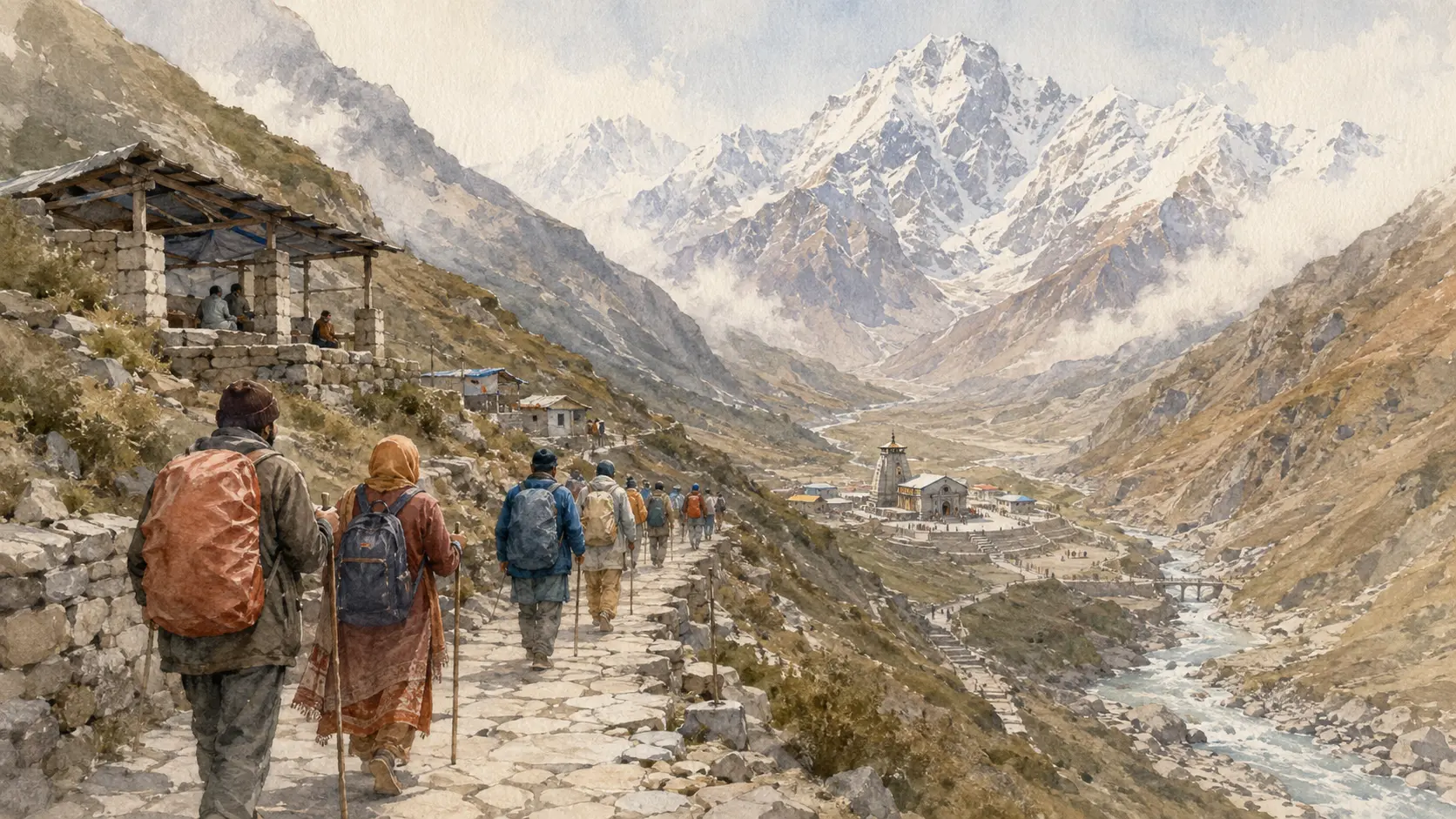
Official sources describe the current ascent as approximately 16, 17 or 19 kilometres. The variation reflects different counting points and route descriptions. Pilgrims should plan physically for an approximately 19-kilometre uphill mountain journey, rather than relying on the shortest quoted figure.
Options normally include walking and authorised palanquin or pony services. Availability, rates and operating rules should be confirmed only at official counters. No option removes the effects of altitude or sudden weather.
Trek planning, health and altitude safety
Kedarnath is not an ordinary day walk. The ascent begins near 2,000 metres and ends around 3,580 metres. A person can be spiritually eager and still be medically unprepared.
Before the journey
- Seek medical advice if you have heart, lung, blood-pressure, mobility or significant chronic health concerns.
- Improve walking endurance gradually in the weeks before travel.
- Keep at least one buffer day for road closures, rain or fatigue.
- Do not plan an immediate rushed ascent after an overnight journey with no rest.
- Check official weather and route advisories on the morning of departure.
What to carry
- waterproof outer layer and backpack cover;
- warm inner layers, gloves, cap and spare socks;
- shoes with reliable grip that have already been broken in;
- prescribed medicines and a simple first-aid pouch;
- water and light vegetarian energy foods;
- sunscreen, sunglasses and lip protection;
- identity documents, registration letter and booking copies;
- a small reusable bag for carrying personal waste back down.
During the ascent
Walk at a pace that allows conversation. Take short, regular breaks without letting the body become cold. Drink water steadily, but do not force excessive quantities. Avoid racing other pilgrims or treating the route as a fitness competition.
Headache, unusual breathlessness, nausea, dizziness, confusion, poor coordination or extreme fatigue can indicate altitude illness or another medical problem. Stop ascending, seek medical assistance and descend when advised. A helicopter ticket or tight schedule is never more important than health.
The official Uttarakhand Tourist Care portal lists emergency number 112, medical emergency number 108 and state tourism helpline 1364. Reconfirm numbers before travel and save them offline.
Strictly vegetarian food in the Kedarnath region
Food at high altitude should support the body without making digestion unnecessarily difficult. Kedarnath and the trek route mainly offer simple vegetarian fare. Guptkashi, Ukhimath, Sonprayag and Rudraprayag have a wider choice of Garhwali dishes and regular vegetarian restaurants.
Simple pilgrim meals near the shrine and trail
- Vegetable khichdi: Warm rice and lentils cooked softly, especially comforting after the climb.
- Dal-rice: A reliable, balanced meal when served fresh and hot.
- Roti with seasonal sabzi: Choose a moderately spiced preparation before an early start.
- Vegetable pulao: Useful when freshly prepared and not excessively oily.
- Plain paratha with curd: A familiar breakfast in lower stops; eat lightly before strenuous walking.
- Tea, milk and hot lemon water: Common warm drinks, though hydration should not depend only on sweet beverages.
Garhwali vegetarian dishes to seek in the lower valleys
- Kafuli: A nourishing preparation of leafy greens, often thickened with rice or grain flour.
- Chainsoo: Roasted black gram cooked into a deeply flavoured Garhwali dal.
- Phaanu: A comforting mixed-lentil preparation traditionally cooked slowly.
- Mandua roti: Finger-millet flatbread with an earthy flavour.
- Aloo ke gutke: Potatoes tempered with regional spices, best enjoyed in moderation before the trek.
- Jhangora ki kheer: A barnyard-millet pudding prepared with milk and gentle flavouring.
- Arsa: A traditional sweet made from rice flour and jaggery, found in parts of Garhwal.
For a sattvic meal, request food without onion and garlic. Ask that it be freshly prepared and choose clean, busy establishments. Carry nuts, roasted chana, fruit or simple homemade snacks, but take every wrapper back with you. Avoid over-ordering where food and waste disposal are difficult.
All cuisine recommendations in this guide are strictly vegetarian.
Places to visit around Kedarnath
Bhairavnath Temple
The Bhairavnath shrine stands on higher ground near Kedarnath and is traditionally associated with the protection of the kshetra during winter. The short-looking climb can feel demanding at altitude. Attempt it only in safe weather and with sufficient energy for the return.
Adi Shankaracharya Samadhi
The reconstructed samadhi precinct behind the temple commemorates Adi Shankaracharya’s association with Kedarnath and the wider renewal of sacred pilgrimage traditions.
Bhim Shila
The large rock behind the temple became an important place of remembrance after the 2013 disaster. Visit quietly and avoid turning the site into a dramatic photo opportunity.
Gaurikund
Gaurikund is the traditional base of the Kedarnath ascent and is associated with Goddess Parvati’s tapas. Access to water features and local temple areas may be regulated, so follow current instructions.
Triyuginarayan Temple
Triyuginarayan is revered in local tradition as the place of Shiva and Parvati’s divine wedding, witnessed by Lord Vishnu. It is a meaningful addition for travellers with an extra day and safe road access.
Guptkashi
Guptkashi’s Vishwanath Temple forms part of the wider Shiva geography of the region. The town is also an important overnight base for the Kedarnath route.
Omkareshwar Temple, Ukhimath
Visit Kedarnath’s winter seat to understand how worship continues through the closed season. Ukhimath also connects the pilgrimage with nearby Panch Kedar routes.
Chorabari Tal and Vasuki Tal
These are high-altitude excursions, not ordinary add-ons to temple darshan. Routes can be strenuous, altered or restricted after weather events. Only well-prepared trekkers should consider them after checking with local authorities and qualified guides.
Best time to visit Kedarnath
May to June
The early season is popular because the temple has reopened and the main monsoon has not yet begun. Nights remain very cold, opening-week crowds can be heavy and residual snow may affect local conditions.
July to August
The monsoon brings frequent rain, landslide risk, slippery trails and possible route suspensions. The valley may be open, but this is not the most predictable period for a high-altitude pilgrimage.
September to October
Post-monsoon weeks often offer clearer views and a deeply devotional atmosphere before winter closure. Temperatures fall quickly, especially in October, and early snowfall is possible.
Winter
The upper shrine is closed and ordinary pilgrimage to Kedarnath should not be attempted. Worship continues at Omkareshwar Temple in Ukhimath.
There is no completely risk-free month in the Himalayas. The safest date is one supported by current weather, route access, health and official guidance.
Suggested pilgrimage itineraries
Four-day Kedarnath pilgrimage from Rishikesh
Day one: Rishikesh to Guptkashi or nearby
Begin early and treat the mountain road as a full travel day. Complete registration checks, rest well and eat a light vegetarian dinner.
Day two: Guptkashi to Gaurikund and Kedarnath
Travel through Sonprayag according to the local traffic system. Start the ascent early. Do not set a rigid arrival time, and use a planned overnight stay at Kedarnath rather than forcing a rushed same-day return.
Day three: Darshan and descent
Attend darshan according to the current temple schedule. Visit the immediate precinct respectfully, then descend while daylight and weather are favourable. Stay near Sonprayag, Guptkashi or Ukhimath.
Day four: Ukhimath or Triyuginarayan, then onward
Choose one meaningful nearby shrine instead of exhausting the family with a checklist. Continue towards Rudraprayag or Rishikesh with a road buffer.
Kedarnath and Badrinath extended circuit
Allow at least six to eight days from the plains, with additional buffer time. After Kedarnath, the road journey to Badrinath commonly passes through Guptkashi, Rudraprayag, Karnaprayag and Joshimath. Avoid placing two demanding travel days back to back.
Indian Ethos readers can use the existing Badrinath Dham guide to plan the Vishnu shrine with the same emphasis on sacred tradition, safety and unhurried travel.
Guidance for seniors and families
For senior pilgrims
- Obtain medical advice before making bookings.
- Consider Ukhimath winter worship if high altitude is unsuitable.
- If using helicopter services, remember that the destination altitude remains the same and rapid ascent can itself be challenging.
- Choose accommodation that minimises unnecessary climbing and confirm heating, toilets and bedding.
- Keep a buffer day and do not combine darshan, descent and a long road journey without rest.
For families with children
- Consult a paediatric professional before taking very young children to high altitude.
- Carry familiar vegetarian snacks, warm layers and spare dry clothing.
- Keep children close near rivers, queues, animals and crowded transport points.
- Never pressure a tired or unwell child to continue for the sake of completing a plan.
For every pilgrim
Kedarnath darshan is not less meaningful when the route changes. Turning back in unsafe weather, accepting medical advice or worshipping at Ukhimath can itself be an act of dharma.
Frequently asked questions about Kedarnath Jyotirlinga
1. Where is Kedarnath Jyotirlinga located?
Kedarnath is in Rudraprayag district, Uttarakhand, at an altitude of about 3,580 metres in the Garhwal Himalayas.
2. Is Kedarnath both a Jyotirlinga and a Char Dham shrine?
Yes. It is one of the twelve Jyotirlingas and one of Uttarakhand’s Chota Char Dham shrines. It is also the best-known temple of the Panch Kedar tradition.
3. What is the Sthala Purana of Kedarnath?
Sacred tradition remembers the Pandavas seeking Shiva’s forgiveness after the Mahabharata war. Shiva appeared as a bull and entered the earth, with the hump remaining at Kedarnath and other manifestations appearing at the remaining Panch Kedar shrines.
4. Is there another Jyotirlinga tradition connected with Kedarnath?
Yes. A revered account associated with the Shiva Mahapurana says that Nara and Narayana performed tapas at Kedara and prayed that Shiva remain there for the welfare of future seekers.
5. What is distinctive about the Kedarnath linga?
It is a natural, irregular conical stone traditionally associated with the hump of Shiva’s bull manifestation, rather than a conventional smooth cylindrical linga.
6. When did Kedarnath open in 2026?
The official Uttarakhand Tourist Care portal lists 22 April 2026 as the opening date. Closing dates and future-season dates should always be checked through official channels.
7. What are the daily temple timings?
General darshan timings vary with the season, ritual programme, weather and queues. BKTC lists early-morning Abhishek worship around 4:00–6:30 AM and evening worship beginning around 6:00 PM. Confirm the current day’s arrangements before attending.
8. Is Char Dham registration compulsory?
Yes. Uttarakhand requires yatra registration and verification. Use the official Tourist Care portal and carry the QR-coded registration letter.
9. How long is the Gaurikund to Kedarnath trek?
Official sources currently quote approximately 16–19 kilometres. Because counting points vary, pilgrims should prepare for an uphill journey of about 19 kilometres.
10. Can seniors take a helicopter to Kedarnath?
Seasonal helicopter services may help reduce walking, but medical fitness remains important because Kedarnath is at high altitude and flights are weather-dependent. Book only through IRCTC HeliYatra after completing registration.
11. What is the best time for Kedarnath Yatra?
May–June and September–October are generally preferred. Weather and official route advisories matter more than a fixed calendar recommendation.
12. Where is Kedarnath worshipped in winter?
The winter seat is Omkareshwar Temple in Ukhimath, where worship continues during the snowbound closed season.
13. What strictly vegetarian food is available?
Fresh khichdi, dal-rice, roti-sabzi, vegetable pulao and simple vegetarian meals are common. In lower towns, try Garhwali dishes such as kafuli, chainsoo, phaanu, mandua roti and jhangora ki kheer.
14. What happened at Kedarnath in 2013?
Extreme rainfall, floods, debris flows and landslides caused catastrophic destruction and tragic loss of life across Uttarakhand, including Kedarnath. The main temple remained standing, while the surrounding settlement suffered severe damage.
15. Is Kedarnath Temple a UNESCO World Heritage Site?
No. Kedarnath Temple itself is not inscribed as a UNESCO World Heritage Site. It should not be confused with Uttarakhand’s separate Nanda Devi and Valley of Flowers World Heritage property.
16. What is Kedarnath’s central spiritual lesson?
Kedarnath teaches that remorse can become responsible action, perseverance can remain humble and grace cannot be demanded. The mountain journey becomes meaningful when it changes how the pilgrim lives afterwards.
Kedarnath: carry the mountain’s silence home
Kedarnath is often described through superlatives: remote, ancient, difficult and magnificent. Yet the deepest memory of the shrine may be simpler. It is the sight of a quiet stone temple standing beneath a sky that can change within minutes.
The Pandavas arrive carrying the moral weight of war. Nara and Narayana offer tapas for the welfare of others. Shiva withdraws, reveals himself and remains. Generations of pilgrims climb, the winter snow returns, and worship descends to Ukhimath until the mountain opens again.
The story does not promise that sincere people will never face hardship. Kedarnath itself has witnessed immeasurable loss. Its teaching is more truthful: grief can be remembered without surrendering to despair, responsibility can grow from remorse, and faith can walk beside caution.
When the pilgrim returns from the mountain, the real Panch Kedar journey begins within everyday life:
- to apologise where we have caused hurt;
- to repair what can be repaired;
- to accept limits without bitterness;
- to persevere without pride;
- and to receive grace without believing we earned it.
The climb to Kedarnath ends at the temple. The transformation it asks of us begins on the way home.
ॐ नमः शिवाय।
हर हर महादेव।
जय बाबा केदार।
Continue through the Dwadasha Jyotirlinga guide, explore the Himalayan Vishnu dham through Badrinath, or revisit the Jyotirlinga teachings of Trimbakeshwar, Kashi Vishwanath and Rameswaram.
Editorial fact-check note
This article distinguishes sacred tradition, living temple practice, documented history and Indian Ethos reflection. The Pandava–Panch Kedar and Nara–Narayana accounts are presented as revered religious traditions. The article does not repeat an incorrect claim appearing on one current government portal that Kedarnath Temple is part of the Nanda Devi and Valley of Flowers UNESCO property. Travel, worship and registration details were verified on 17 August 2026 and remain subject to weather and official change.
Principal sources
- Shri Badarinath Kedarnath Temple Committee
- BKTC: Shri Kedarnath Dham
- BKTC online puja portal
- Official Uttarakhand Tourist Care registration portal
- Official 2026 Kedarnath Dham information
- Rudraprayag District Administration: Kedarnath Yatra 2026
- Rudraprayag District Administration: temples and Panch Kedar tradition
- Uttarakhand Tourism: Panch Kedar circuit
- IRCTC HeliYatra official portal
- NDMA-hosted Uttarakhand disaster recovery overview
- Press Information Bureau: reconstruction of Adi Shankaracharya Samadhi and Kedarnath infrastructure