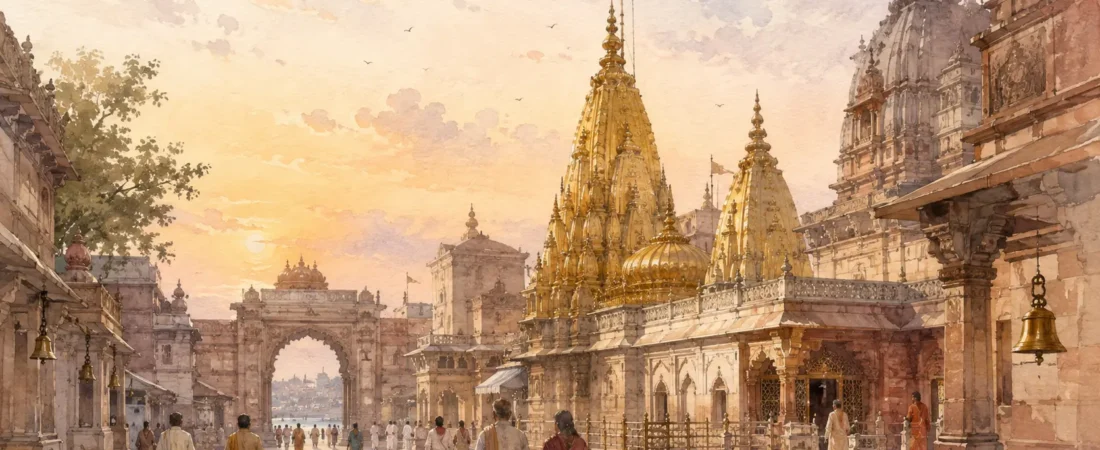
In Kashi, dawn does not simply arrive. It unfolds through temple bells, the murmur of mantras, the first lamps offered to Maa Ganga and the footsteps of pilgrims moving towards Baba Vishwanath.
Among the twelve sacred Jyotirlingas of Lord Shiva, Shri Kashi Vishwanath occupies an extraordinary place in India’s spiritual consciousness. The temple stands in Varanasi, also known as Kashi and Banaras, close to the western bank of the Ganga. Here Shiva is worshipped as Vishwanatha or Vishveshvara, the Lord of the Universe.
This journey continues the Indian Ethos exploration of the Dwadasha Jyotirlingas, following the lesson of fearlessness at Nageshwar Jyotirlinga with Kashi’s call to liberation through awareness.
Yet Kashi Vishwanath is more than a shrine within a city. In living Hindu tradition, Shiva is the presiding Lord of Kashi itself. Temple, river, ghats, Sanskrit learning, music, silk weaving, pilgrimage and everyday life form one sacred landscape.
For the Indian Ethos Jyotirlinga series, Kashi Vishwanath carries the value of liberation through awareness.
On This Page
- Kashi Vishwanath at a glance
- Where is Kashi Vishwanath Jyotirlinga?
- Meaning of Kashi Vishwanath
- Why Kashi is sacred
- Sthala Purana and the Avimukta tradition
- Kashi, moksha and the Taraka tradition
- Spiritual significance of the Jyotirlinga
- Historical journey of the temple
- Maharani Ahilyabai Holkar and cultural stewardship
- Shri Kashi Vishwanath Dham
- Temple worship and daily aartis
- Darshan guidance and pilgrim etiquette
- Shravan, Maha Shivaratri and Dev Deepawali
- Sacred places near Kashi Vishwanath
- The culture of Kashi
- Pure vegetarian food in Varanasi
- How to reach Kashi Vishwanath
- Best time to visit
- Suggested two-day pilgrimage
- Guidance for families and senior pilgrims
- Frequently asked questions
Kashi Vishwanath Jyotirlinga at a Glance
| Pilgrimage detail | Information |
|---|---|
| Sacred shrine | Shri Kashi Vishwanath Jyotirlinga |
| Deity | Lord Shiva as Vishwanatha or Vishveshvara |
| Meaning | Lord of the Universe |
| Location | Varanasi, Uttar Pradesh |
| Sacred river | Maa Ganga |
| Jyotirlinga tradition | One of the twelve revered Jyotirlingas |
| Present temple | Constructed by Maharani Ahilyabai Holkar in 1780 |
| Central spiritual theme | Liberation through awareness |
| Major Shiva season | Shravan, especially Shravan Mondays |
| Major festival | Maha Shivaratri |
| Comfortable travel season | Generally October to March |
| Official portal | Shri Kashi Vishwanath Temple Trust |
Where Is Kashi Vishwanath Jyotirlinga?
Shri Kashi Vishwanath Temple stands in the old city of Varanasi in Uttar Pradesh, near the western bank of the Ganga. The historic lanes around the shrine are known collectively through the living geography of Vishwanath Gali and the surrounding sacred precinct.
Varanasi is known by three familiar names:
- Kashi, the ancient sacred name associated with spiritual illumination
- Varanasi, the official modern name
- Banaras or Benares, the historic and popular name
The Varanasi district administration describes the city as one of the world’s oldest living cities and a long-standing centre of religion, art, culture, tradition and learning. For pilgrims, however, Kashi is not merely the location of Vishwanath. The city is experienced as Shiva’s own kshetra, or sacred domain.
What Does “Kashi Vishwanath” Mean?
The name Vishwanatha comes from:
- Vishva, the universe
- Natha, the Lord or protector
Vishwanatha therefore means Lord of the Universe. Vishveshvara carries the same universal sense: the Lord of all existence.
Kashi is traditionally associated with light or illumination. When the two ideas are brought together, Kashi Vishwanath may be contemplated as the Universal Lord encountered in the City of Spiritual Light.
This meaning expands the pilgrimage beyond geography. The devotee enters a particular temple in Varanasi, but worships Shiva as the consciousness that cannot be confined to one boundary, community or age.
Why Is Kashi Considered So Sacred?
Kashi occupies a distinctive place in Hindu sacred geography. Generations of pilgrims have come here for Shiva darshan, Ganga snana, ancestral rites, scriptural learning, spiritual discipline and prayer for moksha.
The city brings several sacred ideas together:
- Shiva represents stillness, awareness and the ground of consciousness.
- Ganga represents grace, purification and the ceaseless movement of life.
- Jyotirlinga represents Shiva as beginningless and endless light.
- Kashi represents illumination.
- Moksha represents freedom from bondage and the cycle of rebirth.
The pilgrimage therefore carries an inward movement: from distraction to awareness, from possessiveness to surrender and from fear of impermanence to trust in the eternal.
Sthala Purana: Kashi as Avimukta Kshetra
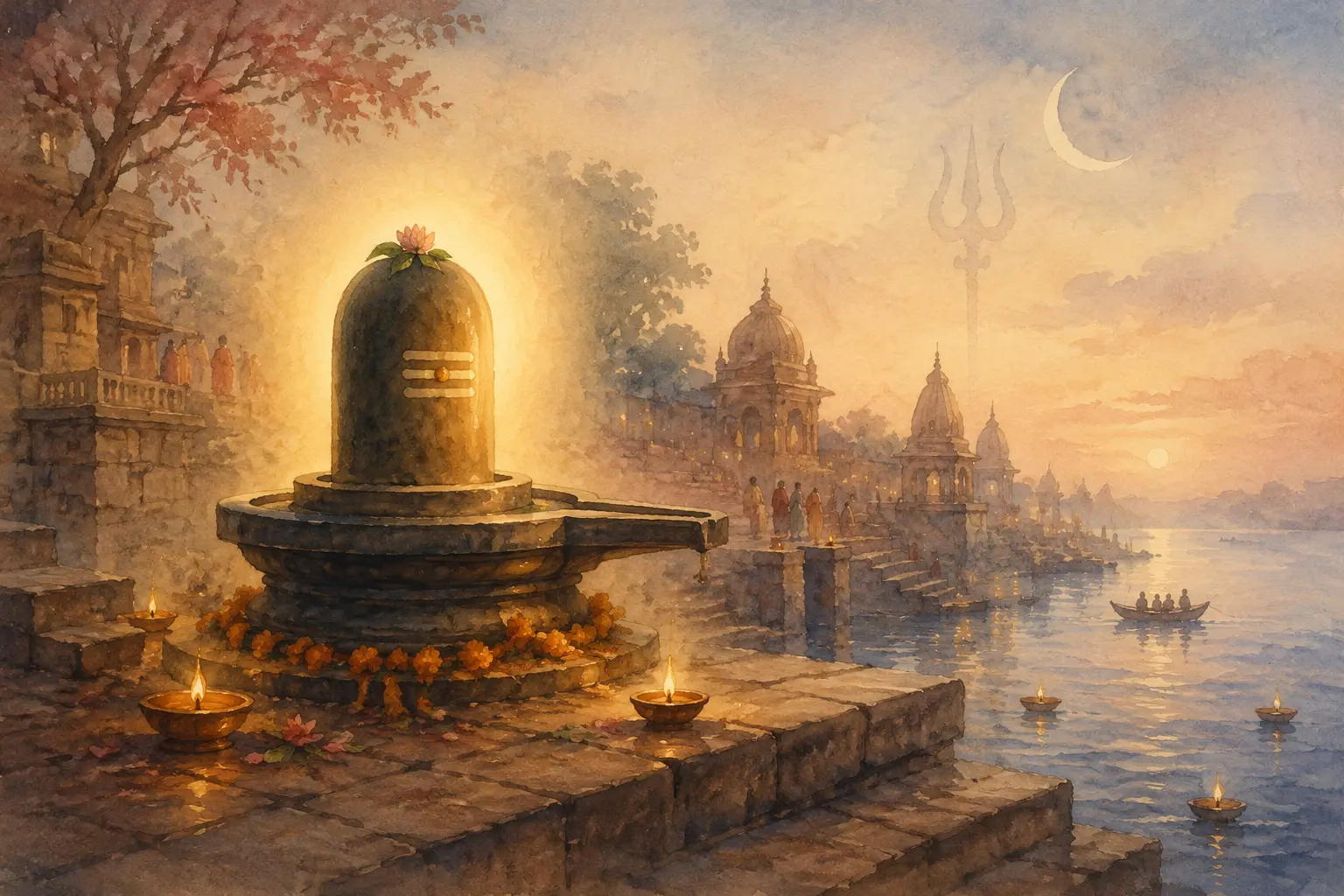
The sacred traditions of Kashi are preserved most richly in the Kashi Khanda of the Skanda Purana and in many generations of oral remembrance. These accounts belong to the devotional and Puranic life of the city; they should not be confused with modern archaeological history.
Kashi is praised as Avimukta Kshetra, the place never forsaken by Shiva. The traditional meaning is tender and powerful: even when the visible world changes, Shiva does not abandon Kashi or the sincere seeker who turns towards Him.
The Kashi Khanda celebrates the sacred creation of Kashi, Manikarnika, the advent of Ganga and the protective presence of Kalabhairava. It presents the city not as a collection of separate monuments, but as a consecrated mandala in which river, linga, shrine, ghat and pilgrimage route participate in one spiritual whole.
Another living tradition remembers Kashi as Anandavana, the forest of spiritual bliss. This is not a promise that pilgrimage removes every worldly difficulty. Rather, it points towards the joy that arises when the mind becomes less burdened by fear, pride and possessiveness.
The Jyotirlinga as the Pillar of Light
The wider Jyotirlinga tradition remembers Shiva manifesting as an immeasurable column of radiance, beyond the capacity of ordinary thought to find its beginning or end. The Varanasi district administration also preserves a local tradition associating Kashi with the primordial fiery pillar of Shiva.
The symbolism is central to the shrine:
- Jyoti means light.
- Linga means the sign or mark of the transcendent.
The Jyotirlinga is therefore worshipped not merely as a sacred form, but as the sign of Shiva’s infinite, formless reality.
The twelve shrines reveal this light through different spiritual emphases. Mahakaleshwar in Ujjain teaches the transcendence of time, while Kashi asks how awareness of time can mature into release.
Kashi, Moksha and the Taraka Tradition
No spiritual idea is more closely associated with Kashi than moksha. Hindu tradition holds that Kashi is a place where the bonds of samsara may be released through the grace of Shiva.
A deeply cherished belief says that Shiva grants the liberating Taraka Mantra to the departing soul in Kashi. Indian Ethos presents this with reverence as a sacred tradition, not as a claim that can be tested through ordinary historical methods.
Kashi’s teaching should not be reduced to an interest in death. Its greater question is how one should live after recognising that life is impermanent.
If the body changes, possessions pass and every generation must eventually depart, what deserves our deepest attention?
Kashi answers through its living traditions: dharma, awareness, compassion, knowledge, devotion and the wise use of time.
Awareness of mortality is not intended to make life gloomy. It can make life more truthful. It invites us to speak more gently, forgive more readily, serve more willingly and hold our blessings with gratitude rather than ownership.
The Ganga and Kashi Vishwanath
The sacred identity of Kashi Vishwanath cannot be separated from Maa Ganga. Pilgrims have traditionally joined Vishwanath darshan with prayer at the river and visits to the ghats.
The symbolism is beautiful:
The river teaches movement without loss of purpose. Shiva teaches stillness without withdrawal from life. Experienced together, they offer a balanced spiritual lesson: participate fully in the world while remaining inwardly anchored.
Kashi also forms part of a cherished north-south pilgrimage memory with Rameswaram and Ramanathaswamy Jyotirlinga, joining the sacred Ganga with the humility and devotion remembered at India’s southern shore.
Those who take a ritual bath should assess river conditions carefully, use designated safe areas, respect local guidance and avoid entering deep or fast-moving water. A prayer offered safely from the ghat is no less sincere.
Spiritual Significance of Kashi Vishwanath Jyotirlinga
Kashi: Illumination
Spiritual life begins when we learn to see clearly. Kashi represents the light of discernment that helps the seeker distinguish the permanent from the temporary and dharma from impulse.
Vishwanath: Universality
Shiva is worshipped as Lord of the Universe. The name gently enlarges devotion beyond narrowness. The Divine cannot be possessed by one person or confined within one social boundary.
Jyotirlinga: Consciousness
The radiant linga points towards awareness that is not destroyed when circumstances change. It invites the pilgrim to turn from outer noise towards the inner witness.
Ganga: Grace and Flow
The river is always moving, yet remains Ganga. Human life also passes through childhood, responsibility, ageing, gain and loss. The spiritual task is not to stop change, but to meet it with wisdom.
Annapurna: Nourishment
Maa Annapurna reminds the pilgrim that spiritual life does not reject embodied existence. Food, care and hospitality become sacred when received with gratitude and shared generously.
Kalabhairava: Time and Accountability
Kalabhairava, traditionally revered as the Kotwal or guardian of Kashi, represents Shiva’s protective and disciplined dimension. Freedom does not mean carelessness; it requires responsibility for our actions.
Moksha: Release
Moksha is the release of bondage. At an everyday level, Kashi asks us to begin by loosening anger, pride, resentment and the need to control what cannot be permanently possessed.
Historical Journey of Kashi Vishwanath Temple
The sacred history of Vishwanath extends far beyond the age of the present building. Over centuries, the shrine experienced destruction, reconstruction and changes in its physical form and location. Devotional continuity survived these upheavals because communities continued to remember, worship and rebuild.
The present Kashi Vishwanath Temple was constructed in 1780 by Maharani Ahilyabai Holkar of Indore. This date and her patronage are recorded by the official temple Trust.
Later patrons contributed to the shrine’s appearance. Maharaja Ranjit Singh of Punjab is remembered for the gold associated with the temple’s celebrated gilded domes and shikharas. These acts of patronage reveal how Kashi has long belonged to a civilizational network extending across India.
The history must be told accurately and with dignity. It includes painful episodes, but the Indian Ethos emphasis is cultural continuity rather than hostility towards present-day communities. The enduring lesson is that sacred memory survives when every generation chooses stewardship over neglect.
Maharani Ahilyabai Holkar: Leadership as Sacred Stewardship
Maharani Ahilyabai Holkar’s reconstruction of the present temple is an inspiring chapter in Indian history. Her wider legacy includes support for sacred places across the country.
Her work illustrates an important Indian understanding of leadership: authority carries responsibility for cultural memory, public welfare and sacred heritage. The temple she built remains a place where millions continue to pray, nearly two and a half centuries later.
For families and educators, her example offers a valuable lesson. Heritage is not preserved by admiration alone. It survives through thoughtful action, patient administration and service whose benefits extend beyond one lifetime.
Shri Kashi Vishwanath Dham
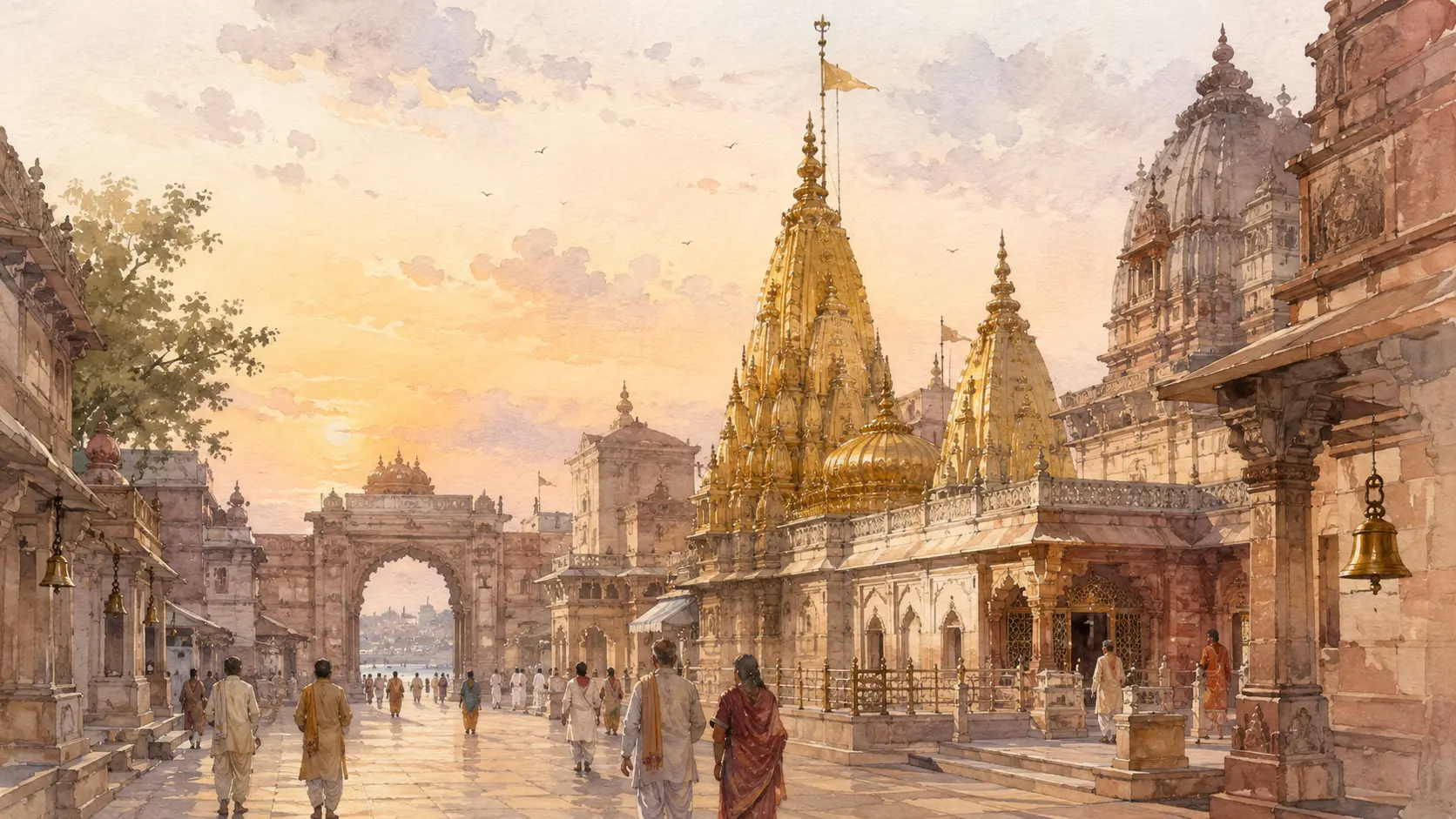
The contemporary pilgrimage landscape changed with the development of Shri Kashi Vishwanath Dham, inaugurated in December 2021. The expanded precinct created a more direct and spacious connection between the temple complex and the Ganga, while providing additional facilities for pilgrims.
The historic golden-spired temple remains the devotional centre. The surrounding infrastructure expresses a continuing question for every living tradition: how can the sacred core be protected while access, safety and public facilities respond to present needs?
Visitors should remember that Kashi remains a living old city. Crowds, security arrangements and pedestrian movement vary greatly by day and season.
Puja Rituals and Daily Aartis at Kashi Vishwanath
The official temple portal lists an elaborate daily cycle of worship. As verified in August 2026, the principal schedule is:
| Worship | Officially listed time |
|---|---|
| Mangala Aarti | 3:00 AM to 4:00 AM |
| Midday Bhog Aarti | 11:15 AM to 12:20 PM |
| Saptarishi Aarti | 7:00 PM to 8:15 PM |
| Shringar or Bhog Aarti | 9:00 PM to 10:15 PM |
| Shayan Aarti | 10:30 PM to 11:00 PM |
The temple portal states that the temple opens at approximately 2:30 AM and closes after Shayan Aarti at about 11:00 PM. General darshan is available in intervals between aartis.
Mangala Aarti
Mangala Aarti is the sacred awakening of Baba Vishwanath before dawn. Attendance requires official booking and adherence to the entry instructions shown on the booking confirmation.
Rudrabhishek
Rudrabhishek is among the important forms of Shiva worship offered through the temple’s authorised arrangements. The Trust lists options performed by trained Shastris. Availability, timings and charges may change, so pilgrims should use only the official portal or temple counters.
Saptarishi Aarti
The evening Saptarishi Aarti is a distinctive temple tradition. The official portal explains that seven priests from different gotras perform the worship together, recalling the seven great rishis.
A Necessary Timing Note
Festival schedules, security procedures and queue arrangements may change, especially during Shravan, Maha Shivaratri and other peak periods. Always confirm the current schedule through the official temple portal shortly before travelling.
Darshan Guidance and Pilgrim Etiquette
- Carry valid identification when required for a booked aarti or service.
- Use only authorised temple channels for darshan, aarti and puja bookings.
- Dress modestly in clean, comfortable clothing suitable for worship and walking.
- Follow current security instructions and deposit restricted belongings only at authorised facilities.
- Do not photograph the sanctum or restricted areas.
- Avoid touts and unauthorised intermediaries.
- Keep children and senior family members close in crowded lanes and queues.
- Carry minimal belongings and wear footwear that is easy to manage.
- Ask before touching shrines or offering ritual materials.
- Maintain silence and avoid obstructing others during darshan.
- Do not push for a longer view of the Jyotirlinga. A brief darshan received with steadiness is spiritually complete.
Shravan, Maha Shivaratri and Dev Deepawali
Shravan: The Most Sacred Shiva Season
Shravan or Sawan is the most significant month for concentrated Shiva worship in Kashi. Shravan Mondays draw very large numbers of devotees for Baba Vishwanath’s darshan and Jalabhishek.
The atmosphere is intensely devotional, but the crowds, waiting times, road restrictions and accommodation demand can be considerable. Pilgrims who value the sacred season should plan patiently; families seeking a quieter visit may prefer another time.
Maha Shivaratri
Maha Shivaratri is among Kashi’s greatest Shiva festivals. The night of vigil, japa, fasting and worship represents awakening from unconscious living.
At Vishwanath, this has a special philosophical resonance. To remain awake is not only to resist sleep for one night, but to awaken the conscience and live with greater awareness.
Dev Deepawali
Dev Deepawali is celebrated on Kartik Purnima, when the ghats of Varanasi glow with innumerable lamps. Although it is a city-wide festival rather than exclusively a Vishwanath observance, it complements the pilgrimage beautifully.
The City of Light illuminated by thousands of individual flames becomes a powerful reminder that collective radiance begins with each person tending one lamp.
Sacred Places Near Kashi Vishwanath
Maa Annapurna Temple
Maa Annapurna is worshipped close to Vishwanath as the Goddess of nourishment. The pairing carries a profound household and spiritual message: wisdom and nourishment belong together. Food becomes sacred when offered, shared and received with gratitude.
Kalabhairava Temple
Kalabhairava is traditionally revered as the Kotwal, or guardian, of Kashi. Many pilgrims include His darshan in their Kashi yatra. The fierce form should be understood as protective discipline, not as a reason for fear.
Dashashwamedh Ghat and Ganga Aarti
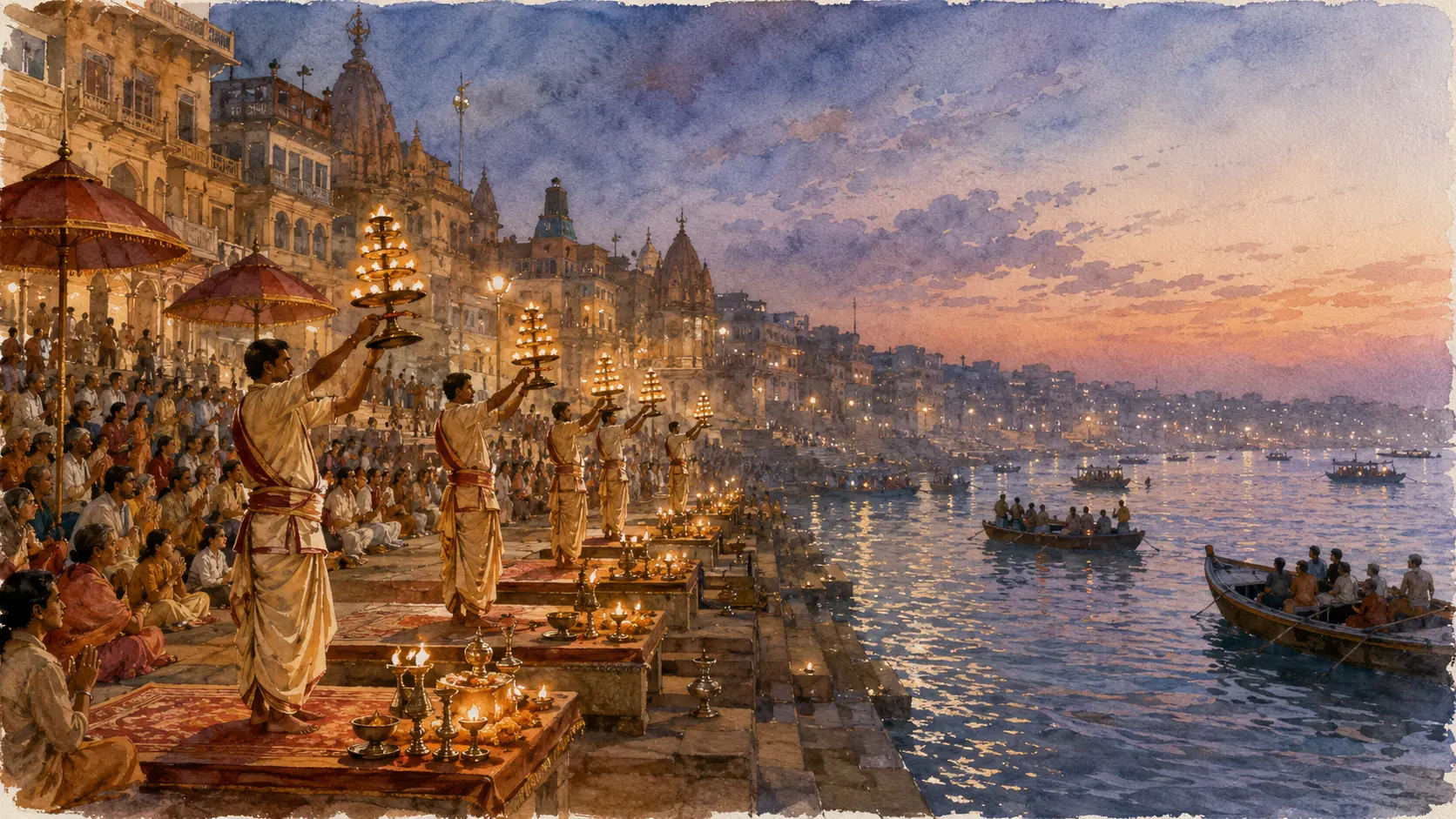
Dashashwamedh Ghat is among Varanasi’s best-known riverfront locations and hosts the celebrated evening Ganga Aarti. Pilgrims should arrive early, follow crowd-control guidance and use only safe, authorised boat services if viewing from the river.
Manikarnika Ghat
Manikarnika is one of Kashi’s ancient cremation ghats and is deeply associated with the city’s moksha traditions. Visitors should behave with complete restraint. This is not a spectacle or a photography site. It is a place where families perform final rites and deserve privacy, compassion and dignity.
Assi Ghat
Assi Ghat is especially evocative in the early morning. The broader Subah-e-Banaras experience often brings together sunrise, devotional music, yoga and the awakening riverfront.
Sankat Mochan Hanuman Temple
The shrine dedicated to Lord Hanuman is among Kashi’s cherished temples. Devotees visit with prayers for courage, devotion and freedom from difficulties.
Durga Kund and Tulsi Manas Temple
Durga Kund and Tulsi Manas Temple add Shakta and Ram-bhakti dimensions to a wider Kashi pilgrimage. They are particularly meaningful for travellers spending two or more days in the city.
Sarnath
Sarnath lies about 10 km from Varanasi. Buddhist tradition remembers it as the place where Bhagavan Buddha delivered His first sermon after enlightenment. The site includes the Dhamek Stupa, monastic remains and the Archaeological Museum.
A visit to Sarnath should be approached as its own sacred and historical experience, not merely as an additional tourist stop.
The Culture of Kashi
Kashi is one of India’s great cultural cities. Its spiritual life has long existed beside Sanskrit learning, philosophical discussion, classical music, poetry, craft and education.
Banaras and Indian Classical Music
The Banaras tradition has nurtured distinguished forms of vocal and instrumental music, tabla and shehnai. In Kashi, art frequently becomes sadhana. Riyaz is discipline, music is offering and beauty becomes another way of approaching the Divine.
Banarasi Silk and Weaving
Banarasi saris are among India’s most celebrated textile traditions. Their weaving, zari work and motifs carry generations of inherited skill. Visitors buying silk should choose reputable sellers, examine labels and bills, and respect the labour of artisan communities.
Languages and Living Heritage
Hindi and Bhojpuri are prominent in contemporary Varanasi, while Sanskrit remains central to the city’s sacred and scholarly memory. The soundscape of Kashi may include mantras, temple bells, classical music, vendors and boatmen, all within a city that is both ancient and fully alive.
Pure Vegetarian Food in Varanasi for Pilgrims
Kashi offers an exceptionally rich vegetarian food tradition. Pilgrims who prefer a strict satvik diet should confirm the use of onion and garlic before ordering and choose clean, well-reviewed establishments.
- Kachori-sabzi: A well-known Banarasi breakfast of crisp kachori with a warming vegetable preparation.
- Chooda-matar: Flattened rice cooked with fresh green peas and mild spices, especially enjoyed in cooler months.
- Tamatar chaat: A distinctive local preparation of cooked tomatoes, spices and crisp accompaniments.
- Baati-chokha: Roasted wheat dumplings served with vegetable preparations and chutney.
- Satvik thali: Dal, rice, roti, seasonal vegetables, curd and simple accompaniments make a balanced pilgrim meal.
- Lassi: Thick yoghurt drink traditionally served in a clay cup.
- Malaiyyo: A delicate seasonal milk preparation available during the cool months.
- Banarasi sweets: Rabri, peda and other milk-based treats may be enjoyed in moderation from hygienic shops.
- Temple prasada: Receive authorised prasada with reverence and avoid unverified sellers claiming temple affiliation.
Kashi’s association with Maa Annapurna gives cuisine a deeper meaning. Food is not merely consumed; it is received as nourishment and shared as grace.
How to Reach Kashi Vishwanath Jyotirlinga
By Air
Lal Bahadur Shastri International Airport at Babatpur serves Varanasi. The district administration places it approximately 22 km from the city. Travel time varies considerably with traffic.
By Train
Varanasi is a major railway centre with connections to cities across India. Important railheads include Varanasi Junction and Banaras station, while Pandit Deen Dayal Upadhyaya Junction also serves the wider region.
By Road
Varanasi is connected by road with Prayagraj, Lucknow, Ayodhya, Bodh Gaya and other northern Indian destinations. Bus, taxi and private-vehicle options are available.
The Final Approach
The last part of the journey generally involves pedestrian movement within the old-city or Dham precinct. Access routes and drop-off points can change with security plans, festivals and crowd levels. Confirm the current gate and route locally before beginning the final approach.
Best Time to Visit Kashi Vishwanath
There are several correct answers, depending on the pilgrim’s purpose:
- For concentrated Shiva devotion: Shravan, especially Shravan Mondays
- For a major Shiva festival: Maha Shivaratri
- For comfortable general travel: Usually October to March
- For the illuminated riverfront: Dev Deepawali around Kartik Purnima
- For quieter darshan: A non-festival weekday outside peak pilgrimage periods
Winter mornings can be cold and foggy. Summers are often very hot, while the monsoon may bring humidity, rain and changing river conditions. Always check weather, local advisories and festival arrangements before travel.
A Thoughtful Two-Day Kashi Pilgrimage
Day One: Vishwanath and Ganga
Begin early with Kashi Vishwanath darshan. Visit Maa Annapurna and spend time within the Dham precinct without rushing. After rest and a simple vegetarian meal, visit Kalabhairava. In the evening, proceed early to Dashashwamedh Ghat for Ganga Aarti, following crowd and safety instructions.
Day Two: Sacred Kashi and Sarnath
Experience the sunrise atmosphere at Assi Ghat. Visit Sankat Mochan Hanuman Temple, Durga Kund and Tulsi Manas Temple according to time and family comfort. Devote the second half of the day to Sarnath and its archaeological and Buddhist heritage.
Three days are preferable for travellers who wish to absorb Kashi rather than complete a checklist.
Guidance for Families and Senior Pilgrims
- Choose accommodation that reduces repeated travel through congested areas.
- Ask the hotel or official helpdesk about the least strenuous current approach.
- Keep medicines, identification and emergency contacts accessible.
- Carry only essential belongings and a small quantity of safe drinking water.
- Plan rest between early-morning darshan and evening Ganga Aarti.
- Avoid combining too many temples and ghats in one day.
- Use railings and avoid slippery ghat steps, especially after rain.
- Do not attempt a ritual bath if mobility, cardiac health, balance or river conditions make it unsafe.
- Keep children beside a responsible adult in crowds.
- Confirm accessibility and wheelchair arrangements directly before travel, since routes can change.
- Seek medical advice before undertaking fasting or strenuous pilgrimage routines if you have a health condition.
Frequently Asked Questions About Kashi Vishwanath
Is Kashi Vishwanath one of the twelve Jyotirlingas?
Yes. Shri Kashi Vishwanath in Varanasi is revered as one of Lord Shiva’s twelve Jyotirlingas. Shiva is worshipped here as Vishwanatha or Vishveshvara, the Lord of the Universe.
What is the spiritual meaning of Kashi Vishwanath?
Kashi represents illumination, Vishwanath represents the universality of the Divine and the Jyotirlinga represents Shiva as infinite light. Together they invite the pilgrim towards awareness, detachment and liberation.
What is the Sthala Purana of Kashi Vishwanath?
The Kashi Khanda of the Skanda Purana praises Kashi as Avimukta, the sacred place never abandoned by Shiva. It celebrates the city’s consecrated relationship with Vishveshvara, Ganga, Manikarnika and Kalabhairava. These are sacred Puranic traditions rather than modern historical claims.
Why is Kashi associated with moksha?
Hindu tradition regards Kashi as a moksha-puri, a sacred city of liberation. A cherished belief holds that Shiva grants the liberating Taraka Mantra to the departing soul. The deeper living lesson is to loosen attachment and live with dharma and awareness.
Who built the present Kashi Vishwanath Temple?
The official temple Trust records that Maharani Ahilyabai Holkar of Indore constructed the present shrine in 1780.
What are the current Kashi Vishwanath Temple timings?
As verified in August 2026, the official portal states that the temple opens at about 2:30 AM and closes at about 11:00 PM, with darshan intervals between the daily aartis. Festival schedules may differ, so confirm shortly before visiting.
What are the principal aartis at Kashi Vishwanath?
The official schedule lists Mangala Aarti, Midday Bhog Aarti, Saptarishi Aarti, Shringar or Bhog Aarti and Shayan Aarti.
Can devotees book Mangala Aarti and Rudrabhishek?
The official temple portal provides booking facilities for Mangala Aarti, Rudrabhishek and other authorised services, subject to availability and temple rules. Avoid unofficial agents.
Which month is most important for Kashi Vishwanath?
Shravan is the most significant month for concentrated Shiva worship, especially on Shravan Mondays. It is also one of the most crowded periods.
What is the best season for a comfortable family visit?
October to March is generally more comfortable than peak summer. Winter mornings may be cold or foggy, and major festivals bring heavy crowds.
Should Kalabhairava and Annapurna be included in the pilgrimage?
Many devotees include both. Kalabhairava is traditionally revered as the guardian of Kashi, while Maa Annapurna represents nourishment and grace beside Vishwanath.
Can Kashi Vishwanath, the ghats and Sarnath be visited in one day?
It is possible to see selected places, but a two-day itinerary is more respectful and practical. Families with seniors or children should avoid an exhausting checklist.
What pure vegetarian dishes can pilgrims try in Varanasi?
Kachori-sabzi, chooda-matar, tamatar chaat, baati-chokha, satvik thali, lassi, seasonal malaiyyo and traditional milk sweets are popular vegetarian choices. Confirm onion and garlic preferences for a strict satvik meal.
Is photography appropriate at Manikarnika Ghat?
No intrusive photography is appropriate. Manikarnika is an active cremation ghat where grieving families perform final rites. Visitors must preserve privacy, silence and human dignity.
Does pilgrimage replace medical or professional care?
No. Prayer and pilgrimage may offer spiritual strength, but they should accompany, not replace, appropriate medical, psychological, legal or practical support.
Carry This Teaching from Kashi
Kashi Vishwanath is not merely a Jyotirlinga to be visited. Kashi is an experience to be absorbed.
Here, Baba Vishwanath abides beside the ever-flowing Ganga. Annapurna represents nourishment. Kalabhairava guards sacred order. The ghats witness the changing journey of human existence, while the Jyotirlinga stands as the sign of consciousness beyond change.
The present temple, rebuilt by Maharani Ahilyabai Holkar in 1780, reminds us that sacred traditions survive because generations choose to protect them. The Dham precinct shows that living heritage can preserve its centre while responding to present needs.
Kashi does not ask us to turn away from life. It asks us to see life clearly.
The river flows. The body changes. Time passes. Possessions move from hand to hand. Generations arrive and depart. Yet the seeker turns towards Vishwanath and asks what remains when everything temporary has passed.
Perhaps that is Kashi’s greatest teaching:
ॐ नमः शिवाय। हर हर महादेव। हर हर गंगे। जय बाबा विश्वनाथ।
Editorial Source Note
This article distinguishes present-day facts, recorded history, sacred Puranic tradition and Indian Ethos reflection. Current worship schedules were checked in August 2026 and may change.
- Shri Kashi Vishwanath Temple Trust: official portal
- Official daily schedule
- Official temple rituals
- Varanasi district: temples of importance
- Varanasi district: history and cultural context
- Varanasi district: how to reach
- Varanasi district: Sarnath excursion
- Government of India: inauguration of Shri Kashi Vishwanath Dham, 13 December 2021
- Kashi Khanda of the Skanda Purana, referenced for sacred traditions of Avimukta Kshetra, Manikarnika, Ganga and Kalabhairava