Indian Ethos · Shakti Peethas and Sacred Temples of India · 9–11 minute read
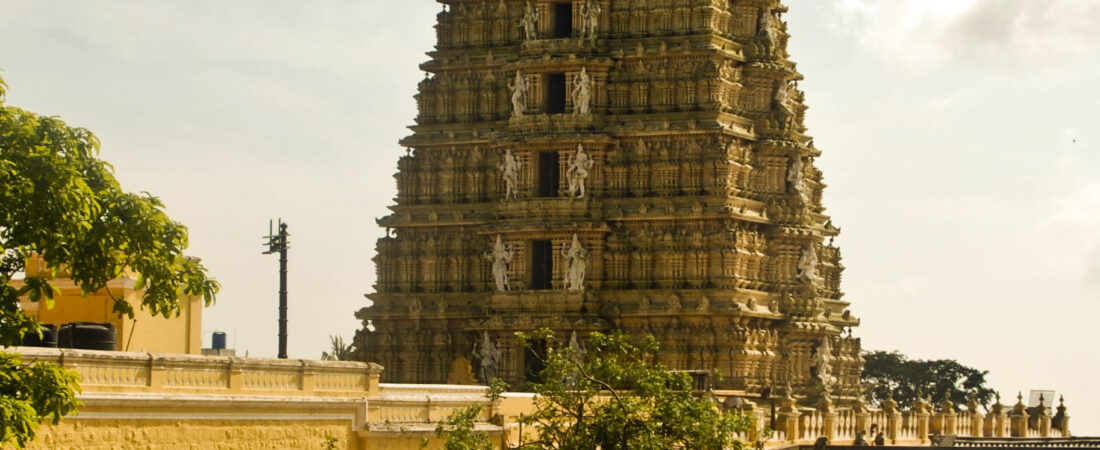
High above the heritage city of Mysuru, Sri Chamundeshwari Devi is worshipped as the protective Mother and the mighty Mahishasura Mardini. Her hilltop shrine brings together devotion, royal history, sacred storytelling and the living traditions of Karnataka. For pilgrims, a visit to Chamundi Hill is both a darshan of the Divine Mother and an opportunity to reflect on courage, humility and the restoration of dharma.
At a glance
- Location: Chamundi Hill, Mysuru, Karnataka, India
- Presiding deity: Sri Chamundeshwari, a form of Goddess Durga
- Known as: Mahishasura Mardini, the slayer of Mahishasura
- Hill elevation: approximately 3,489 feet above sea level
- Distance: about 13 km from Mysuru city, according to district tourism information
- Highlights nearby: the monumental Nandi, Sri Mahabaleshwara Temple and panoramic hill views
1. Chamundi Devi: The Mother who watches over Mysuru
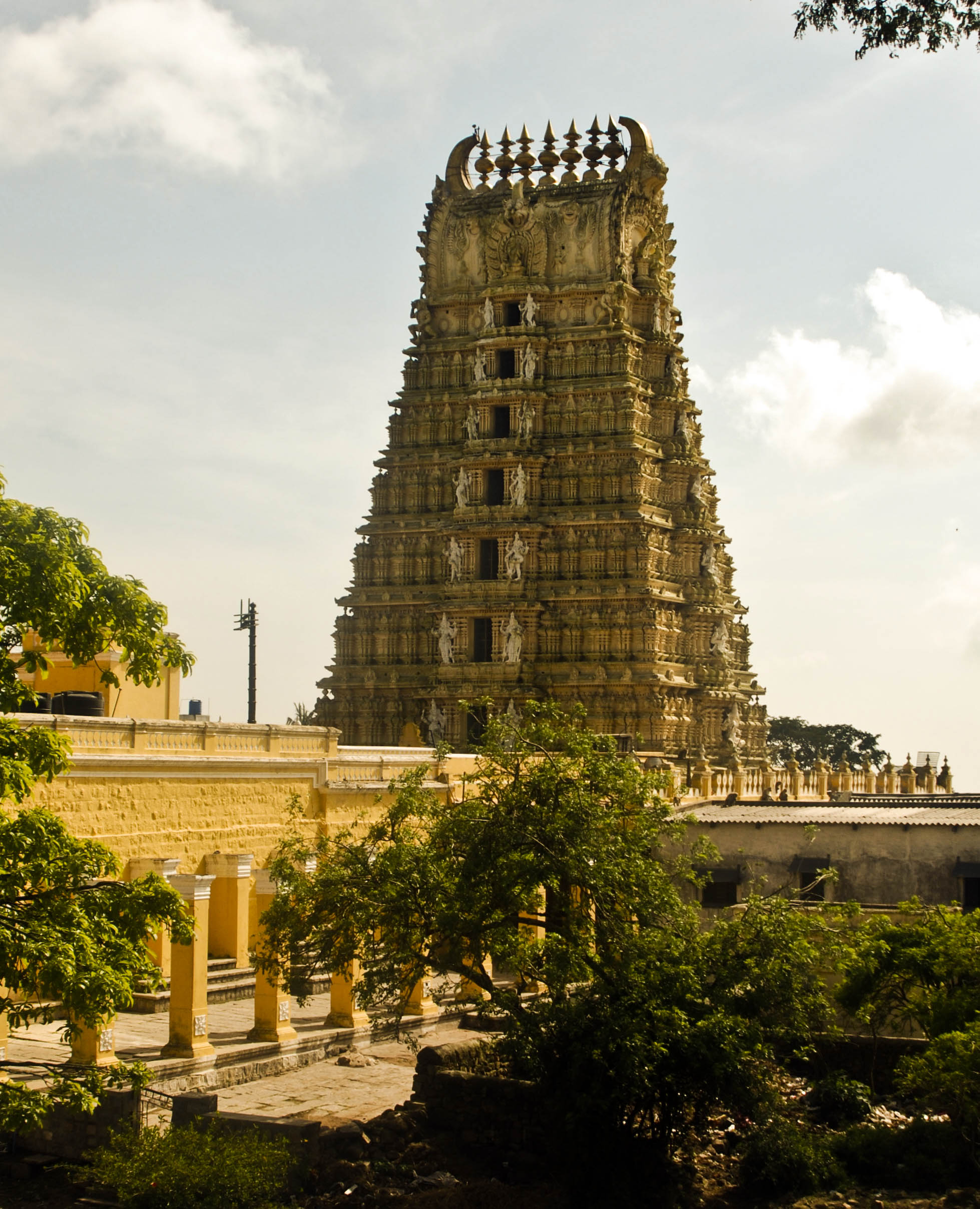
Chamundeshwari is the tutelary deity associated with the former Mysore royal family and the presiding Goddess of Mysuru. The temple crowns Chamundi Hill, a landmark visible across the city. Its gopura, ritual traditions and festival calendar have made it one of Karnataka’s best-known places of Devi worship.
The name Chamundi is linked in the Devi tradition with the fierce power that destroys Chanda and Munda; at Mysuru, the Goddess is especially celebrated as Mahishasura Mardini. Her fierce form does not stand apart from maternal compassion. It expresses the strength that rises to protect life, restore balance and defend dharma when destructive forces become overwhelming.
Is Chamundi Devi one of the eighteen Maha Shakti Peethas? Chamundeshwari is unquestionably a major and widely revered Shakti shrine. However, traditional lists of the eighteen Maha Shakti Peethas differ, and she is not included in every standard enumeration. Indian Ethos therefore honours her sacred importance without presenting one disputed classification as universally accepted.
2. Sthala Puranam: The legend of Mahishasura Mardini
The rise of Mahishasura
According to Hindu sacred narratives, Mahishasura was a powerful asura who could assume the form of a buffalo. Strengthened by a boon, he became arrogant and challenged the devas, threatening the balance of the worlds. When the gods’ individual powers proved insufficient, their divine energies united in the manifestation of Goddess Durga.
The Goddess and the battle
Radiant with divine power and equipped with celestial weapons, Durga rode forth to confront Mahishasura. The battle was fierce: the asura changed forms and relied on brute force, while the Goddess met every challenge with unwavering resolve. At the decisive moment, she vanquished him. The victory came to symbolise the restoration of cosmic order and the triumph of dharma over arrogance and destructive power.
Mysuru’s name and its Dasara traditions are closely associated with this legend. The district’s official tourism account identifies Chamundeshwari as Mahishasura Mardini, the Goddess who defeated the buffalo-headed demon. The story is not only a tale of divine victory; it is also a reminder that power must be guided by wisdom and used to protect what is right.
Why is the Goddess called Chamundeshwari?
Chamunda is celebrated in the wider Durga tradition as a fierce form of the Divine Mother. Chamundeshwari is worshipped as the Goddess who removes fear, protects devotees and confronts forces that threaten righteousness. For many devotees, her presence represents the union of determination and compassion: the Mother can be gentle in guidance and formidable in protection.
3. Spiritual significance: What Chamundi Devi teaches us
The legend of Mahishasura Mardini can be contemplated as an inner pilgrimage as well. The asura becomes a symbol of pride, anger, greed and the illusion that strength gives one the right to dominate others. The Goddess’s victory invites devotees to cultivate discernment, self-mastery and courage.
- Courage: meet difficulty with steadiness instead of surrendering to fear.
- Humility: remember that strength without wisdom can become destructive.
- Self-discipline: recognise and work on the inner habits that disturb peace.
- Compassionate protection: use influence and ability to support those who need help.
- Restoration of dharma: choose what is right even when it demands patience and resolve.
A simple devotional prayer
Devotees may pray according to their family tradition, recite hymns to Durga or read the Devi Mahatmyam. Any prayer offered with sincerity, reverence and a commitment to righteous living can become part of the pilgrimage.
4. The sacred landscape of Chamundi Hill
Sri Mahabaleshwara Temple
Chamundi Hill is a wider sacred landscape, not just a single shrine. The Sri Mahabaleshwara Temple is dedicated to Lord Shiva and is described by the district tourism authority as the oldest temple on the hill. Its presence connects the hill’s Devi worship with the enduring Shaiva traditions of the region.
The monumental Nandi
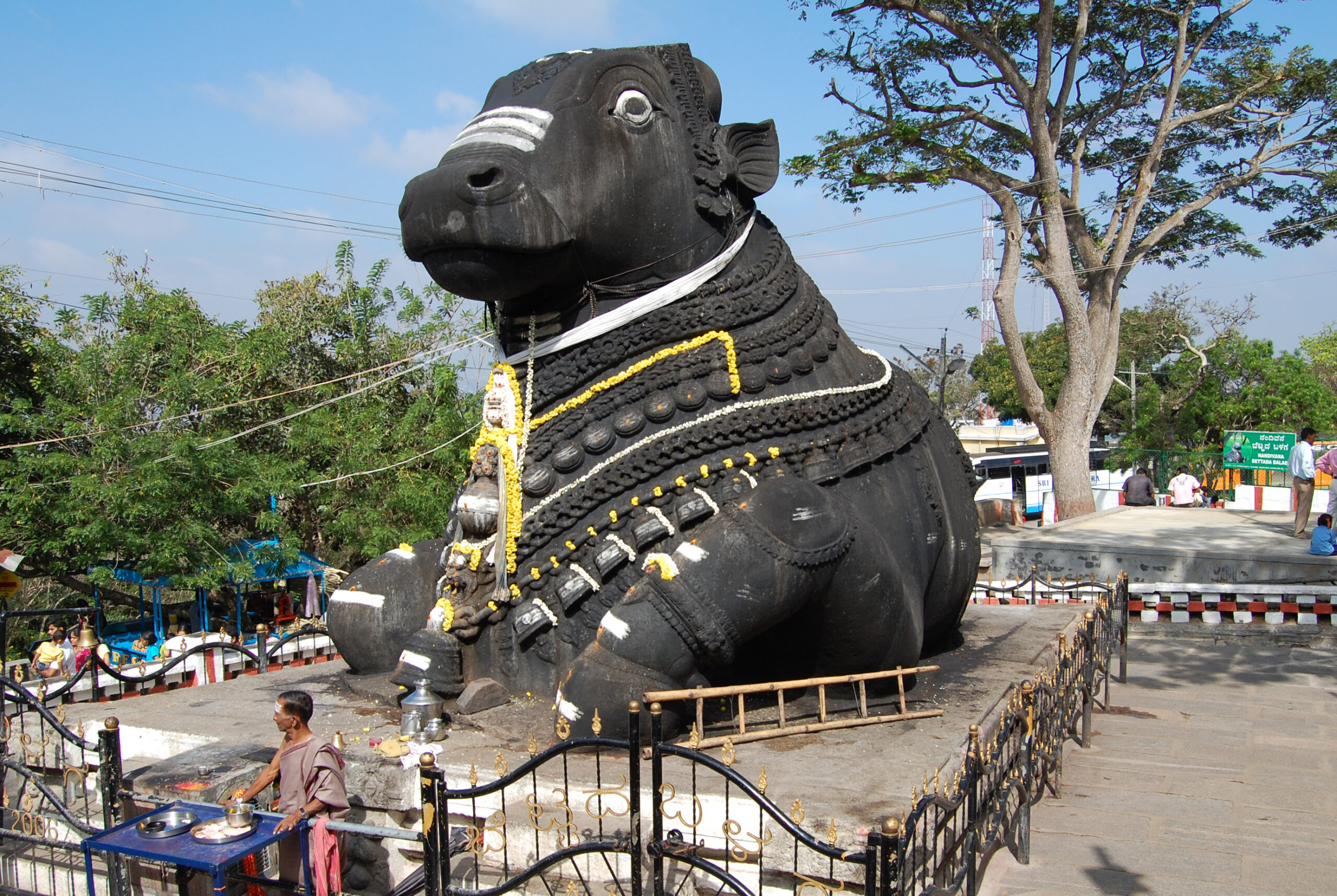
The hill is also known for its striking stone Nandi, the sacred bull associated with Lord Shiva. The Mysuru district tourism account describes the sculpture as approximately 16 feet tall at the front and 25 feet long. Pause here to appreciate the craftsmanship and the quiet symbolism of Nandi as devotion, patience and steadfastness.
5. Mysuru Dasara and the Goddess
Mysuru Dasara is among the city’s defining cultural and religious celebrations. The festival honours the victory of good over evil and has a close association with Chamundeshwari, revered as Mysuru’s guardian deity. Worship, processions, decorated public spaces and cultural programmes bring the city’s royal history and devotional life together.
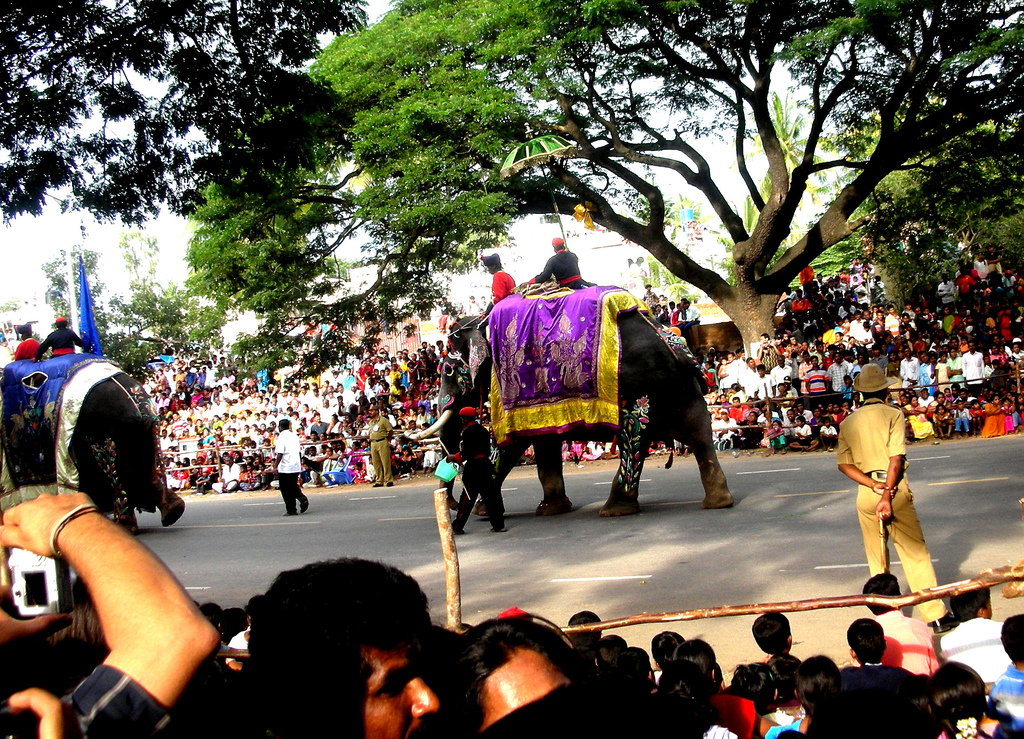
Navaratri and Dasara are especially meaningful times to remember the many dimensions of the Divine Mother: courage, protection, wisdom and compassion. Festival dates, crowd arrangements and temple rituals can change from year to year, so visitors should confirm current details before travelling.
6. Darshan timings and pilgrimage planning
The Sri Chamundeshwari Development Authority publishes daily darshan and puja sessions, but timings can differ across official information pages and may change on festival days. Confirm the latest schedule directly with the temple authority before setting out.
- Temple authority: https://chamundeshwaritemple.in/
- Location: Chamundi Hill, Mysuru, Karnataka
- Traditional stairway: commonly described as having 1,008 steps
- Transport: taxis, auto-rickshaws and city bus services connect Mysuru with the hill; check current routes and frequency locally
- Visitor care: carry water if climbing, wear suitable footwear, allow time for the ascent and descent, and follow local instructions during crowded periods
- Cleanliness: the authority identifies the hill as a no-plastic zone; avoid disposable plastic and take all waste back with you.
How to reach Chamundeshwari Temple
By train
Mysuru Junction is the main railway station serving the city. From there, continue towards Chamundi Hill by taxi, auto-rickshaw or available city bus services.
By air
Check whether flights to Mysuru Airport suit your route. Bengaluru’s Kempegowda International Airport is another option, followed by onward travel to Mysuru by road or rail.
By road or on foot
The temple is accessible by road from Mysuru. Devotees who wish to climb the traditional steps should begin early, check weather conditions and take breaks as needed. The climb may not be suitable for everyone; choosing road transport is also a valid way to make the pilgrimage.
7. Places to visit around Chamundi Hill
- Nandi statue: a memorable stop on the hill, associated with Lord Shiva and admired for its scale and stone craftsmanship.
- Sri Mahabaleshwara Temple: an important Shaiva shrine within the sacred hill landscape.
- Mysuru Palace: explore the city’s royal heritage and the cultural setting in which Chamundeshwari has long been revered.
- Mysuru city viewpoints: on a clear day, the hill offers broad views over the city; follow local safety guidance and respect restricted areas.
- Srirangapatna: consider this as a separate excursion for visitors interested in the region’s temple traditions and history.
8. Vegetarian food to enjoy in Mysuru
A visit to Mysuru offers a wonderful introduction to Karnataka’s vegetarian food traditions. From a leisurely tiffin to a traditional meal and a sweet prepared with ghee, the city has plenty to enjoy after darshan.
Mysore masala dosa
A crisp dosa filled with spiced potato palya and served with chutney and sambar is a classic choice. Recipes vary between establishments, so ask about ingredients if you follow specific dietary practices.
Traditional Karnataka meals
Look for rice, sambar, rasam, vegetable palya, kosambari, curd and seasonal preparations. A traditional meal offers a satisfying way to explore the region’s everyday vegetarian cooking.
Mysore pak
This celebrated Mysuru sweet is traditionally made with gram flour, ghee and sugar. It is also a popular edible souvenir; check the ingredient list if you have specific dietary requirements.
Vegetarian dining in Mysuru
The city has vegetarian restaurants and South Indian tiffin options. Your draft shortlist includes Hari Govinda’s around Vani Vilas Road/Siddappa Square, Pankhii Veg Restaurant near RTO Circle on Vani Vilas Road, and Aatithya Grand Pure Veg Restaurant on Deshika Road. Restaurant locations, menus and opening hours can change, so confirm directly before visiting.
For devotees who prefer strictly vegetarian food, ask about ingredients and preparation practices at the restaurant. If you avoid onion and garlic or shared cooking equipment, state those requirements clearly. The temple authority also lists daily Dasoha meal sessions for devotees; confirm current timings and arrangements before relying on this service.
9. Frequently asked questions
Is Chamundi Devi a Shakti Peetha?
Chamundeshwari Temple is a major and widely revered Shakti shrine. Her inclusion among the traditional eighteen Maha Shakti Peethas varies by list and tradition, so it is best to acknowledge that distinction.
What is Chamundeshwari Devi famous for?
She is worshipped as Mahishasura Mardini, the Goddess who defeated Mahishasura, and is closely associated with Mysuru’s royal and cultural traditions.
How many steps lead to Chamundi Hill Temple?
The traditional stairway is commonly described as having 1,008 steps. Visitors should consider weather, fitness and local conditions before climbing.
What are the temple darshan timings?
Darshan and puja sessions are published by the temple authority and may vary. Check the official website before travelling: https://chamundeshwaritemple.in/.
What vegetarian food should visitors try in Mysuru?
Mysore masala dosa, traditional Karnataka meals and Mysore pak are good starting points. Confirm ingredients and preparation practices directly with the restaurant.
What is the spiritual message of Chamundi Devi?
Her story encourages courage, self-mastery, humility and the protection of dharma. The defeat of Mahishasura can also be understood as a call to overcome destructive tendencies within ourselves.
10. Further reading on Indian Ethos
Continue exploring the Shakti tradition with our articles on the eighteen Maha Shakti Peethas, Sri Kamakshi Devi of Kanchipuram and Sri Shankari Devi.
Sources and image credits
Temple background, elevation, distance and Nandi details: Mysuru district tourism, Government of Karnataka, https://mysore.nic.in/en/tourist-place/chamunid-hill/. Darshan, puja and visitor guidance: Sri Chamundeshwari Development Authority, https://chamundeshwaritemple.in/.
Temple photograph: Rithwik, public-domain dedication, https://commons.wikimedia.org/wiki/File:Chamundeshwari_Temple_Mysore.jpg. Nandi photograph: Sanjay Acharya, CC BY-SA 3.0, https://commons.wikimedia.org/wiki/File:Nandi_Chamundi_Mysore.jpg. Dasara procession photograph: Kalyan Kumar, CC BY-SA 2.0, https://commons.wikimedia.org/wiki/File:Mysore_Dasara_procession.jpg. Image licences and attribution details were checked against the individual Wikimedia Commons file pages.
The Mother’s strength and grace
Chamundi Devi stands in Mysuru’s spiritual imagination as the Mother who protects, guides and restores balance. Her story reminds us that strength is most meaningful when it serves righteousness, that courage must be guided by wisdom, and that true victory begins with the mastery of our own inner weaknesses.
For the devotee who climbs Chamundi Hill—or approaches it with a prayer in the heart—the pilgrimage offers a moment to pause, give thanks and seek the Mother’s blessings for a life lived with courage, compassion and integrity.
Indian Ethos