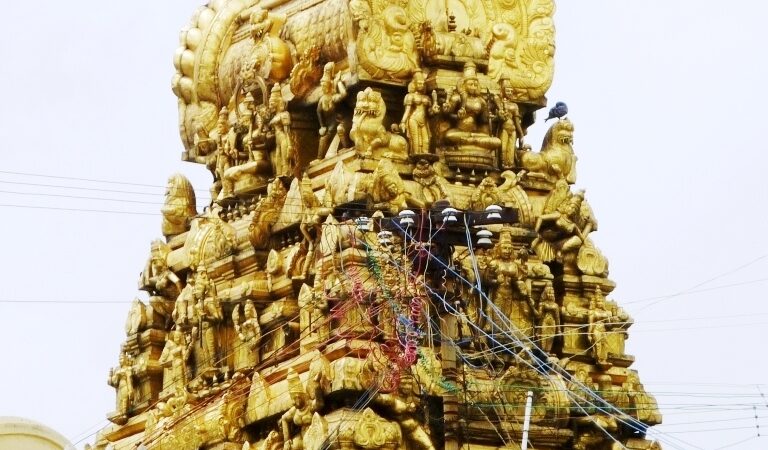
Indian Ethos · Temples of India · Shakti Peethas
Kanchipuram, Tamil Nadu, is a city where temple bells, silk looms and centuries of devotion belong to the same living heritage. At its spiritual heart stands Sri Kamakshi Amman Temple, where the Divine Mother is worshipped as Kamakshi, the compassionate form of Parashakti whose gaze is understood to unite wisdom, auspiciousness and grace.

Sri Kamakshi Amman Temple: the sacred heart of Kanchipuram
The Kamakshi Amman Temple is one of the best-known centres of Shakta worship in Tamil Nadu. The Goddess is revered as a form of Parvati and as the sovereign presence of divine energy. Her principal image is traditionally described in a seated posture, inviting devotees to contemplate inner steadiness alongside the power and compassion of the Mother.
The name Kamakshi is often explained devotionally through Ka, associated with Saraswati; Ma, associated with Lakshmi; and akshi, meaning “eye”. The interpretation evokes the Goddess whose gaze embraces learning, prosperity and benevolence. It is a traditional spiritual explanation rather than a claim that the name has only one linguistic derivation.
Kanchipuram’s sacred geography is unusually rich. Kamakshi’s shrine stands within a city shaped by Shaiva, Vaishnava and Shakta traditions, and a visit becomes more meaningful when approached not as a checklist of monuments but as an encounter with a living temple culture.
Sthala Puranam: the story of Kamakshi and the sacred traditions of Kanchi
Parvati’s penance and the power of devotion
A cherished tradition of Kanchipuram tells of Goddess Parvati undertaking intense penance to unite with Lord Shiva. In the best-known local account, she fashioned a Shiva Lingam from sand beneath a mango tree and worshipped it with unwavering concentration. When the waters threatened to disturb the Lingam, Parvati embraced it protectively. Moved by her devotion, Shiva accepted her penance and reunited with her.
This story is especially associated with Ekambareswarar Temple and the city’s sacred mango tree tradition. It forms part of Kanchi’s wider spiritual memory: devotion is not passive longing, but a disciplined expression of love, courage and unwavering attention.
Kamakshi and the Shakti Peetha tradition
The Shakti Peethas are linked in Hindu sacred tradition to the story of Goddess Sati. After Sati gave up her body at Daksha’s sacrifice, Shiva carried her in grief. Vishnu’s Sudarshana Chakra is said to have divided the body so that cosmic balance could be restored; places associated with the falling of body parts or ornaments became centres of Shakti worship.
The Ashtadasha Shakti Peetha Stotram names Kamakshi at Kanchikapura, traditionally identified with Kanchipuram. Different regional lists and later accounts vary in their details, including body-part associations. This guide honours the living tradition without presenting every variant as universally agreed history.
Sri Vidya and the Sri Chakra
Kamakshi is deeply revered in Sri Vidya traditions, in which the Sri Chakra is a sacred geometric representation of the relationship between Shiva and Shakti and the unfolding of the cosmos. A prominent religious tradition connects Adi Shankaracharya with Sri Chakra worship at the shrine. Such attributions are important to the temple’s devotional heritage; individual historical details should be distinguished from the tradition itself.
The sacred verse: Kamakshi in the eighteen-Peetha hymn
लङ्कायां शाङ्करी देवी कामाक्षी काञ्चिकापुरे ।
प्रद्युम्ने शृङ्खला देवी चामुण्डी क्रौञ्चपट्टणे ॥Ashtadasha Shakti Peetha Stotram · opening verse
Transliteration: Laṅkāyāṃ Śāṅkarī Devī, Kāmākṣī Kāñcikāpure; Pradyumne Śṛṅkhalā Devī, Cāmuṇḍī Krauñcapaṭṭaṇe.
Meaning: Shankari Devi is revered in Lanka, Kamakshi in Kanchipuram, Shrinkhala Devi in Pradyumna, and Chamundi at Kraunchapattana.
Sanskrit manuscripts and printed editions may differ in spelling and sandhi. For recitation, follow a trusted text or the version taught in your family or temple tradition.
Spiritual significance: what Kamakshi represents
Wisdom and clear seeing
The Goddess’s name and iconography invite reflection on clear perception. Devotees may pray for discernment in decisions, the patience to listen carefully and the wisdom to act with kindness. Her grace is not a substitute for effort; it can be a source of courage and steadiness while we do the work before us.
Prosperity rooted in responsibility
Kamakshi is approached with prayers for auspiciousness and family well-being. A deeper devotional reading asks that prosperity be accompanied by generosity, restraint and care for those around us. The blessings of the Mother are remembered not only in what a household receives, but also in how it shares.
Stillness amid the movement of life
The seated form of the Goddess suggests a mind that is centred even while life is full of responsibilities. The traditional sugarcane bow and flower arrows are interpreted in some devotional explanations as symbols of desire and the subtle movements of the mind. They encourage self-awareness rather than impulsive reaction.
One sacred city, many paths
Visiting Kamakshi alongside Ekambareswarar, Varadharaja Perumal and Kailasanathar helps pilgrims appreciate the ways Shakta, Shaiva and Vaishnava traditions coexist in Kanchipuram. The city’s religious life is a reminder that India’s sacred heritage is both diverse and deeply interconnected.
Temple worship, festivals and pilgrim etiquette
Daily worship at Kamakshi Amman Temple follows temple-specific schedules that may change during festivals and special observances. Check the temple’s current announcements before travelling rather than relying on timings copied from old travel pages.
- Navaratri: Nine nights of devotion to the Divine Mother, with special worship and decorations according to temple practice.
- Vijayadashami: The culmination of Navaratri, associated with the victory of dharma and the power of knowledge.
- Thai and Panguni observances: Seasonal Tamil temple festivals and processions may draw large gatherings; verify the current annual programme.
- Daily puja: Devotees may offer prayers and participate in the rituals open to visitors, following instructions from temple staff.
Dress modestly, remove footwear where instructed, keep queues moving, and ask before photographing people or ritual activity. Temple access rules can vary by area and occasion. Avoid assuming that every part of the complex is open to every visitor.
Travel guide: planning a pilgrimage to Kanchipuram
- Location: Kanchipuram, Tamil Nadu, India.
- By air: Chennai International Airport is the principal major airport for many visitors. Continue by road or a suitable rail connection.
- By train: Kanchipuram has a railway station; confirm current services and connections from Chennai and other cities.
- By road: Kanchipuram is connected to Chennai and nearby towns by road. Journey time varies with traffic, route and departure point.
- Best season: October to March is often more comfortable for sightseeing than the hottest months. Festival periods are spiritually vibrant but can be crowded.
- How long to stay: One full day can cover Kamakshi and a few nearby temples; two days allow a more relaxed visit to the temple city and its heritage.
Before departure, verify opening and puja times, festival crowd arrangements, transport schedules and any restrictions on entry. Carry water, sun protection and comfortable footwear for walking between sites.
Nearby temples and attractions in Kanchipuram
Ekambareswarar Temple
A major Shiva temple associated with the mango-tree tradition and Parvati’s penance. It is a natural companion visit for understanding Kanchipuram’s sacred stories.
Varadharaja Perumal Temple
An important Vaishnava pilgrimage centre dedicated to Lord Vishnu. Its large complex and sculptural heritage reveal another strand of the city’s religious life.
Kailasanathar Temple
Known for its early structural Dravidian architecture and sculptural details, this temple is especially rewarding for visitors interested in the history of South Indian temple design.
Ulagalanda Perumal Temple
A prominent Vishnu temple associated with the Vamana-Trivikrama tradition. Check local opening hours and any ritual breaks before planning the route.
Kanchipuram silk weaving
The city is celebrated for its silk sarees and weaving heritage. Buy thoughtfully, ask about silk composition and zari, and request a bill and product details from the seller.
Plan temple visits around actual opening windows rather than attempting every site in a single rushed circuit. Distances, traffic and ritual schedules can make a shorter itinerary more rewarding.
Strictly vegetarian cuisine: what to eat in Kanchipuram
Kanchipuram’s food traditions are closely tied to Tamil home cooking and temple-town hospitality. The dishes below are vegetarian suggestions, not a claim that every restaurant prepares them in a dedicated vegetarian kitchen. If you avoid onion, garlic, particular oils or shared cooking surfaces, confirm these details before ordering.
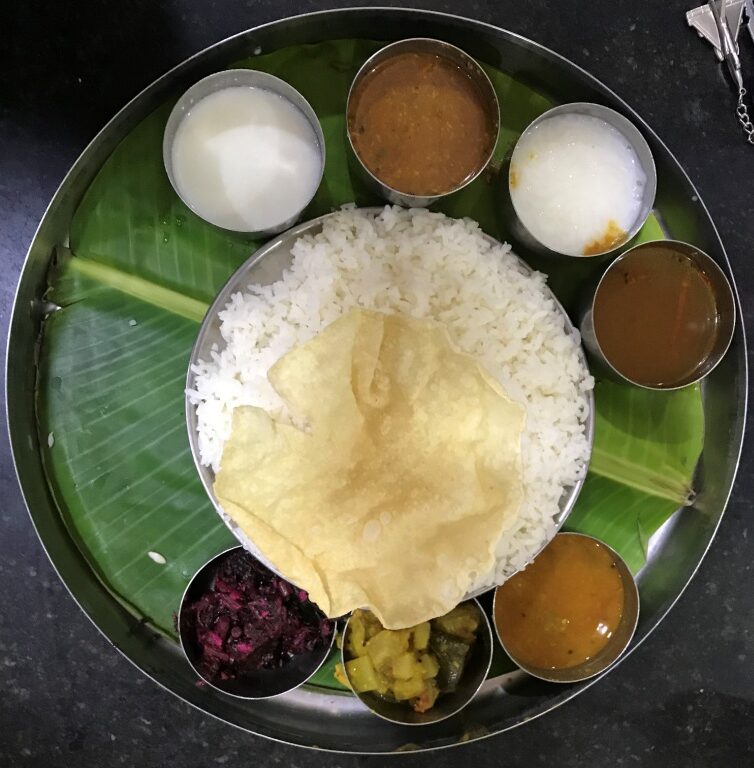
Kanchipuram idli
A distinctive steamed rice-and-lentil preparation traditionally seasoned with pepper, cumin, ginger and other spices. Ask whether the version served is the temple-style preparation or a restaurant variation.
Ven pongal
A comforting dish of rice and moong dal, commonly tempered with pepper, cumin, curry leaves and ghee. Confirm whether the kitchen uses ghee and whether the dish is prepared to your dietary requirements.
Sambar, rasam and vegetable poriyal
These everyday South Indian dishes offer a satisfying meal with rice or tiffin. Sambar recipes differ; check for the ingredients and seasoning you wish to avoid.
Idli, dosa and chutneys
Steamed idli and dosa with coconut chutney are familiar choices. Ask whether the dosa batter and chutneys are freshly prepared and whether the cooking surface is shared with non-vegetarian food.
Temple-town sweets and filter coffee
Traditional sweets, payasam and South Indian filter coffee are popular accompaniments. For strict vegetarian practice, check the ingredients of sweets and the use of ghee or other fats.
Finding a suitable restaurant
Look for clearly labelled vegetarian or pure-vegetarian establishments near the temple and main roads, then check recent reviews and current opening hours. Because restaurant listings and kitchen practices change, this article does not certify an individual business as exclusively vegetarian without current verification. Ask the staff directly and explain your requirements clearly.
Frequently asked questions
Is Kamakshi Amman Temple considered a Shakti Peetha?
Kamakshi at Kanchikapura is named in the traditional Ashtadasha Shakti Peetha Stotram. The lists and details of Shakti Peethas vary across traditions, so specific claims should be read in context.
What is the significance of Kamakshi Devi?
She is revered as a form of Parvati and the Divine Mother, associated devotionally with wisdom, auspiciousness, compassion and spiritual strength.
What else can I visit in Kanchipuram?
Ekambareswarar, Varadharaja Perumal, Kailasanathar and Ulagalanda Perumal temples are among the city’s best-known sacred and heritage sites.
What vegetarian food should I try?
Kanchipuram idli, ven pongal, dosa, idli, sambar, rasam, vegetable poriyal and regional sweets are good starting points. Confirm ingredients and preparation with the restaurant.
When should I visit?
October to March is often more comfortable for sightseeing. If travelling for a festival, verify dates and expect larger crowds.
Sources and further reading
- Kancheepuram District official tourism information.
- Incredible India for destination and heritage context.
- Ashtadasha Shakti Peetha Stotram, for the traditional hymn.
Maa Kamakshi’s seated form reminds us that strength and gentleness can dwell together. May a visit to Kanchipuram inspire clear thought, compassion at home, generosity towards others and a steady heart amid life’s many duties.
May Maa Kamakshi Devi bless every home with wisdom, peace, prosperity and spiritual fulfilment. Jai Maa Kamakshi!