Shakti Peethas Series · Indian Ethos
In the sacred geography of the Divine Mother, Lanka is remembered as the abode of Shankari Devi in the traditional hymn celebrating the eighteen Maha Shakti Peethas. The name evokes the eternal presence of Shakti and her inseparable relationship with Lord Shiva.
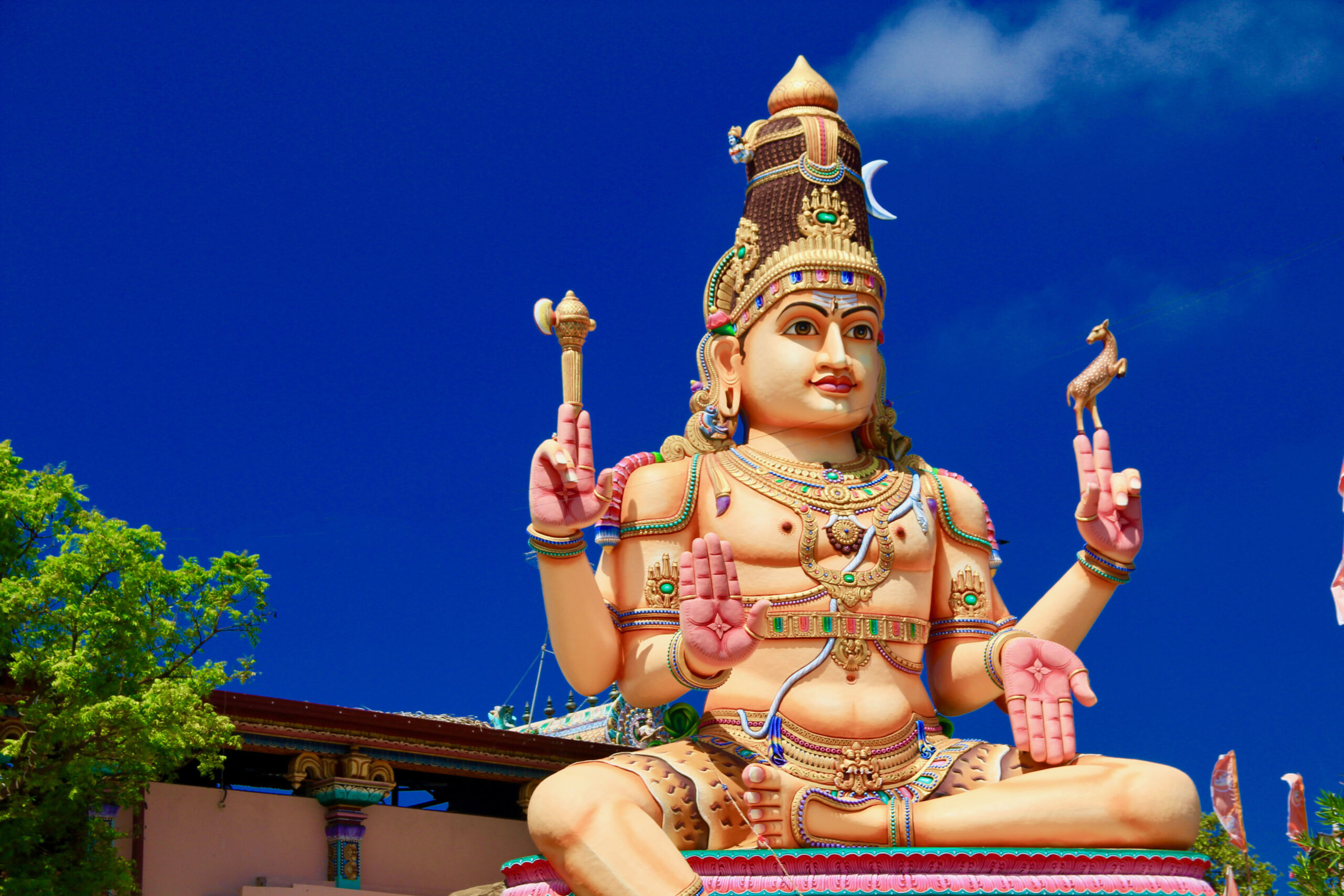
The pilgrimage tradition is commonly associated with Trincomalee, on Sri Lanka’s eastern coast, where the historic Koneswaram Temple stands on Swami Rock overlooking the Indian Ocean. It is important, however, to distinguish the traditional Shakti Peetha association from the historical identity of the surviving temple: Koneswaram is an established Shiva shrine, while the precise history of a separate ancient Shankari shrine is not fully established by surviving evidence.
Where is Shankari Devi Shakti Peetha?
The traditional Lanka Shakti Peetha is associated with Sri Lanka. Sri Lanka Tourism describes Koneswaram as a major Hindu pilgrimage destination and connects the site with the Shankari Peetha tradition. For a careful reading, keep these three points in view:
- Scriptural tradition: The Ashtadasha Shakti Peetha Stotram names Shankari Devi in Lanka.
- Established temple: Koneswaram, also known as Thirukoneswaram, is a historic Shiva temple and one of Sri Lanka’s Pancha Ishwarams.
- Historical distinction: The identification of Koneswaram with the Lanka Shakti Peetha is a living religious tradition. The evidence does not settle every detail about a separate ancient shrine dedicated to Shankari Devi.
This distinction honours the devotional tradition while avoiding claims that the available historical record cannot firmly establish.
Sthala Puranam and the legend of the Shakti Peethas
According to Hindu sacred tradition, Goddess Sati gave up her body after the humiliation she experienced at Daksha’s sacrificial ceremony. Grief-stricken, Lord Shiva carried her body, and the universe was overwhelmed by his sorrow. In the traditional account, Lord Vishnu used the Sudarshana Chakra to divide Sati’s body so that cosmic order could be restored. The places associated with the falling of her body parts or ornaments came to be revered as Shakti Peethas.
Each Peetha is cherished as a place where devotees remember the presence of the Divine Mother. Regional traditions differ in their lists of Peethas and in the body part or ornament associated with each place. For Lanka, the clearest point in the eighteen-Peetha hymn is the name Shankari Devi; a specific body-part claim should not be presented as universally agreed.
The sacred verse
लङ्कायां शाङ्करी देवी कामाक्षी काञ्चिकापुरे ।
प्रद्युम्ने शृङ्खलादेवी चामुण्डी क्रौञ्चपट्टणे ॥Ashtadasha Shakti Peetha Stotram, verse 1
Meaning: Goddess Shankari resides in Lanka; Goddess Kamakshi is in Kanchipuram. Goddess Shrinkhala resides in Pradyumna, and Chamundi at Kraunchapattana.
Traditional Sanskrit hymns may appear in slightly different textual versions. Consult a reputable Sanskrit text when quoting the verse for worship or scholarly use.
The spiritual significance of Shankari Devi
Shankari Devi is revered as the Divine Mother, the sustaining power of creation and the compassionate presence of Shakti. Remembering her can inspire courage, discernment, humility and compassion, while the Shaiva heritage of Trincomalee reminds devotees of the inseparable relationship between Shiva and Shakti.
The ocean-facing setting adds its own quiet symbolism: the vast sea can become a reminder of the boundless nature of the Divine. These are devotional reflections, not promises of specific worldly outcomes.
Koneswaram Temple: historical background
Koneswaram occupies a dramatic promontory above the sea and has long been an important centre of Hindu worship in Sri Lanka. The temple complex was destroyed during Portuguese colonial expansion in the early seventeenth century. Fort Frederick was later established on the promontory, and Hindu worship at Koneswaram was subsequently restored.
Traditional accounts often describe the site as extremely ancient. Exact prehistoric dates and claims that every element of the present complex belongs to antiquity require stronger archaeological support, so this guide does not treat them as established dates. See the official Sri Lanka tourism information and the Central Cultural Fund for further context.

Travel guide: visiting Trincomalee
Trincomalee is in Sri Lanka’s Eastern Province. Plan transport around your arrival airport, the current rail timetable and the time you wish to spend at the temple and nearby sights.
- From Colombo: The road journey is several hundred kilometres; the exact distance and travel time depend on the route and traffic. Check a current route planner before departure.
- By air: Many international visitors arrive at Bandaranaike International Airport and continue overland. Confirm any domestic flight connections directly with the operator.
- By train: Check Sri Lanka Railways for current services and schedules to Trincomalee.
- Nearby places: Fort Frederick, Swami Rock, Nilaveli Beach and Kanniya hot springs may be included if time allows.
Allow about two days in the region for darshan and relaxed sightseeing, in addition to the journey to and from Trincomalee. Confirm temple opening hours, festival arrangements, local transport and travel advisories shortly before you go. Dress modestly and follow the temple’s photography and worship guidelines.
Strictly vegetarian food guide
Trincomalee offers South Indian-style tiffin and Sri Lankan rice-and-vegetable dishes. This guide recommends vegetarian food only. If you follow a strict vegetarian practice, ask the restaurant to confirm ingredients, cooking fats, stocks, seasoning and preparation surfaces before ordering.
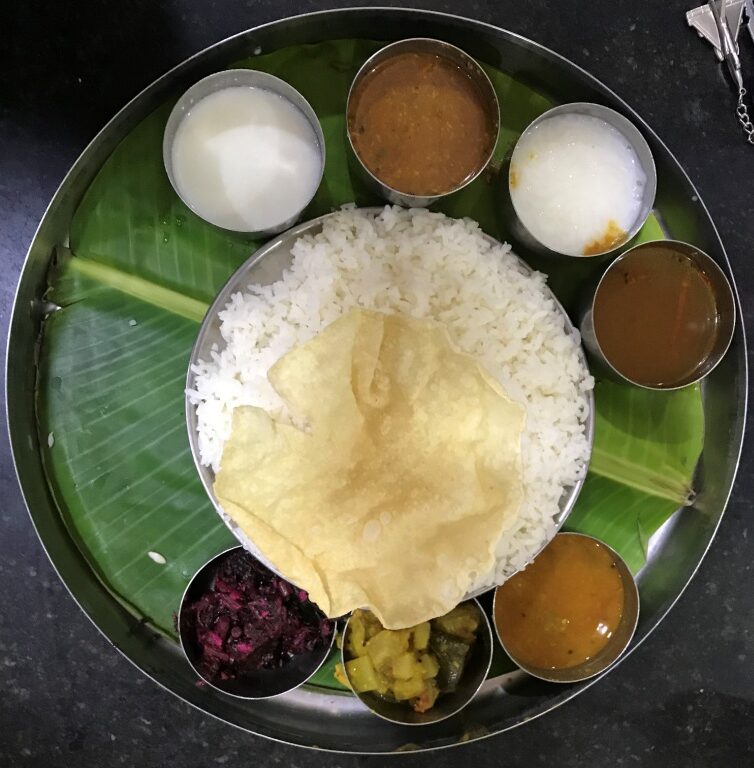
Idli, dosa and South Indian tiffin
Rice-based breakfasts with coconut chutney and vegetarian sambar are familiar options. Ask whether the chutney and sambar are prepared without ingredients you avoid, and whether the cooking surface is shared.
Sri Lankan rice, dhal and vegetable curry
Rice served with dhal, greens and vegetable curries can offer a flavourful local meal. Explain clearly that you require vegetarian preparation, and check for fish-based seasoning, dried fish, meat stock or other non-vegetarian ingredients.
String hoppers and vegetable accompaniments
String hoppers are steamed rice-flour noodles often served with curry or dhal. Choose vegetable-based accompaniments and confirm their ingredients with the kitchen.
Vegetarian dining leads in Trincomalee
Earlier business listings identified the following possible options. Their current operating status, addresses, telephone numbers and kitchen practices have not been independently reconfirmed for this publication, so please treat them as leads and verify before travelling:
- Vegan Cafeteria: previously listed at 65 Main Street, Trincomalee; listed phone +94 76 276 3313.
- Sri Purani Vegetarian Restaurant: previously listed at 184 Main Street, near Sea View Road, Trincomalee; listed phone +94 76 380 2858.
- Lakshmi Cafe: previously listed at 792 North Coast Road, Trincomalee; listed phone +94 77 656 9649.
These are unverified directory leads, not endorsements or guarantees of an exclusively vegetarian kitchen. Confirm the current menu and preparation practices directly.
Sources and image credits
- Sri Lanka Tourism for destination and pilgrimage context.
- Central Cultural Fund of Sri Lanka for cultural heritage information.
- Sanskrit Documents for access to Sanskrit texts; compare versions where necessary.
- Koneswaram temple photograph: Dr. S. Rajivraja, Wikimedia Commons, CC BY-SA 4.0. Source: Wikimedia file page.
- Vegetarian thali photograph: Marajozkee, Wikimedia Commons, CC BY-SA 4.0. Source: Wikimedia file page.
May the blessings of Shankari Devi bring peace, wisdom and devotion to all who remember the Divine Mother.