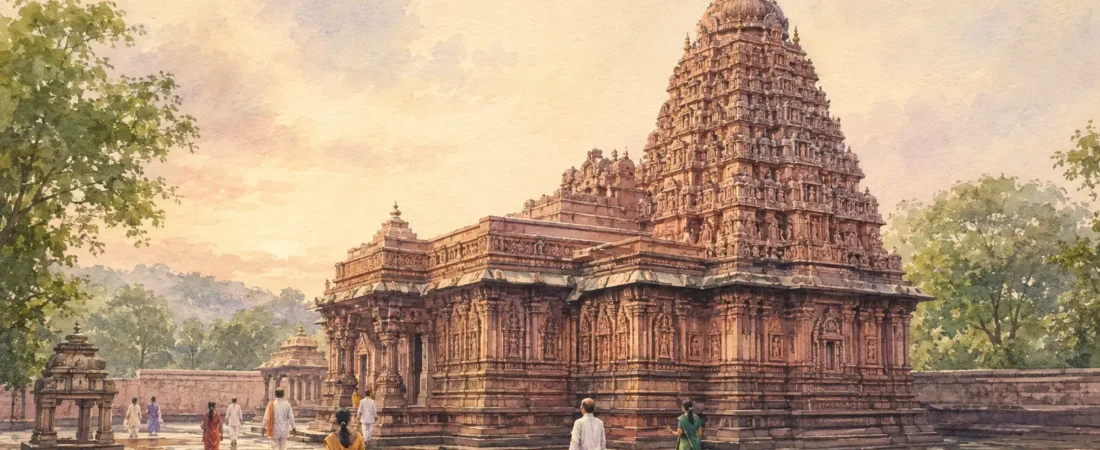
Near the monumental rock-cut world of Ellora stands a smaller, living shrine whose spiritual message is immense. Grishneshwar Jyotirlinga in Maharashtra, also written as Ghrishneshwar and remembered in sacred tradition as Ghushmeshwar, is revered as the final shrine in the traditional list of twelve Jyotirlingas.
Its Sthala Purana does not centre on royal power or a great battle. It centres on Ghushma, a woman whose daily worship remains steady through profound sorrow. When Shiva offers divine justice, she asks for compassion. Grishneshwar therefore completes the Indian Ethos Jyotirlinga journey with a demanding and beautiful truth:
Worship reaches its deepest purpose when devotion transforms character.
This guide brings together Grishneshwar’s sacred tradition, spiritual significance, temple history and architecture, worship guidance, major festivals, strictly vegetarian Maharashtrian food, travel planning and the neighbouring Ellora heritage landscape. It also completes the wider Indian Ethos Dwadasha Jyotirlinga journey.
Contents
- Grishneshwar Jyotirlinga at a glance
- Where is Grishneshwar?
- Names of the shrine
- Sthala Purana: Ghushma’s unwavering devotion
- Spiritual significance
- The meaning of the 101 Shiva lingas
- Forgiveness with wisdom
- Temple history and Ahilyabai Holkar
- Architecture of Grishneshwar Temple
- Worship, darshan and visitor customs
- Bilva worship and mantra
- Festivals and the best time to visit
- How to reach Grishneshwar
- Strictly vegetarian food
- Ellora and nearby places
- Suggested itineraries
- Practical guidance for families and seniors
- Frequently asked questions
Grishneshwar Jyotirlinga at a glance
| Pilgrimage detail | Guidance |
|---|---|
| Sacred name | Shri Grishneshwar or Ghrishneshwar Jyotirlinga |
| Traditional name | Ghushmeshwar, associated with the devotee Ghushma |
| Location | Verul village, Chhatrapati Sambhajinagar district, Maharashtra |
| Sacred status | Traditionally revered as the twelfth Jyotirlinga |
| Central Sthala Purana | Ghushma’s disciplined worship, Shiva’s grace and her prayer for forgiveness |
| Surviving temple | Predominantly an eighteenth-century structure, with earlier reconstruction traditions |
| Architectural character | Reddish volcanic stone, carved walls, pillared hall and a five-tiered shikhara |
| Major observances | Maha Shivaratri, Shravan and Shravan Mondays |
| Best weather for travel | October to March |
| Nearest major base | Chhatrapati Sambhajinagar, formerly widely known as Aurangabad |
| Closest major attraction | Ellora Caves, approximately one kilometre away |
| Ideal visit | One day for Grishneshwar and Ellora; two days for a wider heritage circuit |
| Food | Strictly vegetarian Maharashtrian meals and pilgrimage-friendly snacks |
| Indian Ethos value | Devotion through forgiveness |
Where is Grishneshwar Jyotirlinga?
Grishneshwar Temple stands at Verul in Maharashtra’s Chhatrapati Sambhajinagar district, close to the celebrated Ellora Caves. The district administration places the temple about 31 kilometres by road from Chhatrapati Sambhajinagar and approximately one kilometre from Ellora.
This compact landscape brings together three powerful experiences:
- Grishneshwar, a living centre of Shiva worship
- Ellora, a UNESCO World Heritage complex of Buddhist, Hindu and Jain rock-cut monuments
- Devagiri or Daulatabad, a major landmark of medieval Deccan history
The journey is therefore both pilgrimage and cultural study. At Verul, sacred memory, continuing worship, artistic achievement and historical change remain close enough to be experienced in a single day.
Grishneshwar, Ghrishneshwar and Ghushmeshwar: why are there different names?
Several English spellings appear in travel and devotional writing, including Grishneshwar, Ghrishneshwar, Grushneshwar and Ghushmeshwar. Maharashtra Tourism uses Ghrishneshwar as its page title while also using Grishneshwar in the text. The Shiva Purana tradition remembers the Jyotirlinga as Ghushmesha or Ghushmeshwar, connecting its name with the devotee Ghushma.
These are not different Jyotirlingas. They are transliteration and traditional naming variations associated with the same revered shrine at Verul.
For clarity, this article uses Grishneshwar as the principal English spelling and retains Ghushmeshwar when discussing the sacred narrative.
Sthala Purana: Ghushma’s unwavering devotion
The best-known sacred account of Grishneshwar is associated with the Shiva Purana tradition. Narrative details and personal names can vary in regional retellings, but the spiritual centre remains consistent.
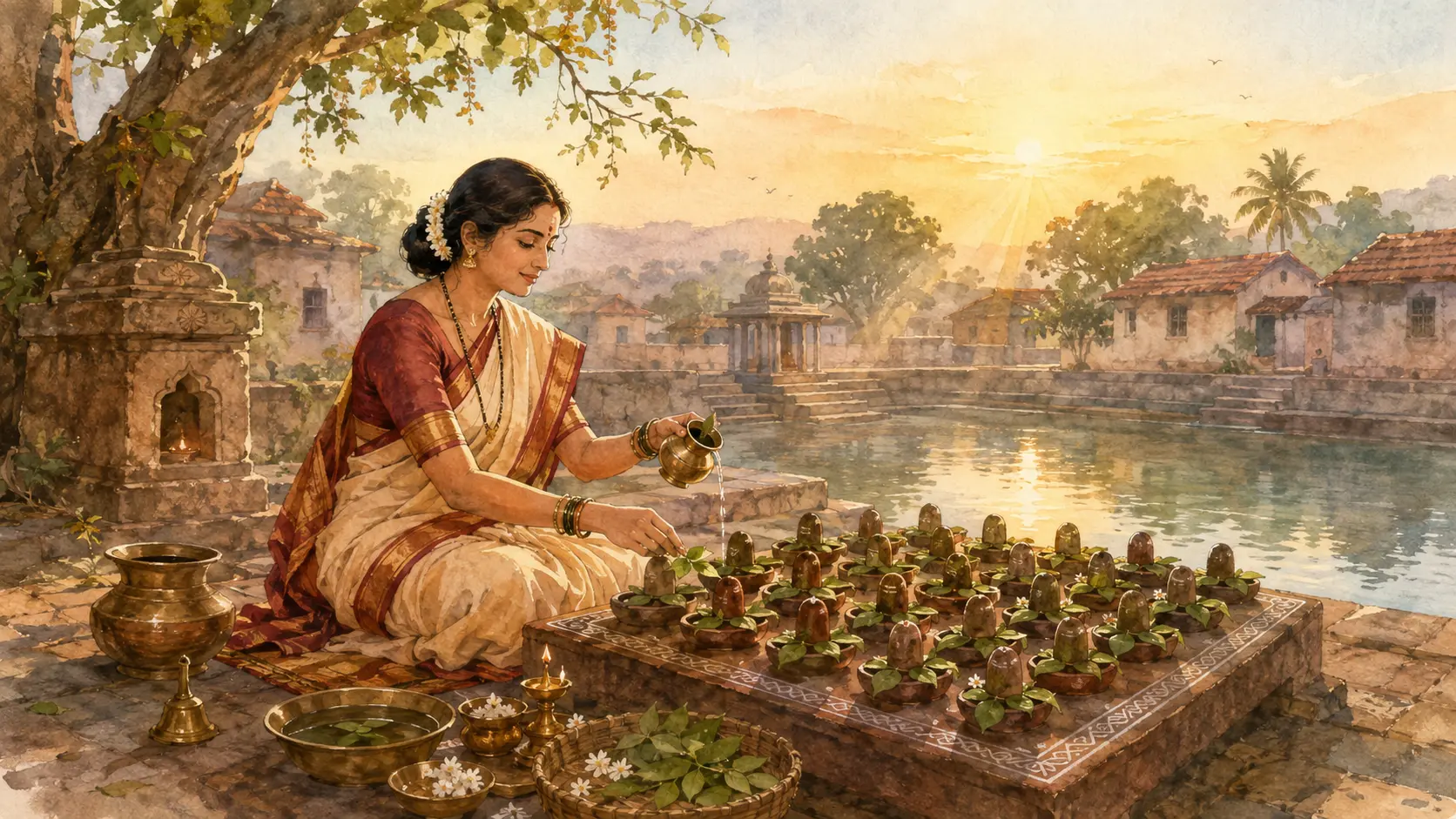
Ghushma is remembered as a devoted worshipper of Shiva. Each day, she prepares a large number of small parthiva lingas, traditionally said to be 101. She worships them with attention and then immerses them in a nearby water body. Her practice is regular, quiet and free from display.
Through Shiva’s grace, Ghushma is blessed with a son. Jealousy later enters the household, and the young man is killed. His body is cast into the same water in which Ghushma immerses the worshipped lingas.
The account does not portray her as indifferent to love or loss. It presents her as inwardly anchored. She completes her daily worship without allowing anguish to turn her away from Shiva.
Moved by her unwavering devotion, Shiva appears, restores her son and offers to punish the person responsible. Ghushma does not ask for vengeance. She asks that the offender be forgiven.
Shiva then agrees to remain at that sacred place for the welfare of devotees. The Jyotirlinga becomes known as Ghushmeshwar, the Lord associated with Ghushma.
This is sacred narrative, not a datable historical event. Its truth is carried through spiritual meaning: discipline can steady the mind, grief need not become hatred, and devotion should awaken compassion.
Spiritual significance: when worship changes the heart
All Jyotirlingas point towards Shiva as limitless divine presence, traditionally understood through the imagery of jyoti, or light. Grishneshwar adds a distinctive human question: what should the light of worship reveal within the devotee?
Ghushma’s practice is repetitive. She does not seek spectacle. She makes the lingas, worships, immerses and begins again the next day. This is abhyasa, steady spiritual practice.
Her story suggests four movements of inner growth:
Discipline becomes steadiness
Regular practice gives the mind a centre deeper than changing circumstances. The value of repetition is not mechanical performance. It is the formation of attention, patience and inner strength.
Sorrow does not have to become bitterness
The legend does not deny suffering. It asks whether suffering will be allowed to command every future thought and action.
Justice is tempered by compassion
When punishment is offered, Ghushma asks for forgiveness. Her mercy does not make the wrongdoing acceptable. It shows that the offender’s action will not be permitted to shape her heart permanently.
Divine grace is followed by ethical transformation
The miracle is not only the restoration described in the story. The deeper transformation is Ghushma’s refusal to become consumed by revenge.
True devotion is not measured only by the prayers we repeat, but by the character those prayers help us build.
The symbolism of the 101 Shiva lingas
The traditional number 101 belongs to the sacred narrative. The act of creating and immersing the lingas can also be read symbolically:
- Creation: Every day begins with renewed intention.
- Worship: Attention makes an ordinary material part of sacred practice.
- Immersion: What has been offered is released without possessiveness.
- Repetition: Spiritual strength grows through sincere consistency.
- Renewal: The next day’s practice begins without pride in the previous day’s achievement.
This sequence offers a gentle lesson for daily life: perform what is right with care, release the result, and return to duty without attachment.
Forgiveness with wisdom
Ghushma’s compassion is spiritually powerful, but forgiveness must not be simplified into silence about harm. Hindu ethical life also values dharma, truth, protection of the vulnerable and responsible action.
Forgiveness may mean refusing to nourish hatred. It does not require denying what happened, abandoning lawful protection, remaining in danger or preventing accountability. Compassion and wise boundaries can coexist.
This distinction makes the Grishneshwar message especially relevant to families and young readers. A gentle heart need not be a defenceless heart. Ghushma’s strength lies in retaining inner freedom even when she has every reason to surrender it to anger.
Temple history: ancient sacred identity and a later surviving structure
Grishneshwar’s sacred identity is Puranic, but the present temple should not be assigned an unsupported ancient construction date.
The Chhatrapati Sambhajinagar district administration describes the surviving shrine as an eighteenth-century temple. Maharashtra Tourism records a sixteenth-century reconstruction associated with Maloji Bhosale and credits the temple’s present grandeur substantially to eighteenth-century restoration under Maharani Ahilyabai Holkar.
Ahilyabai Holkar’s association creates a beautiful thread through the Indian Ethos Jyotirlinga series. Her patronage is also remembered at other major sacred centres, most notably Kashi Vishwanath. Her work demonstrates how pilgrimage sites across distant regions of Bharat were understood as part of a shared sacred geography.
The historically careful conclusion is therefore:
Grishneshwar’s Jyotirlinga tradition is ancient and sacred, while the visible temple largely reflects Maratha-period reconstruction and eighteenth-century restoration.
Architecture of Grishneshwar Temple
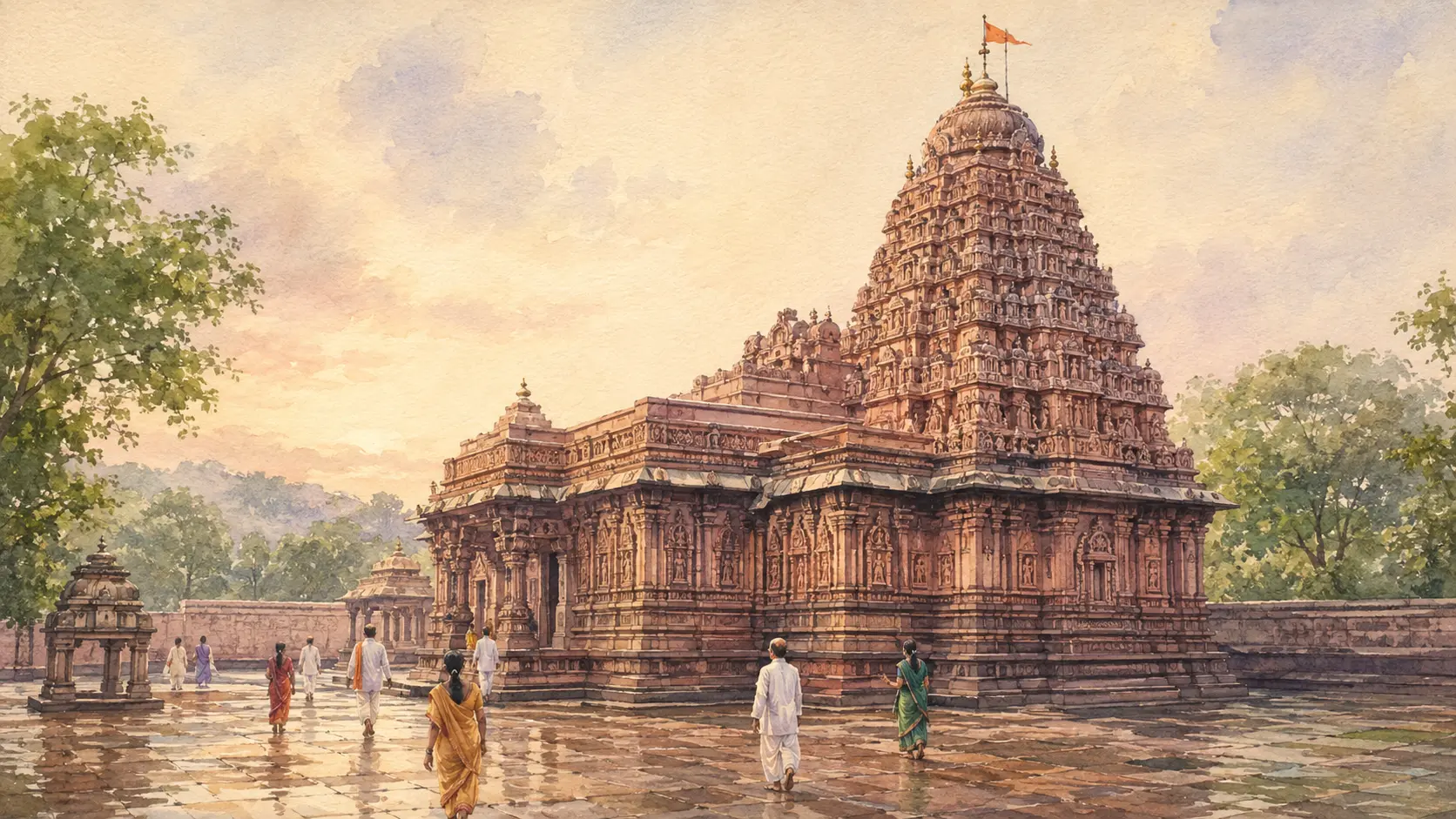
Grishneshwar has an earthy architectural presence. Its warm reddish stone, carved surfaces and ascending shikhara look very different from Kedarnath’s Himalayan austerity or Kashi Vishwanath’s dense urban setting.
Maharashtra Tourism describes the temple as built from red volcanic rock and identifies features associated with Hemadpanti architectural character. Important elements include:
- a five-tiered, sculpture-rich shikhara
- carved exterior walls with sacred and mythological imagery
- a spacious hall supported by 24 carved pillars
- Nandi facing the sacred direction of the sanctum
- a relatively intimate scale compared with many monumental temple complexes
Architecture here is not merely decorative. The strong base conveys stability, the carved walls hold sacred memory, and the rising shikhara draws the eye from the human courtyard towards the sky.
Visitors should observe the carvings respectfully and avoid touching delicate stone surfaces. The temple is a living place of worship, not simply a monument for photography.
Worship, darshan and visitor customs
The central experience is darshan of Shri Grishneshwar Mahadev. Maharashtra Tourism lists worship practices such as Panchamrut Pujan, Rudra Abhishek and Mahamrityunjaya Japa, while daily aarti forms part of the temple’s continuing devotional rhythm.
Pilgrims may also offer prayers with water, flowers and bilva leaves according to the temple’s current arrangements. Offerings and abhisheka should be performed only as directed by the priests or temple authorities.
Temple hours
The official Maharashtra Tourism page states that the temple welcomes devotees throughout the year, but it does not publish a dependable permanent daily timetable. Hours, queue systems, puja access and sanctum procedures may change during Shravan, Maha Shivaratri and other high-footfall days.
For an evergreen and responsible guide:
- confirm the current day’s opening, aarti and puja arrangements before travelling
- arrive early when possible
- keep additional time for security and queues
- never rely exclusively on an old private-site timetable
Sanctum custom and dress
Maharashtra Tourism notes a traditional custom in which male devotees entering the inner sanctum do so bare-chested. Access conditions can still change according to crowd management and temple instructions.
All visitors should dress modestly, carry a shawl or suitable traditional covering if helpful, and follow the directions displayed at the entrance. Darshan remains spiritually complete even if a pilgrim chooses not to enter, is unable to enter or is directed to worship from outside the innermost area.
Photography rules may differ within the complex. Follow current signage and never photograph worshippers without consent.
Bilva worship and the mantra of simplicity
Bilva leaves are among the most revered offerings to Shiva. Their three leaflets are interpreted through several sacred triads, including Shiva’s three eyes, the three gunas and the three movements of creation, preservation and transformation.
A traditional bilva verse says:
त्रिदलं त्रिगुणाकारं त्रिनेत्रं च त्रियायुधम् ।
त्रिजन्मपापसंहारम् एकबिल्वं शिवार्पणम् ॥
Tridalam trigunakaram trinetram cha triyayudham |
Trijanma-papa-samharam eka-bilvam Shivarpanam ||
The verse offers a single bilva leaf to Shiva with reverence. Its spirit is especially suited to Grishneshwar: sincerity gives depth to even the simplest offering.
The most accessible mantra for personal japa remains:
ॐ नमः शिवाय।
Om Namah Shivaya.
Chant quietly and respectfully without obstructing queues or organised worship.
Festivals and the best time to visit Grishneshwar
Maha Shivaratri
Maha Shivaratri is the shrine’s most prominent annual festival. Special worship, night vigil, mantra chanting and large gatherings create an intense devotional atmosphere. Pilgrims seeking this experience should expect long queues and stricter crowd-management procedures.
Shravan and Shravan Mondays
Shravan is one of the most sacred periods for Shiva worship across India. Mondays carry particular significance, and the number of devotees at Grishneshwar can rise sharply. Shravan is spiritually powerful but not necessarily the easiest time for seniors, small children or travellers seeking an unhurried architectural visit.
October to March
Maharashtra Tourism recommends October to March for generally pleasant weather. These months are well suited to a combined Grishneshwar and Ellora journey.
Summer and monsoon
The region can become very hot in summer. During the monsoon, carry rain protection and footwear appropriate for wet stone surfaces. Weather, road conditions and crowd advisories should take priority over a fixed itinerary.
How to reach Grishneshwar Jyotirlinga
By road
The district administration places Grishneshwar and Ellora about 31 kilometres from Chhatrapati Sambhajinagar. State transport buses, private taxis and personal vehicles serve the Verul route.
By train
Chhatrapati Sambhajinagar railway station is the nearest major rail base, approximately 29 kilometres from the Ellora-Grishneshwar area according to the district website.
By air
Chhatrapati Sambhajinagar Airport is the nearest airport, approximately 36 kilometres away according to the district administration. Flight schedules and onward transport should be checked close to travel.
Local planning
The former name Aurangabad still appears in railway codes, flight listings, maps and older travel material. When searching or booking, compare both Chhatrapati Sambhajinagar and Aurangabad to avoid confusion.
Strictly vegetarian food near Grishneshwar
The Grishneshwar journey is well suited to simple Maharashtrian vegetarian food. Around Verul and Ellora, availability may be modest, while Chhatrapati Sambhajinagar provides a wider choice.
Pilgrimage-friendly vegetarian options include:
- poha with lemon and coriander
- upma
- sabudana khichdi or sabudana vada
- varan-bhat, a comforting combination of dal and rice
- pithla-bhakri or zunka-bhakri
- bharli vangi prepared as a fully vegetarian dish
- vegetable thali with dal, rice, roti and seasonal sabzi
- thalipeeth with curd
- puran poli
- shrikhand
- jowar or bajra bhakri according to season
For a sattvic or vrata-friendly meal, ask specifically about onion, garlic, grain, groundnut oil and the type of salt used. Pilgrims with allergies should also ask about shared utensils and frying oil.
Choose freshly cooked food, drink sealed or safely filtered water and carry light vegetarian snacks when travelling with children or seniors. On a pilgrimage day, simplicity often supports both physical comfort and a quieter mind.
Ellora Caves: the extraordinary neighbour
The Ellora Caves are the most important companion visit to Grishneshwar. UNESCO describes an ensemble of 34 rock-cut monuments representing Buddhist, Brahmanical or Hindu, and Jain traditions. The phases of excavation extend broadly from the sixth to the twelfth centuries.
Ellora does not show three traditions blended into one. It shows distinct religious communities creating monuments within a shared cultural landscape. Its importance lies in artistic brilliance, intellectual plurality and the long civilizational life of the Deccan.
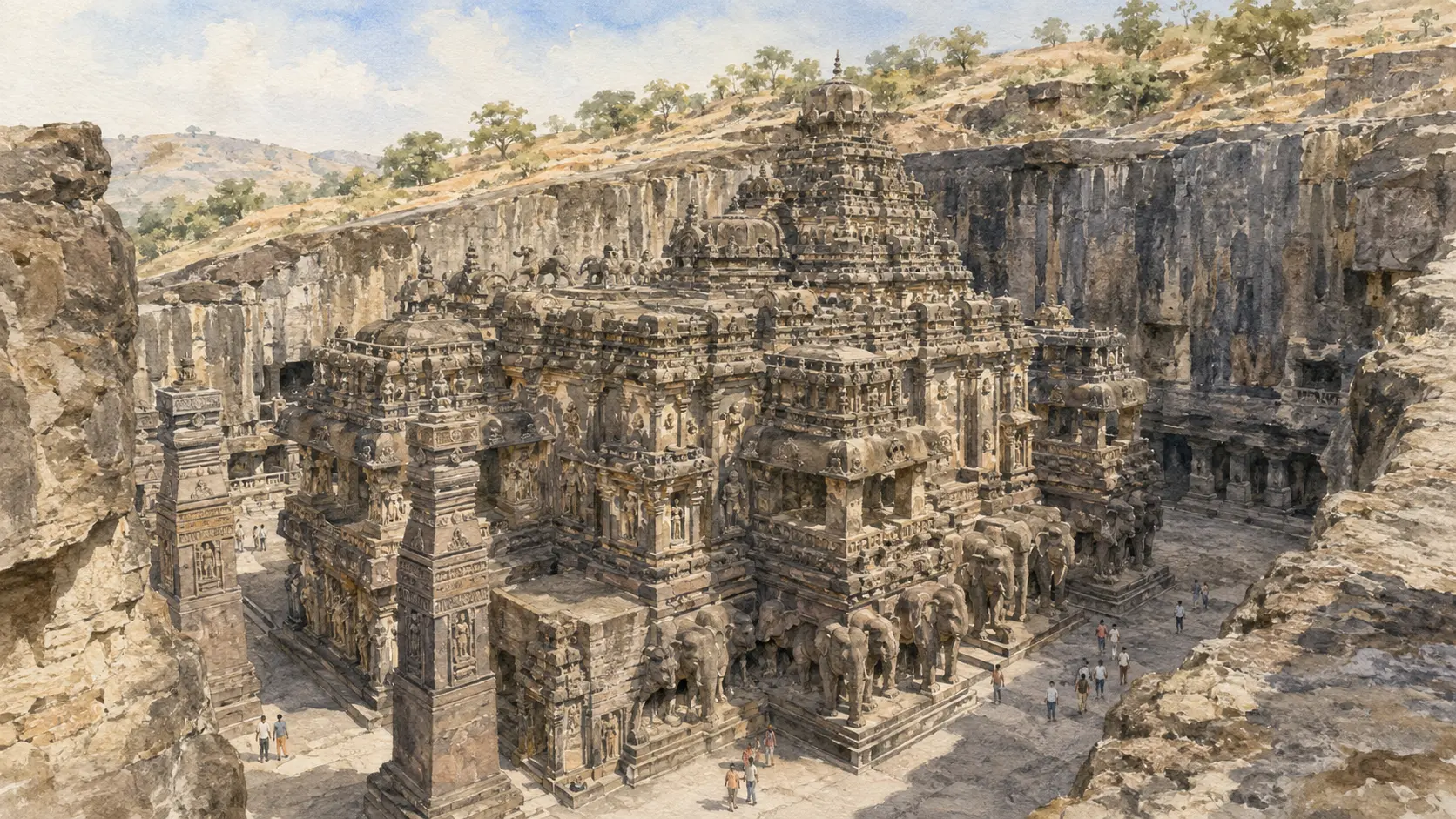
Kailasa Temple, Cave 16
The monumental Kailasa Temple is the centrepiece of Ellora’s Hindu group. UNESCO identifies it as the largest monolithic temple at the site and an exceptional achievement of rock-cut architecture.
Together, Grishneshwar and Kailasa offer two complementary experiences:
- Grishneshwar expresses living Jyotirlinga worship.
- Kailasa expresses the artistic imagination of Shiva’s cosmic abode in rock.
Ellora visitor note
The Archaeological Survey of India currently states that Ellora is open from sunrise to sunset and closed on Tuesdays. Ticket prices and operational arrangements may change, so confirm them on the ASI website before travel. Allocate at least three to four hours for selected caves and a full day for a more complete visit.
Other places to visit around Grishneshwar
Devagiri or Daulatabad Fort
The hill fort adds medieval statecraft, military architecture and Deccan history to the journey. The climb can be steep and physically demanding, so seniors and travellers with cardiac, respiratory or mobility concerns should assess their fitness honestly.
Bhadra Maruti Temple
This popular Hanuman shrine near Khuldabad is known for its reclining Hanuman tradition. It can be combined with Grishneshwar and Ellora when time and crowds permit.
Chhatrapati Sambhajinagar heritage sites
Travellers staying an additional day may consider Bibi Ka Maqbara, Panchakki and the Aurangabad Caves. These are historical and cultural extensions rather than substitutes for an unhurried Grishneshwar darshan.
Suggested one-day Grishneshwar and Ellora itinerary
Early morning
Visit Grishneshwar Jyotirlinga for darshan. Allow time for queues and follow the current sanctum instructions.
Mid-morning to afternoon
Proceed to Ellora. Give priority to the Kailasa Temple and then select caves from the Buddhist and Jain groups according to time and mobility.
Late afternoon
Visit Bhadra Maruti or return to Chhatrapati Sambhajinagar for rest.
Do not plan this Ellora itinerary on a Tuesday, when ASI currently closes the cave complex.
Suggested two-day pilgrimage and heritage itinerary
Day one: Shiva and Ellora
- Grishneshwar darshan
- Breakfast with fresh vegetarian food
- Ellora Caves, with sufficient time for Kailasa
- Bhadra Maruti if energy and time remain
Day two: the Deccan landscape
- Devagiri or Daulatabad Fort, subject to fitness and weather
- Selected Chhatrapati Sambhajinagar heritage sites
- A relaxed Maharashtrian vegetarian meal
This two-day structure prevents a sacred and historically rich landscape from becoming a hurried checklist.
Practical guidance for families, seniors and all pilgrims
- Check current temple instructions and Ellora’s ASI status shortly before travel.
- Carry water, prescribed medicines and sun or rain protection.
- Wear modest clothing and footwear that can be removed and managed easily at the temple.
- Remember that stone surfaces may become slippery during rain.
- Keep children close in queues and at elevated heritage areas.
- Do not pressure a senior or unwell family member to enter a crowded sanctum.
- Respect separate rules for a living temple and a protected archaeological site.
- Avoid agents promising guaranteed access or unofficial priority darshan.
- Keep the precinct clean and do not leave flowers, plastic or food outside designated places.
Darshan is not diminished by physical limitation. Quiet worship from the permitted area, undertaken with sincerity and respect, is complete in itself.
Frequently asked questions about Grishneshwar Jyotirlinga
1. Where is Grishneshwar Jyotirlinga located?
It is at Verul village in Chhatrapati Sambhajinagar district, Maharashtra, close to the Ellora Caves.
2. Is Grishneshwar the twelfth Jyotirlinga?
It is traditionally revered as the twelfth and concluding shrine in the widely followed Dwadasha Jyotirlinga sequence.
3. Are Grishneshwar, Ghrishneshwar and Ghushmeshwar the same shrine?
Yes. The spellings vary through transliteration and sacred tradition. Ghushmeshwar particularly recalls the devotee Ghushma.
4. What is the Sthala Purana of Grishneshwar?
The Shiva Purana tradition remembers Ghushma’s daily worship of 101 parthiva lingas. After profound loss, she remains devoted, receives Shiva’s grace and asks that the wrongdoer be forgiven. Shiva agrees to remain there as Ghushmeshwar.
5. What is Grishneshwar’s central spiritual lesson?
Its central lesson is devotion through forgiveness. Steady worship should create inner strength, compassion and freedom from consuming hatred.
6. Does forgiveness mean accepting injustice?
No. Forgiveness need not deny harm, cancel lawful accountability or require anyone to remain unsafe. Compassion, truth and protective boundaries can coexist.
7. Who restored the present Grishneshwar Temple?
Maharashtra Tourism records an earlier reconstruction associated with Maloji Bhosale and gives major credit for the temple’s present form to eighteenth-century restoration under Maharani Ahilyabai Holkar.
8. What is distinctive about the architecture?
The temple is known for reddish volcanic stone, intricate carvings, a 24-pillared hall and a five-tiered sculpted shikhara.
9. What worship is performed at Grishneshwar?
Maharashtra Tourism lists Panchamrut Pujan, Rudra Abhishek and Mahamrityunjaya Japa. Daily aarti and ordinary darshan also form part of worship. Current booking and access arrangements should be confirmed locally.
10. What should visitors wear?
Dress modestly and follow current temple instructions. Maharashtra Tourism notes a bare-chested custom for male devotees entering the inner sanctum, but access procedures may change with crowd conditions.
11. What are the Grishneshwar Temple timings?
The temple is open to devotees throughout the year, but dependable permanent daily hours are not published on the official tourism page. Confirm current timings before travel, especially during Shravan and Maha Shivaratri.
12. Which is the best month or season to visit?
Shravan is especially sacred for Shiva worship but very crowded. October to March is generally better for comfortable weather and a combined Ellora visit.
13. How far is Grishneshwar from Ellora?
The district administration describes the temple as approximately one kilometre from the Ellora Caves.
14. Is Ellora open every day?
No. ASI currently states that the Ellora Caves are closed on Tuesdays and open from sunrise to sunset on other days. Recheck before travelling.
15. What strictly vegetarian food is available?
Poha, upma, sabudana khichdi, varan-bhat, pithla-bhakri, thalipeeth, vegetable thalis, puran poli and shrikhand are useful vegetarian choices. Ask specifically about onion, garlic and fasting ingredients when required.
16. Can Grishneshwar and Ellora be visited in one day?
Yes. Begin with early Grishneshwar darshan and reserve at least three to four hours for selected Ellora caves. A full day at Ellora is better for serious heritage interest.
Grishneshwar: where the twelve-shrine journey comes home
The Jyotirlinga journey has crossed coasts, forests, rivers, cities and mountains. It has spoken of resilience at Somnath, harmony at Srisailam, time at Mahakaleshwar, oneness at Omkareshwar, healing at Baidyanath, dharmic strength at Bhimashankar, humility at Rameswaram, fearlessness at Nageshwar, liberation at Kashi Vishwanath, purification at Trimbakeshwar and perseverance at Kedarnath.
Readers may revisit the preceding reflections through Kashi Vishwanath, Trimbakeshwar and Kedarnath.
At Grishneshwar, the journey concludes within the human heart.
Ghushma’s worship is quiet. Her discipline is daily. Her grief is not made small, but neither is it allowed to become the ruler of her future. When offered vengeance, she chooses compassion. Shiva remains where such devotion has revealed its true fruit.
The nearby stones of Ellora preserve extraordinary artistic achievement. The living temple preserves something equally precious: the conviction that a sacred practice should make us steadier, wiser and kinder.
Devotion becomes complete when prayer leaves the lips, enters conduct and returns to the world as compassion.
ॐ नमः शिवाय।
हर हर महादेव।
जय श्री घृष्णेश्वर महादेव।
Editorial fact-check note
- The article distinguishes the Shiva Purana’s sacred narrative from datable temple history.
- The number 101 is presented as part of the traditional Ghushma account, not an archaeological fact.
- The district administration identifies the surviving temple as eighteenth century.
- Maharashtra Tourism attributes earlier reconstruction to Maloji Bhosale and major eighteenth-century restoration to Ahilyabai Holkar.
- Exact permanent temple hours have not been asserted because official public guidance is limited and operational details change.
- The male bare-chested sanctum custom is attributed to Maharashtra Tourism and qualified as subject to current temple instructions.
- Ellora’s Tuesday closure and sunrise-to-sunset hours are based on the current ASI page and should be rechecked before travel.
- The generated Sthala Purana artwork is a respectful conceptual illustration, not documentary evidence or a depiction of the sanctum.
- All food guidance is strictly vegetarian.
Principal sources
- Maharashtra Tourism: Ghrishneshwar
- District Chhatrapati Sambhajinagar: Ellora Leni and Ghrishneshwar Jyotirlinga Temple, Verul
- District Chhatrapati Sambhajinagar: Ghrishneshwar Temple gallery
- Archaeological Survey of India: Ellora Caves
- UNESCO World Heritage Centre: Ellora Caves
- User-provided Grishneshwar article forwarded by email on 17 August 2026