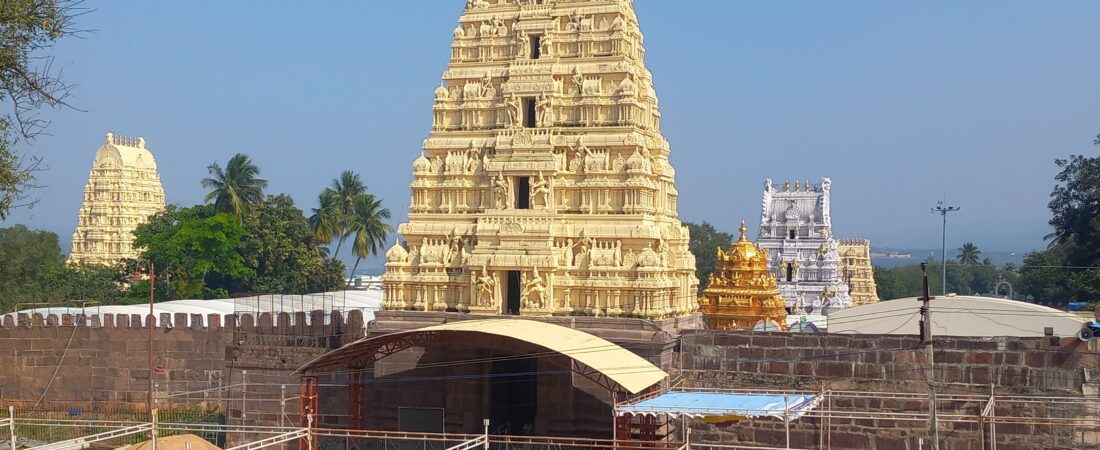
Among the sacred hills of the Nallamala range in Andhra Pradesh stands Sri Bhramarambika Devi Shakti Peetha at Srisailam, a revered abode of the Divine Mother. Here, the worship of Goddess Bhramaramba or Bhramarambika shares one sacred temple complex with Lord Mallikarjuna Swamy, one of the twelve Jyotirlingas of Lord Shiva. India’s Ministry of Tourism describes Srisailam as both a Jyotirlinga destination and a Maha Shakti Peetha. (Ministry of Tourism – Utsav)
For pilgrims, Srisailam offers a rare meeting of Shaiva and Shakta traditions, ancient temple architecture, the forested Nallamala landscape and the sacred Krishna River. This guide explores the Sthala Puranam, spiritual significance, worship and festivals, travel planning, nearby attractions and strictly vegetarian food.
At a glance: Bhramarambika Devi Shakti Peetha
- Location: Srisailam, Nandyal district, Andhra Pradesh, India
- Devi: Sri Bhramarambika (Bhramaramba), the Mother of the Bees
- Associated Shiva shrine: Sri Mallikarjuna Swamy Jyotirlinga
- Setting: Nallamala Hills, near the Krishna River gorge
- Nearest major airport: Hyderabad; Kurnool is another regional option depending on available services
- Rail access: Markapur Road, approximately 85 km away according to the Ministry of Tourism
- Official information: Srisaila Devasthanam
Sthala Puranam: The sacred legends of Bhramarambika Devi
Sati and the origin of the Shakti Peethas
According to Hindu sacred tradition, Sati, daughter of Daksha Prajapati, married Lord Shiva. When Daksha performed a great sacrifice and dishonoured Shiva by excluding him, Sati was overcome by grief and gave up her life at the sacrificial gathering. Shiva, stricken with sorrow, carried her body as he wandered. To restore cosmic balance, Lord Vishnu used his Sudarshana Chakra to divide the body; the places associated with the falling of Sati’s body parts or ornaments came to be revered as Shakti Peethas.
Srisailam is counted in the traditional eighteen Maha Shakti Peetha lists. The Ministry of Tourism’s Utsav portal identifies Bhramaramba as the sixth among these sacred Peethas. Traditional accounts sometimes differ on details associated with individual sites; for devotional accuracy, consult the temple’s own account when describing the specific body part associated with this Peetha.
The legend of Arunasura: Why is she called Bhramaramba?
One of the most distinctive legends of Bhramarambika Devi concerns the asura Arunasura. Empowered by a boon, he became a threat to the devas and the cosmic order. The Goddess manifested in a form that could overcome the protection he believed made him invincible. In the devotional account, she took the form of countless bees and defeated him.
The Sanskrit word bhramara means “bee,” and the name Bhramaramba is traditionally connected with this form of the Mother. The story honours divine intelligence that can overcome a challenge through an unexpected means. It also offers a spiritual reflection: even what appears small can become powerful when guided by purpose and divine grace.
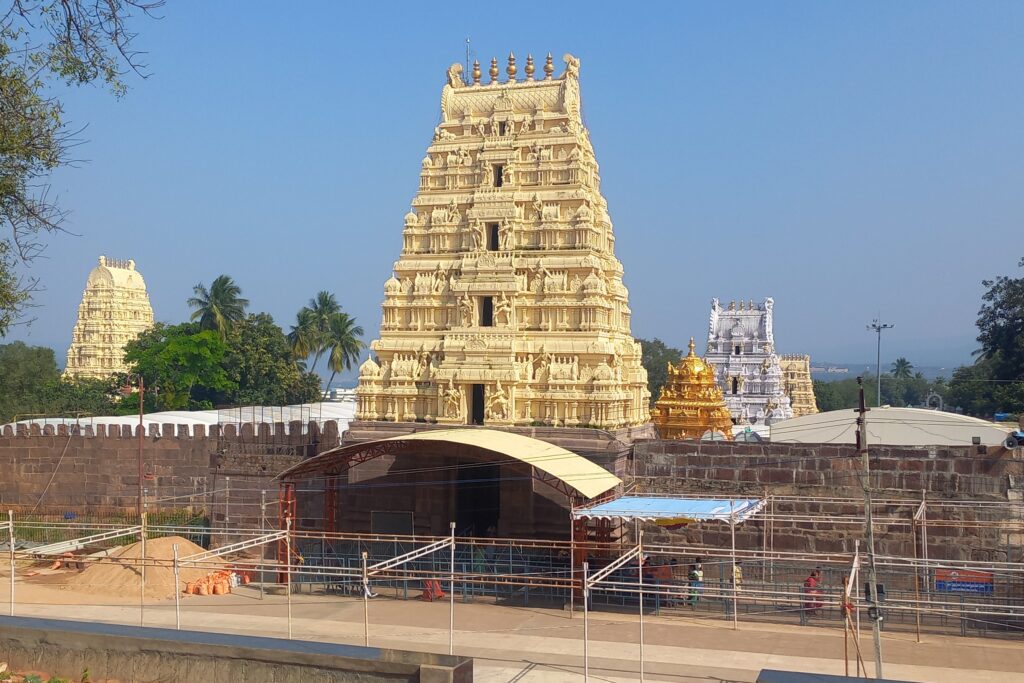
Temple exterior photograph: Adityamadhav83, licensed under CC BY 4.0, via Wikimedia Commons.
Spiritual significance: Shiva and Shakti together
The special importance of Srisailam lies in the presence of Mallikarjuna Jyotirlinga and Bhramarambika Shakti Peetha within the same sacred complex. Their shared presence expresses the inseparability of Shiva and Shakti: consciousness and divine energy, stillness and creative power. Devotees commonly plan darshan of both shrines as part of one pilgrimage.
Bhramarambika is approached as a protective and compassionate manifestation of the Mother. Devotees pray for courage, family well-being, clarity, protection and spiritual progress. Her fierce legend does not diminish her maternal grace; rather, it depicts the strength that confronts harmful forces and restores balance.
Lessons devotees may contemplate
- Courage: Meet adversity with steadiness rather than fear.
- Discernment: Strength is most effective when guided by wisdom.
- Transformation: Confront destructive habits and inner obstacles.
- Faith: Help may arrive in forms we do not expect.
- Compassion: Use strength to protect, guide and serve.
Rituals, sevas and festivals
Daily worship at Srisailam follows the temple’s established Agama and devotional traditions. Schedules and availability can change, so treat the following as a guide to commonly offered forms of worship—not a promise that every seva is available on every date.
- Darshan: Devotees visit the sanctum of Bhramarambika Devi and the Mallikarjuna Swamy shrine. Follow the current queue and entry instructions.
- Kumkum Archana: A devotional offering of kumkum to the Goddess, subject to the temple’s current seva arrangements.
- Abhishekam and Shiva worship: Ritual bathing and worship associated with Mallikarjuna Swamy are among the temple’s important devotional practices.
- Naivedyam and aarti: Offerings and lamp worship form part of the daily cycle of worship.
- Annadanam / Anna Prasadam: The Devasthanam maintains food-service initiatives; check its official site for current timings and arrangements.
Major festival: Maha Shivaratri is especially important at Srisailam and is associated with an extended programme of religious ceremonies and processions. Other auspicious occasions and annual celebrations may draw large crowds. Confirm dates, seva tickets, darshan rules and accommodation through the official Srisaila Devasthanam website before travelling.
Temple and heritage architecture
The Srisailam complex is a living place of worship as well as a historic architectural landscape, with sculpted stonework, gateways, mandapas and shrines reflecting layers of patronage and renovation. The temple’s own website provides sections on its history, mythology, temple structure and visiting places.
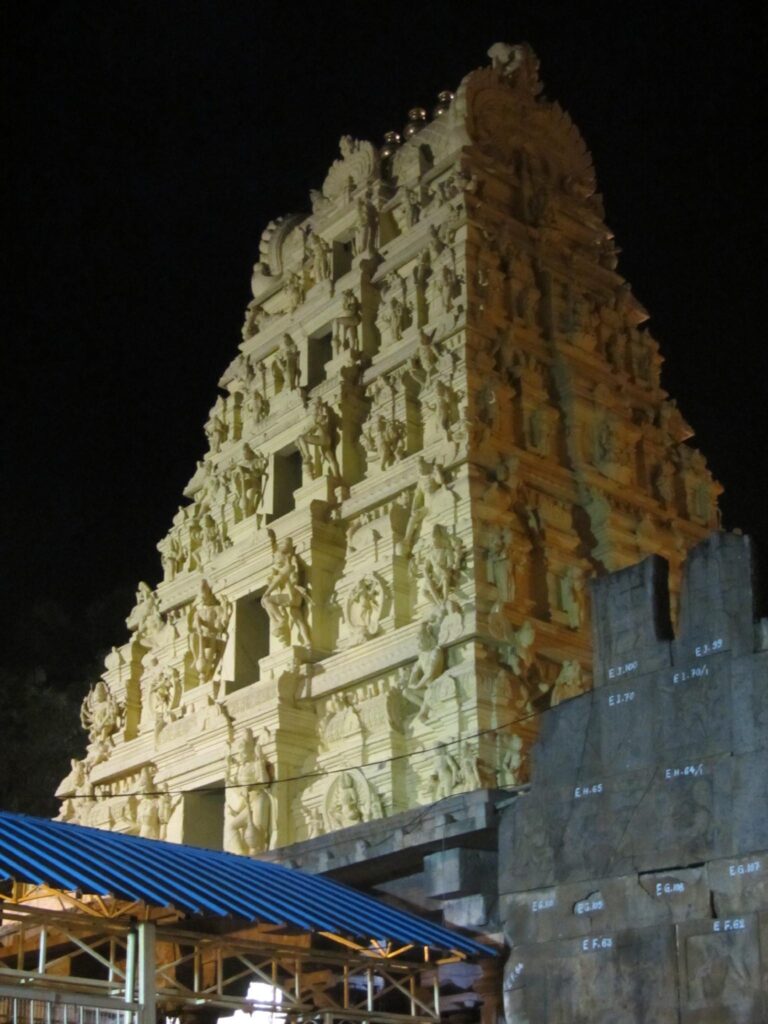
Gopuram photograph: Vedamurthy.j, licensed under CC BY-SA 3.0, via Wikimedia Commons.
Travel guide: How to reach Bhramarambika Devi Temple
By air: Hyderabad is a major airport option, while Kurnool may be useful depending on flight availability. The Ministry of Tourism’s Utsav page lists Kurnool at about 180 km and Hyderabad at around 200–232 km in different official listings; road distances and travel times vary by route.
By train: Markapur Road is a commonly used rail access point, approximately 85 km from Srisailam. Arrange onward transport and check current train services before departure.
By road: State buses and private vehicles connect Srisailam with regional towns. The route crosses the Nallamala forest landscape. Check current forest-road restrictions and permitted travel hours before setting out; restrictions may change for safety or wildlife protection.
Before you go: Save offline maps, carry drinking water, wear comfortable footwear, follow temple rules on clothing and photography, and allow additional time during festival days. Confirm darshan, seva and accommodation information directly with the Devasthanam.
Other attractions around Srisailam
Mallikarjuna Jyotirlinga
Plan time for Lord Mallikarjuna Swamy’s shrine alongside Bhramarambika Devi. Together, the two shrines are the spiritual heart of Srisailam.
Patalaganga and the Krishna River
Patalaganga is associated with the Krishna River below the hill. Check access, boating or ropeway availability and safety guidance locally before visiting.
Srisailam Dam and Nallamala landscape
The dam and surrounding hills offer striking views of the river and forested terrain. Respect wildlife, avoid littering and follow all protected-area rules.
Akka Mahadevi Caves
These caves are a well-known regional excursion, generally involving a boat journey on the Krishna River when services operate. Confirm availability, weather conditions and safety arrangements locally.
Chenchu Lakshmi Tribal Museum
Visitors interested in regional culture may consider this museum; confirm current opening days and hours before planning a visit.
Strictly vegetarian food in Srisailam
A pilgrimage meal can be simple, nourishing and rooted in Andhra cuisine. The dishes below are vegetarian choices to look for; availability varies by establishment and day.
- Andhra pappu: Lentils cooked with greens or vegetables, usually served with rice.
- Pappu charu: A tangy lentil-based preparation.
- Vegetable kura: Seasonal vegetable curry with rice or roti.
- Idli and dosa: Familiar breakfast choices when available.
- Pulihora: Tamarind rice commonly associated with festive and temple-food traditions.
- Curd rice: A simple, cooling meal.
- Temple annadanam: Check the official Devasthanam for current food-service timings and eligibility.
Strict vegetarian note: Restaurant names and online listings cannot guarantee that a kitchen is exclusively vegetarian or that every item meets your requirements. Ask directly about ingredients, cooking oil, utensils and shared preparation surfaces. If you avoid onion and garlic, state that clearly. Do not assume that every dish mentioned is available at every restaurant.
Suggested one-day pilgrimage plan
- Early morning: Arrive and complete darshan at Bhramarambika Devi, subject to current temple schedules.
- Morning: Visit Mallikarjuna Swamy Jyotirlinga and explore the temple complex.
- Midday: Take a vegetarian meal and rest; check annadanam arrangements if relevant.
- Afternoon: Visit a nearby viewpoint or Patalaganga if access and timing permit.
- Later: Keep the schedule flexible for queues, pujas, weather and forest-road rules.
Frequently asked questions
Is Bhramarambika Devi one of the eighteen Maha Shakti Peethas?
Yes. The Government of India’s Utsav portal identifies Bhramaramba at Srisailam among the eighteen Maha Shakti Peethas.
Why is the Goddess called Bhramaramba?
The name is traditionally associated with bhramara, meaning bee, and the legend in which the Goddess manifests as countless bees to defeat Arunasura.
Why is Srisailam important to both Shiva and Shakti devotees?
The sacred complex brings together Mallikarjuna Swamy, one of the twelve Jyotirlingas, and Bhramarambika Devi, a Maha Shakti Peetha.
What rituals can devotees participate in?
Darshan and certain sevas, such as kumkum archana and abhishekam-related offerings, may be available according to the temple schedule. Check current offerings and booking requirements with the Devasthanam.
What vegetarian food should I look for?
Andhra pappu, pappu charu, vegetable curries, idli, dosa, pulihora and curd rice are options to ask for. Confirm ingredients and kitchen practices directly.
A closing prayer
Amma Bhramarambika, Mother of boundless strength and compassion, bless us with courage in adversity, clarity in confusion and humility in success. May your grace protect our families and guide our thoughts, words and actions towards dharma.
At Srisailam, the legend of the bees reminds devotees that wisdom may overcome obstacles in unexpected ways. The shared presence of the Divine Mother and Mallikarjuna Swamy invites every pilgrim to seek balance, devotion and inner strength.
Jai Bhramarambika Amma! Jai Mallikarjuna Swamy!
Sources and further information
- Official Srisaila Devasthanam — darshan, sevas, accommodation and pilgrim information.
- Ministry of Tourism, Utsav: Srisailam Temple — Shakti Peetha significance and travel access.
- Incredible India: Srisailam Temple — regional heritage and attractions.