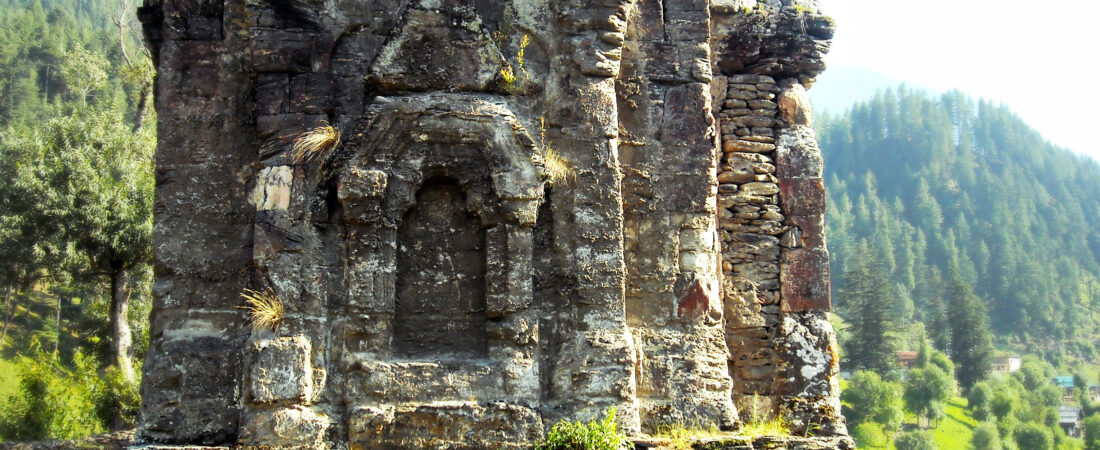
In the sacred imagination of Kashmir, Goddess Sharada is revered as the radiant source of wisdom, learning, language and spiritual insight. The ancient Sharada Peeth, traditionally associated with Saraswati and the Kashmir Kshetra in the Ashtadasha Shakti Peetha Stotram, stands in memory as both a shrine of the Divine Mother and a historic centre of learning. This guide explores the Sthala Puranam, spiritual significance, worship traditions, history, travel realities and vegetarian flavours connected with this revered heritage.
At a glance: Kashmir Saraswati Shakti Peetha
- Devi: Goddess Sharada, revered as a form of Saraswati
- Sacred site traditionally associated: Sharada Peeth, Sharda, Neelum Valley, in Pakistan-administered Kashmir
- Spiritual associations: knowledge, eloquence, arts, learning, memory and liberation through wisdom
- Shakti Peetha tradition: The Kashmir–Saraswati association is named in the widely recited Ashtadasha Shakti Peetha Stotram; traditions differ on details such as the body part associated with the site
- Current access: The historic ruins are not an ordinary domestic pilgrimage destination from India. Travel and cross-Line of Control arrangements are subject to official permissions and current conditions
Who is Goddess Sharada?
Goddess Sharada is worshipped as the luminous power of knowledge—closely identified with Saraswati, the Mother who blesses speech, music, scholarship, discernment and the arts. Her name is inseparable from Kashmir’s historic identity as Sharada Desha, the land of Sharada. The Sharada script, once important for writing Sanskrit and other languages in the north-western subcontinent, carries the memory of this intellectual heritage.
For devotees, Sharada is not merely the giver of worldly learning. She represents the inner clarity that allows knowledge to mature into wisdom, pride to become humility, and speech to become truthful and compassionate. A pilgrimage to Sharada is therefore also an inward journey: to cultivate a receptive mind, disciplined study and a life guided by dharma.
Sthala Puranam: The sacred memory of Kashmir Kshetra
Hindu Shakti Peetha traditions recount that after Goddess Sati relinquished her body following the tragedy of Daksha’s sacrifice, Lord Shiva carried her body in profound grief. To restore cosmic balance, Vishnu’s divine intervention caused the body to be divided into sacred portions; the places associated with those portions became centres of Shakti worship. Different textual and regional traditions enumerate the Peethas differently, and details of the body part associated with individual sites are not uniform.
In the Ashtadasha Shakti Peetha Stotram, the Kashmir Kshetra is associated with Saraswati. Devotional and pilgrimage traditions connect this Kashmir Saraswati Peetha with Sharada Peeth at Sharda in the Neelum Valley. Some later lists identify the right hand of Sati with the site, while other traditions vary; this detail should therefore be presented as a traditional belief rather than an uncontested historical fact.
Sharada Peeth grew into a celebrated sacred and intellectual centre. Historical references, including medieval accounts and Kashmir’s literary memory, attest to the site’s importance. Scholars travelled to Kashmir to study sacred texts, philosophy and grammar, and the shrine became associated with learning as well as worship. The surviving structure is now in ruins, but its significance endures in the religious and cultural memory of Kashmiri Hindus and the wider Indic world.
The Sthala Puranam is thus held in two intertwined ways: as sacred remembrance of the Divine Mother’s presence in Kashmir, and as historical memory of a place where worship, scholarship and the pursuit of knowledge once flourished together.
Spiritual significance of Sharada Saraswati Peetha
- Vidya and viveka: Devotees pray for education, sound judgement, concentration and the ability to distinguish lasting truth from passing distraction.
- Speech and expression: Sharada is invoked for clear communication, poetry, music, teaching, writing and eloquence.
- Learning as sadhana: The Peetha’s memory reminds seekers that study becomes sacred when joined with humility, ethical conduct and service.
- Kashmiri cultural heritage: Sharada links temple worship with the region’s Sanskrit scholarship, manuscripts and the historical Sharada script.
- Shakti and consciousness: Saraswati’s gentle, luminous form expresses the Divine Mother’s power to awaken understanding and inner harmony.
Sharada Peeth: History and heritage
Sharada Peeth is a historic temple site in Sharda, in the Neelum Valley of Pakistan-administered Kashmir, near the Neelum River. It is widely remembered as an important centre of learning in the medieval period. The surviving ruins should not be confused with a fully functioning temple complex offering routine public darshan today.
Because historical records, devotional accounts and later popular retellings do not always agree on dates or legends, this article distinguishes documented heritage from religious tradition. The exact age of the earliest shrine and some popular claims about its former scale remain subjects of historical interpretation. What is clear is the site’s enduring place in Kashmir’s sacred geography and intellectual history.
Worship, rituals and devotional observances
For devotees who honour Goddess Sharada from their homes or at an accessible Saraswati shrine, worship can be simple, respectful and centred on learning:
- Pratah smarana: Begin the day with a prayer to Saraswati for clarity, humility and right understanding.
- Deepa and pushpa: Offer a lamp and fresh flowers where customary, following the practices of the temple or household tradition.
- Saraswati mantra: Recite “Om Aim Saraswatyai Namah” with attention and reverence.
- Book and instrument puja: On Vasant Panchami or during Navaratri, devotees may worship books, notebooks, musical instruments and tools of learning according to family custom.
- Study as offering: Read a sacred text, begin a study session, support a student or donate books as a practical act of devotion to the Goddess of Knowledge.
- Navaratri: Sharada is remembered in the wider worship of the Divine Mother during Navaratri. Local observances vary, particularly where the historic shrine is inaccessible.
These are general Saraswati devotional practices, not a claim that all these rituals are currently performed at the ruins of Sharada Peeth. Visitors should never assume access to a restricted or non-operational heritage site.
When to visit and practical travel guidance
Important: Sharada Peeth lies in Pakistan-administered Kashmir, not in the Indian-administered Kashmir Valley around Srinagar. It is not appropriate to plan an ordinary drive from Srinagar or assume that Indian domestic tourist permits provide access. Cross-Line of Control travel arrangements, where available, depend on government policy, permissions, documentation and prevailing security conditions. Check official government advisories before making any plan; do not rely on old blogs or informal tour claims.
For visitors exploring Kashmir’s Saraswati heritage from India
Those unable to visit the historic ruins can explore the broader Sharada tradition through museums, cultural programmes, scholarly resources and accessible Saraswati temples in India. A prominent modern place of Sharada worship is the Shri Sharada temple at Teetwal in the Kupwara region, established as part of contemporary efforts to revive the tradition. Confirm current opening arrangements, road access and local advisories with official sources before travelling.
Nearest practical travel hub for the Indian-side Kashmir region: Srinagar is the principal air gateway for many Kashmir itineraries, with road journeys onward depending on the destination and conditions. Teetwal/Kupwara-area travel is a separate itinerary from sightseeing in Srinagar and requires current local verification. This guide does not imply that the historic Sharada Peeth ruins are directly accessible from Srinagar.
Responsible pilgrimage checklist
- Check current official security and travel advisories before booking.
- Verify permissions and opening status directly with relevant authorities or the local temple committee.
- Carry valid identification and allow flexibility for weather, road closures and local restrictions.
- Respect local communities, sacred spaces and heritage structures; do not touch, remove or climb on fragile ruins.
- Use a locally informed guide only where travel is officially permitted.
Vegetarian Kashmiri food: strictly vegetarian choices
Kashmir’s culinary heritage includes a rich vegetarian tradition, especially in Kashmiri Pandit home cooking. Travellers who eat vegetarian food can seek out the dishes below. Recipes vary by household and restaurant, so confirm ingredients and cooking practices each time. If you follow a strict vegetarian diet, ask whether the dish is cooked separately and whether any meat stock, shared utensils or animal fat is used.
- Haak saag: Leafy greens cooked simply with oil and mild seasoning; ask for a meat-free preparation.
- Nadru yakhni: Lotus stem in a yoghurt-based sauce flavoured with fennel and dry ginger. Confirm that the kitchen prepares it without meat stock.
- Kashmiri dum aloo / dum olav: Potatoes cooked with aromatic spices; recipes vary in heat and ingredients.
- Lyodur tschaman / chaman kaliya: Paneer in a yellow, delicately spiced gravy.
- Al yakhni: Bottle gourd in a yoghurt-based preparation, where available.
- Rajma with rice: Kidney beans and rice, a familiar vegetarian meal; ask about stock and cooking fat.
- Modur pulao: Saffron-scented rice with nuts and dry fruits, often sweet or mildly savoury; check whether ghee is used if you have specific dietary requirements.
- Nadru monje: Lotus-stem fritters, usually a snack; confirm frying oil and shared-fryer practices.
- Kahwa: Aromatic green tea often served with saffron, spices and almonds. It is generally a vegetarian beverage; confirm any additions.
- Phirni and local breads: Ask about ingredients, ghee, egg, and shared preparation surfaces before ordering.
Strict vegetarian note: Traditional Wazwan is predominantly meat-based, so do not assume a Wazwan menu is vegetarian. Ask for a separately prepared vegetarian meal and verify that no meat stock, animal fat or shared cooking equipment is used. If you also follow sattvic rules, specify no onion, no garlic and any other restrictions clearly.
Other attractions and cultural experiences
For an India-based itinerary focused on Kashmir’s landscape and culture, the following are separate, accessible destinations to consider subject to current advisories and seasonal conditions:
- Srinagar’s Dal Lake: A lake landscape associated with shikara rides, houseboats and views of the surrounding mountains.
- Mughal gardens: Shalimar Bagh, Nishat Bagh and Chashme Shahi offer historic garden design and seasonal blossoms.
- Hazratbal area: A major religious and cultural landmark on Dal Lake; visitors should follow local etiquette.
- Old Srinagar: Explore traditional architecture, craft markets and the city’s layered cultural history with respect for worshippers and residents.
- Pampore saffron fields: A seasonal landscape associated with Kashmiri saffron; harvest timing varies.
- Gulmarg and Pahalgam: Mountain scenery and outdoor excursions, planned according to weather, road status and official advisories.
- Teetwal Sharada shrine: A contemporary Indian-side site associated with the revival of Sharada worship; confirm local access and arrangements before visiting.
These places are not all adjacent to Sharada Peeth. They are options for a broader Kashmir cultural itinerary, not a single walkable temple circuit.
Suggested 4-day Kashmir culture itinerary
- Day 1 – Srinagar: Arrive, settle in and explore Dal Lake and the nearby gardens, allowing time for weather and traffic.
- Day 2 – Heritage and devotion: Visit accessible religious and cultural landmarks in Srinagar; observe dress and photography rules.
- Day 3 – Landscape and cuisine: Plan a garden, craft or saffron-related excursion based on season, and arrange a strictly vegetarian Kashmiri meal in advance.
- Day 4 – Sharada heritage research or onward travel: If considering the Teetwal/Kupwara region, confirm permissions, route status and local opening arrangements first. Do not treat this as access to the historic Sharada Peeth ruins across the Line of Control.
Frequently asked questions
Is Kashmir Saraswati mentioned among the 18 Maha Shakti Peethas?
Yes. The widely recited Ashtadasha Shakti Peetha Stotram names Saraswati in Kashmir. The precise identification of the site and details such as the body part associated with it vary among later traditions.
Is Sharada Peeth the same as the Saraswati Shakti Peetha?
Sharada Peeth is the historic shrine most commonly associated with the Kashmir Saraswati tradition. The identification is a religious and cultural tradition, while individual lists may describe the Peetha differently.
Can Indian pilgrims visit the historic Sharada Peeth today?
Do not assume routine access. The historic ruins are in Pakistan-administered Kashmir, and travel across the Line of Control depends on official arrangements and current policy. Check government advisories before considering any journey.
Is there a Sharada temple on the Indian side?
A contemporary Sharada shrine has been established at Teetwal in the Kupwara region. Its access and opening arrangements should be verified locally before travel.
What is the best offering for Goddess Saraswati?
Devotees commonly offer prayers, flowers, a lamp and sincere study. Books, music and learning can themselves become offerings when used with humility and for the good of others.
Can vegetarians find food in Kashmir?
Yes. Haak, nadru dishes, dum aloo, paneer preparations, rajma and rice are possible options, but recipes and kitchen practices vary. Strict vegetarians should verify stock, cooking fat, utensils and shared fryers.
Conclusion: May Sharada bless the pursuit of wisdom
The memory of Sharada Peeth is a reminder that a sacred place can nourish both devotion and learning. In the Kashmir Saraswati tradition, the Divine Mother is the light behind every honest question, every meaningful word and every effort to understand the world with compassion. Even when a historic shrine is difficult to reach, devotees can honour Sharada through study, truthful speech, the sharing of knowledge and reverence for Kashmir’s living cultural heritage.
Sources and further reading
- Press Information Bureau, Government of India: Sharada Peeth and the Sharada tradition
- Indian Modern Art and Culture / IMPART: Sharada Peeth historical overview
- Wikimedia Commons: Sharda Devi Temple photograph and licence details
- Incredible India: Vegetarian dishes to try in Srinagar
- Directorate of Tourism, Kashmir: official travel information
Editorial note: This article distinguishes devotional tradition from historical evidence and current travel logistics. Site access, security conditions and local arrangements can change; verify them with official authorities before travel.