Indian Ethos · Temples of India · Shakti Peethas
In the sacred hymn that remembers eighteen celebrated manifestations of the Divine Mother, Shrinkhala Devi is named at Pradyumna. Her story invites both devotion and careful inquiry: the name belongs to a cherished Shakta tradition, while the exact modern location of the ancient shrine remains uncertain. This guide explores the spiritual meaning, the Sati legend, the traditional geography, and practical travel and food guidance without presenting disputed claims as settled fact.

Shrinkhala Devi in the Ashtadasha Shakti Peetha Stotram
लङ्कायां शाङ्करी देवी कामाक्षी काञ्चिकापुरे ।
प्रद्युम्ने शृङ्खला देवी चामुण्डी क्रौञ्चपट्टणे ॥Ashtadasha Shakti Peetha Stotram · opening verse
Transliteration: Laṅkāyāṃ Śāṅkarī Devī, Kāmākṣī Kāñcikāpure; Pradyumne Śṛṅkhalā Devī, Cāmuṇḍī Krauñcapaṭṭaṇe.
Meaning: Shankari Devi is revered in Lanka, Kamakshi in Kanchipuram, Shrinkhala Devi in Pradyumna, and Chamundi at Kraunchapattana.
The hymn preserves the traditional association between Shrinkhala Devi and Pradyumna. It does not, by itself, establish the precise present-day location of the shrine. Spellings such as Shrinkhala, Shrunkhala and Shringkhala appear in modern writing; when preparing a devotional text, follow a trusted Sanskrit edition or the version used in your lineage.
Sthala Puranam: the sacred story of Sati and the Peethas
The spiritual setting of Shrinkhala Devi belongs to the wider Puranic story of Goddess Sati and Lord Shiva. According to a widely told account, Sati, daughter of Daksha Prajapati, married Shiva despite her father’s disapproval. When Daksha arranged a great sacrifice and did not honour Shiva with an invitation, Sati attended and was deeply hurt by the insult directed at her husband.
Unable to bear the humiliation, Sati relinquished her body at the sacrifice. Shiva, overwhelmed with grief, carried her body through the universe. To restore cosmic balance, Lord Vishnu used the Sudarshana Chakra to divide it. Places associated with the falling of Sati’s body parts or ornaments became revered as Shakti Peethas, each celebrating the Divine Mother in a distinct form.
Traditions differ in their lists, the body part associated with each place and the accompanying Bhairava. For Shrinkhala Devi, the most careful approach is to preserve what the hymn clearly says: the Goddess is associated with Pradyumna. Specific claims about a body part or a surviving temple should be attributed to the particular source that makes them, not presented as universally agreed.
What does the name “Shrinkhala” mean?
The Sanskrit word śṛṅkhalā commonly means a chain, link or bond. Read devotionally, the name invites us to consider the invisible chains that can bind the heart: fear, resentment, harmful habits, pride, confusion and attachment.
This is a spiritual reflection on the word, not a claim about a single historically established ritual. The Divine Mother may be approached as the compassionate strength that helps a seeker move from limitation towards freedom, from anxiety towards steadiness, and from self-absorption towards a more generous life.
Pradyumna: the traditional association and the location question
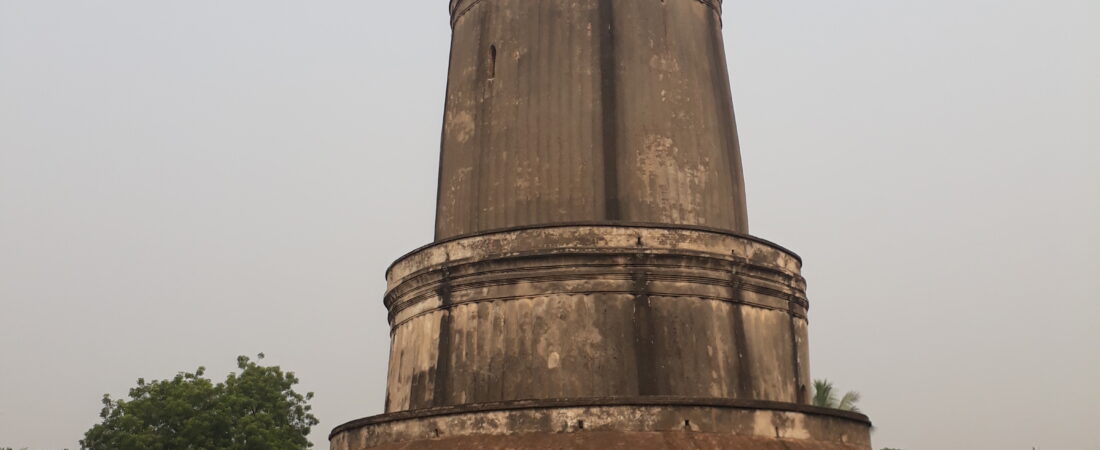
Pradyumna is the place named in the traditional hymn. Some modern accounts identify it with Pandua in the Hooghly district of West Bengal. That identification is not universally accepted, and the precise ancient site and continuity of worship at a particular surviving shrine have not been conclusively established.
Pandua and the surrounding region have a layered history and historic monuments. Those monuments should not automatically be described as the original Shrinkhala Devi temple: regional heritage is worth exploring on its own terms, while the sacred identification remains a question requiring careful sourcing.
- What the hymn says: Shrinkhala Devi is associated with Pradyumna.
- What some modern accounts propose: A connection with Pandua, West Bengal.
- What remains uncertain: The exact ancient location and an unbroken history linking a specific present-day monument to the shrine.
For Indian Ethos, acknowledging uncertainty is not a failure of faith. It is a way to protect sacred traditions from unsupported claims and to help readers plan journeys with clear expectations.
Spiritual significance of Shrinkhala Devi
The Divine Mother as liberating strength
Within the Shakti Peetha tradition, Shrinkhala Devi is honoured as an expression of Adi Parashakti, the dynamic power underlying creation, preservation and transformation. Her name can inspire reflection on release from inner bondage and the courage to choose what is right even when it is difficult.
Faith in uncertain times
Prayer to the Mother can offer a moment of calm when life feels uncertain. Devotees may seek discernment in decisions, resilience through difficulty, harmony within the family and the humility to learn from experience. These are devotional aspirations, not guaranteed worldly outcomes.
The unity of the Peethas
The many names of the Divine Mother express regional forms of worship while pointing towards one underlying Shakti. Shrinkhala Devi’s place in the eighteen-Peetha hymn links her to a wider network of sacred memory that has been carried through recitation, pilgrimage, local custom and family devotion.
Worship and devotional observances
Because the exact shrine identification remains uncertain, this article does not assign a specific daily ritual schedule or temple-specific offering to Shrinkhala Devi. Devotees wishing to honour her may follow their family tradition or seek guidance from a trusted priest, offering prayers to Adi Parashakti with sincerity and respect.
- Keep the place of worship clean and arrange a picture or symbol of the Divine Mother.
- Light a lamp if this is customary and safe.
- Offer fresh flowers, water, fruit or a simple vegetarian prasadam.
- Recite a Devi hymn followed in your family, such as the Devi Mahatmyam or Lalita Sahasranama, according to your tradition.
- Conclude with a prayer for wisdom, courage, compassion and freedom from harmful tendencies.
A widely known Devi invocation is ॐ ऐं ह्रीं क्लीं चामुण्डायै विच्चे॥ (Om Aim Hreem Kleem Chamundayai Vichche). It is a general Devi mantra, not a mantra uniquely established for Shrinkhala Devi. Those who follow a specific Shakta lineage should use the practice taught within that lineage.
Festivals for remembering the Divine Mother
Even where the precise Shrinkhala shrine is not established, devotees may honour the Goddess through major Shakti observances. Local customs and dates differ by region and calendar.
- Sharad Navaratri: Nine nights celebrating the Goddess in her many forms, culminating in Vijayadashami.
- Chaitra Navaratri: A springtime period of prayer, discipline and renewal in many traditions.
- Durga Ashtami: A day of special devotion to Durga, observed according to regional customs.
- Lalita Panchami: Honoured in some traditions in connection with Lalita Tripurasundari.
Do not assume that a temple identified with Shrinkhala Devi holds a particular festival until a reliable local source confirms its calendar.
Travel guidance: researching a possible visit to Pandua
If you are interested in the modern identification linking Pradyumna with Pandua in Hooghly district, treat the trip as a visit to a historical region associated in some accounts with the tradition, not as a guaranteed visit to a conclusively verified Shrinkhala Devi temple.
- Starting point: Kolkata is a practical major city from which to research onward travel in the region.
- Transport: Rail and road options depend on the exact monument or locality you intend to visit. Check current timetables and local access information before departure.
- Confirm the place name: Several places in eastern India share similar names. Verify the exact destination with a reliable local tourism office or heritage authority.
- Accommodation: Choose lodging based on the confirmed route and available facilities; do not assume a dedicated pilgrimage complex exists.
- Respect local rules: Follow worship, photography and conservation instructions at temples and historic monuments.
Because the location is disputed, this article deliberately does not publish unverified darshan timings, temple phone numbers or claims about a functioning Shrinkhala Devi shrine. Confirm details locally before booking transport or accommodation.
Strictly vegetarian cuisine: regional dishes to look for
If your journey takes you through West Bengal, the region offers a rich vegetarian food tradition. The dishes below are regional suggestions, not documented Shrinkhala Devi temple prasadam. Recipes vary, so ask about ingredients, cooking fats, onion, garlic and shared preparation if you follow a strict vegetarian practice.
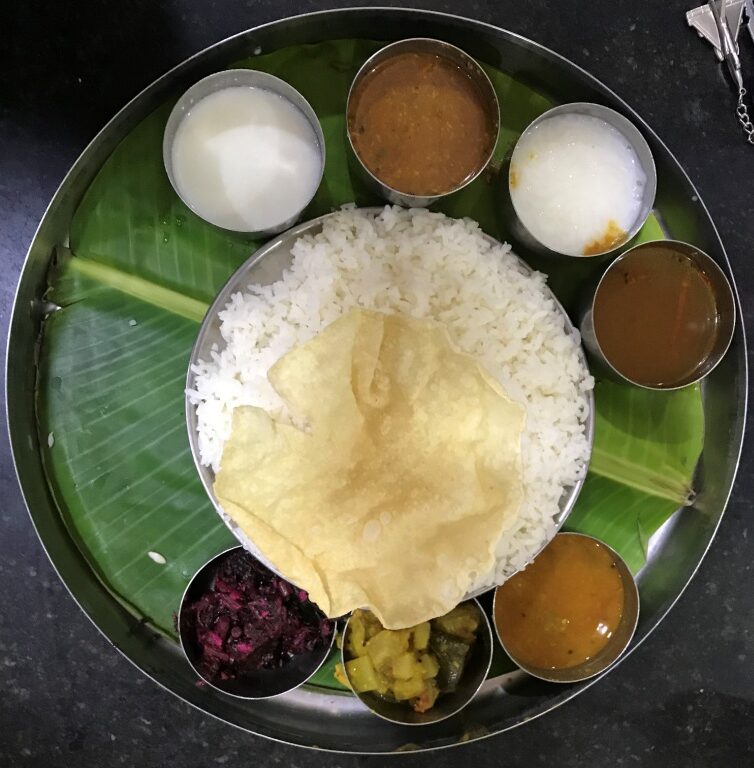
Luchi with alur dom
Luchi is a small fried flatbread often served with a spiced potato preparation. Ask which oil is used and whether the kitchen can meet your dietary requirements.
Cholar dal
A Bengali preparation of chana dal, sometimes flavoured with whole spices and coconut. It is often paired with luchi, though recipes vary between households and restaurants.
Aloo posto
Potatoes cooked with poppy-seed paste are a well-known Bengali home-style dish. Confirm the preparation and whether onion or garlic is included.
Shukto and seasonal vegetables
Shukto is a traditional mixed-vegetable preparation with many regional variations. Ask for a vegetarian version and check all ingredients rather than relying on the dish name alone.
Mishti doi, sandesh and payesh
These familiar Bengali sweets offer a taste of the region’s dairy and confectionery traditions. Check ingredients and preparation if you avoid particular additives or fats.
Choosing a restaurant
Look for current listings of vegetarian restaurants in the actual town where you will stay, then confirm opening hours, location and kitchen practices directly. Since the destination itself is not firmly identified, it would be misleading to name one restaurant as the definitive dining stop for this pilgrimage without verifying the exact route.
Frequently asked questions
Where is Shrinkhala Devi Shakti Peetha?
The Ashtadasha Shakti Peetha Stotram associates Shrinkhala Devi with Pradyumna. Some modern accounts connect this with Pandua in West Bengal, but the exact identification is disputed.
What does Shrinkhala mean?
The Sanskrit word commonly means chain, link or bond. Devotionally, the name can prompt reflection on freedom from fear, harmful habits and inner limitations.
Which body part of Sati is associated with Shrinkhala Devi?
Accounts differ. This article does not present one disputed association as universally accepted.
Can I visit a verified Shrinkhala Devi temple at Pandua?
The identification is not conclusively established. Confirm the precise site with reliable local sources before making pilgrimage arrangements.
What vegetarian food should I try in West Bengal?
Luchi with alur dom, cholar dal, aloo posto, seasonal vegetable dishes, mishti doi, sandesh and payesh are regional options. Confirm ingredients and preparation practices with the restaurant.
Sources and further reading
- Ashtadasha Shakti Peetha Stotram, for the traditional hymn.
- Hooghly District official website, for district-level public information.
- Incredible India, for general destination and heritage context.
Shrinkhala Devi’s place in the sacred hymn reminds us that a tradition can remain spiritually meaningful even when every historical detail is not settled. Reverence and careful research can stand together: one honours the Mother, while the other protects the integrity of the story we pass on.
May Adi Parashakti bless every home with courage, harmony, clear understanding and freedom from inner burdens. Jai Mata Di!